

 NFL
NFL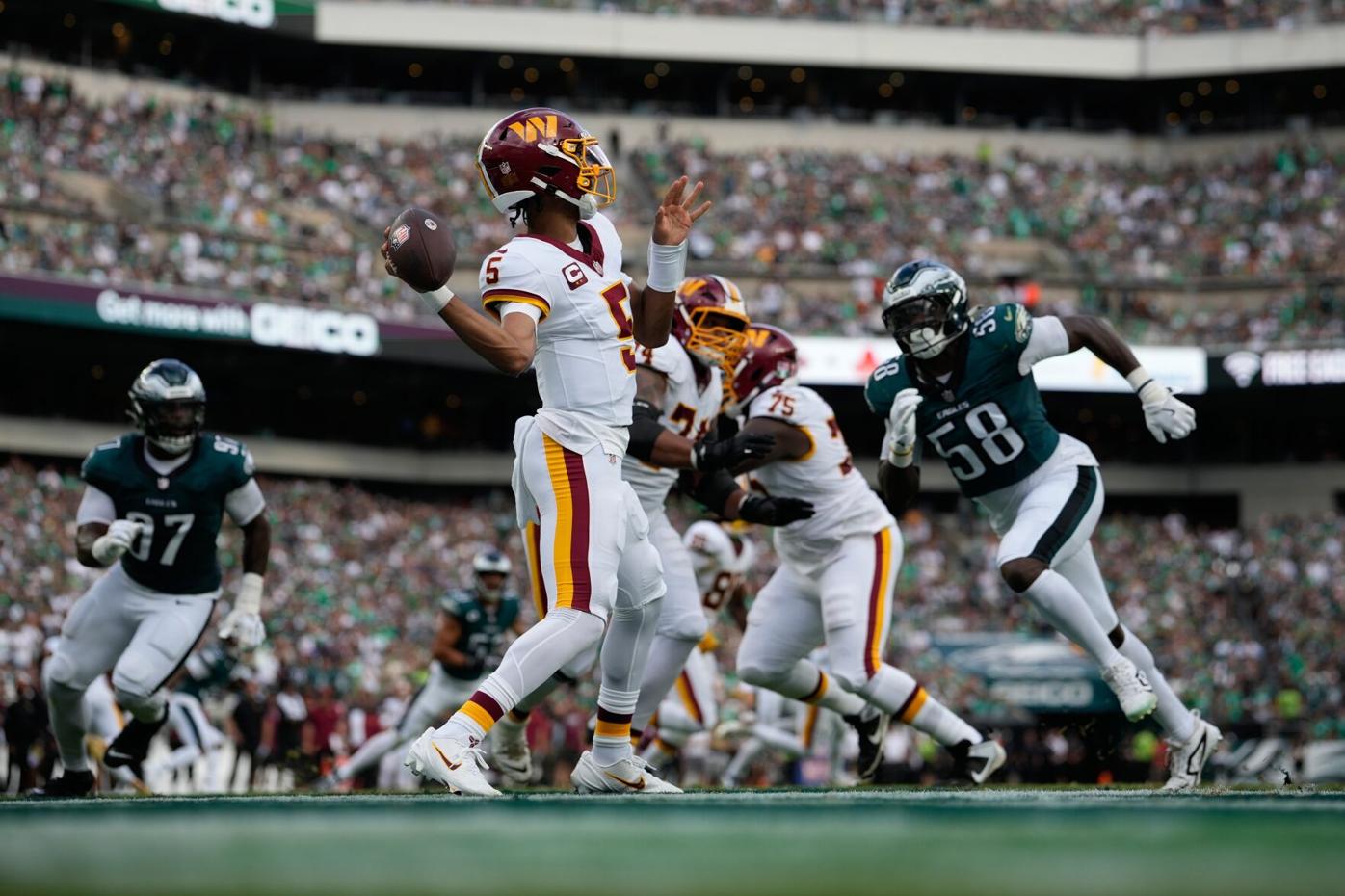
By: Courtney Byrd
Two days after the Commanders’ 24-22 loss to Philadelphia, I’m less interested in the final two-point conversion than in what Washington showed before it even got there.
Mistakes cost the Commanders opportunities. The offense took too long to find its rhythm, and defensive breakdowns let Philadelphia punish them. But after some time to look back at the season opener, some things felt different from the Washington team we watched struggle through a 5-12 season last year.
That’s what matters to me now.
The Commanders didn’t spend the offseason making changes to look better in a close loss. They changed coordinators, added veterans, trusted young players with key roles, and entered this season believing 2025 didn’t have to define where this team was headed. One game isn’t enough to say those changes worked. However, Philadelphia gave us our first real evidence of what might be.
Now, with another NFC East game against Dallas coming up, the question is which aspects of Sunday’s performance Washington can build on.
The Defense Looked Different
The biggest reason I left encouraged was Washington’s defense.
We’ve heard Daronte Jones talk throughout the offseason about wanting an aggressive defense that pressures offenses. One that makes them uncomfortable. Against Philadelphia, we finally saw that approach applied to a starting offense. At times, Washington looked like the defense it spent all summer trying to become.
The Commanders sacked Jalen Hurts three times and forced Philadelphia to punt seven times. They held the Eagles to 318 total yards and kept Saquon Barkley from controlling the game as he has before. Barkley finished with 83 rushing yards, but 42 came on a single run. Remove that explosive play, and Washington held him to 41 yards on his other 14 carries.
That’s something I would build upon.
The defense wasn’t perfect, and that mattered because the explosive plays were costly. A 64-yard completion to Dontayvion Wicks helped Philadelphia reach the end zone, Barkley’s 42-yard run set up another scoring opportunity, and Dallas Goedert’s 43-yard touchdown came at exactly the wrong time in the fourth quarter. Washington can play well for most of a drive. Against teams like Philadelphia, though, one missed assignment or tackle can erase everything that came before.
Still, the difference for me was that those mistakes didn’t lead to a complete collapse. Washington kept getting stops and gave its offense chances to stay in the game.
Sonny Styles also gave the Commanders something to be excited about. There is always a difference between hearing about a rookie throughout training camp and seeing what he does once the regular season starts. Styles recorded his first NFL sack and made plays against Barkley behind the line of scrimmage. What stood out even more, though, was what happened after Frankie Luvu left with a groin injury. Styles was asked to take on additional communication responsibilities, and Dan Quinn praised the way he handled them afterward.
For a rookie playing his first NFL regular-season game in Philadelphia, that’s a promising start. It doesn’t mean we’ve learned everything about what Styles will become, but Washington asked a lot of him right away, and he didn’t look overwhelmed.
Washington Has to Find Its Offense Earlier
The offense is where I have the most questions heading into Dallas.
Jayden Daniels finished 18-of-34 for 164 yards, with two touchdowns and no interceptions. Those numbers aren’t going to jump off the page, but I don’t think they tell the full story of his afternoon. Philadelphia applied pressure, Washington struggled to move the ball consistently, and Daniels was playing his first regular-season game in almost a year.
What concerns me more is how long the offense took to settle in.
Washington managed just 50 yards on its seven non-scoring possessions. After Drew Stevens opened the game with a 55-yard field goal, the Commanders gained only 13 yards over their next four drives. Against Philadelphia, that’s too much of the game to spend searching for answers.
Then the fourth quarter arrived.
Daniels completed nine of his 11 passes on Washington’s final two drives, throwing touchdowns to Stefon Diggs and Antonio Williams. Suddenly, the offense that had looked uncomfortable for much of the afternoon played with urgency and moved the ball.
That’s the version David Blough needs to find sooner.
I’m not expecting a new offensive coordinator and a quarterback returning from an injury-shortened season to have everything figured out after one game. But Washington has too much talent at the skill positions to disappear offensively for long stretches. Diggs, Terry McLaurin, Williams, and the rest of this group should give Daniels options. The more comfortable everyone gets in Blough’s offense, the fewer of these stretches we should see.
Williams might already be giving Washington another response.
He caught all four of his targets for a team-high 64 yards, including a 33-yard reception on third-and-14, before scoring the touchdown that gave Washington a chance to tie the game late. We spent the preseason talking about Williams because he kept giving us reasons to. Week 1 was his first chance to show it against a defense like Philadelphia’s, and he took advantage.
That’s the kind of performance that should earn him more opportunities.
The Little Things Still Matter
The more I look back on Sunday’s game, the less inclined I am to blame the loss on Washington’s failed two-point conversion.
It was obviously a huge play. Daniels’ touchdown to Williams cut the deficit to two with just over a minute left, and the Commanders had a chance to tie it. Philadelphia stopped the designed shovel pass to John Bates, and that became the play everyone would remember.
But Washington’s problems began well before that.
Stefon Diggs’ unsportsmanlike conduct penalty after his fourth-quarter touchdown is one example. The explosive plays allowed on defense are another. Washington missed opportunities offensively and had too many possessions where it couldn’t generate anything. None of those moments decided the game on its own, but together they created a situation in which the Commanders needed one play at the end to make up for them all.
Daniels said afterward that Washington shot itself in the foot, and that’s probably the part of this loss that matters most in the future. The Commanders didn’t turn the ball over, which is encouraging, but avoiding turnovers doesn’t mean they played clean football.
Against the better teams in the NFC, the margin will be small. Philadelphia showed Washington exactly how small it will be.
Tyler Owens also had special teams play that deserves to be remembered, even if it isn’t why I’m writing about this game two days later. His effort was among the afternoon’s best individual plays and another example of Washington finding contributions across the roster. Now the bigger concern is his ankle injury, along with the statuses of Luvu, Chig Okonkwo, and Jordan Magee as Washington moves into another divisional week.
What Carries Over to Dallas?
This is where Sunday’s game becomes more than a look back at a loss.
Washington doesn’t have to wait long for another opportunity. The Commanders head to Dallas for another NFC East matchup, and I want to see whether the encouraging aspects of Week 1 can become consistent.
Can Jones’ defense apply the same pressure without giving up the explosive plays that hurt it in Philadelphia, and build on his debut, especially if injuries force Washington to ask even more of him? Can Williams turn his four catches in Week 1 into a legitimate role in this offense? Most importantly, can Blough and Daniels find their fourth-quarter rhythm before the fourth quarter?
Those questions matter more to me now than whether Washington should have called a different play on the two-point conversion.
The Commanders are 0-1. There aren’t any moral victories in that, and I don’t think anyone in Washington should be satisfied simply because they stayed close to Philadelphia. This team has higher expectations.
But there is a difference between making excuses for a loss and recognizing signs of progress.
Two days later, I still think Washington showed some signs.
The defense looked faster and more aggressive. Two rookies made an immediate impact. Daniels protected the football and found his rhythm late enough to give Washington a chance. There are things to fix, but there are also things worth carrying into Week 2.
Now we get to see whether the Commanders can turn those encouraging signs into something that matters more than a close loss.