

 NFL
NFL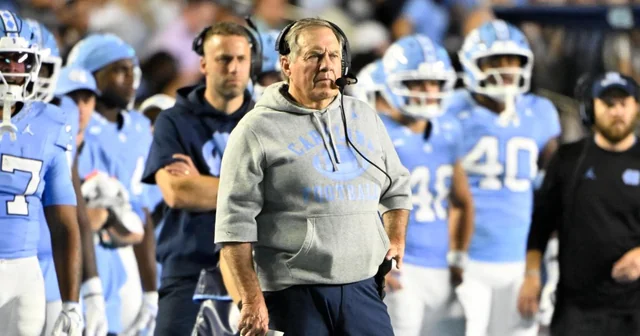
CHARLOTTE, N.C. — Bill Belichick has spent decades building one of the greatest coaching resumes in NFL history. However, after one year leading North Carolina, the six-time Super Bowl champion says he’s discovered something he didn’t expect.
He genuinely enjoys coaching college football.
Speaking at ACC Kickoff, Belichick reflected on his transition from the NFL to Chapel Hill. He touched on everything. From roster construction and team culture to what he’s learned during his first season leading the Tar Heels.
“I like coaching in college,” Belichick said. “I really didn’t know whether I would or wouldn’t, and I do.”
For Belichick, the biggest difference isn’t football itself—it’s the relationships.
Unlike the NFL’s limited offseason, college football gives coaches months to work with players. It allows them to develop both on and off the field.
“I enjoy the players, the interaction, the time we get to spend with them,” Belichick said. “It gives you more of an impact on the players. You get to know them better. I love coaching. I love helping them in any way I can, both on and off the field.”
A Different Blueprint for Building a Roster
Belichick also acknowledged that today’s college landscape presents an entirely different challenge than constructing an NFL roster.
The transfer portal and player retention have become just as important as high school recruiting. He believes roster management has fundamentally changed.
“The roster building in college now… you either bring them in as freshmen, you bring them in through the portal, or you retain them,” Belichick said. “That’s it.”
Unlike the NFL, where teams can make roster moves throughout the season, Belichick noted that once players are enrolled, coaches must maximize the group they have.
“It’s a completely different model,” he said. “You have to recruit them, get them in the transfer portal, or retain them once you have them.”
Growth Beyond the X’s and O’s
After navigating his first year in Chapel Hill, Belichick believes one of the biggest improvements has come from inside the locker room.
He praised the maturity and accountability of his players, saying they now require less direction from coaches and staff members.
“Our guys are more accountable,” Bill Belichick said. “They’re doing more things the right way professionally… with less prompting from the coaches. It’s part of maturing and growing up.”
Belichick also admitted there were valuable lessons learned from last season, particularly with integrating so many new players into the program.
He recalled entering the year knowing the Tar Heels faced an uphill climb, with quarterbacks unfamiliar with the offense and a roster still coming together.
“We had a lot of new players that we needed to start all over again with,” Belichick said. “We got off to a slow start, but we improved quite a bit over the course of the season.”
Learning the Carolina Way
While Belichick has spent years mastering professional football, he said his biggest adjustment wasn’t learning a new sport—it was learning an entirely new organization.
He pointed to building relationships with university administrators, academic staff, trainers, donors, and coaches across UNC’s athletic department as one of the most rewarding parts of the job.
“It’s been a time investment,” Belichick said. “But it’s certainly paying off now.”
Bill Belichick also praised the opportunity to collaborate with coaches from other sports, something he rarely experienced in the NFL. From basketball and baseball to lacrosse and field hockey, he said interacting with fellow coaches has broadened his perspective and made his first year on campus especially enjoyable.
As North Carolina prepares for Year 2 under one of football’s most accomplished coaches, Belichick isn’t promising championships or making bold preseason predictions.
Instead, he’s focused on building a stronger culture, developing players, and continuing to grow alongside a program that has given him a fresh appreciation for coaching.
For someone who has already conquered the NFL, Bill Belichick’s newest challenge may be proving that his blueprint can transform North Carolina into a consistent ACC contender.