

 NFL
NFL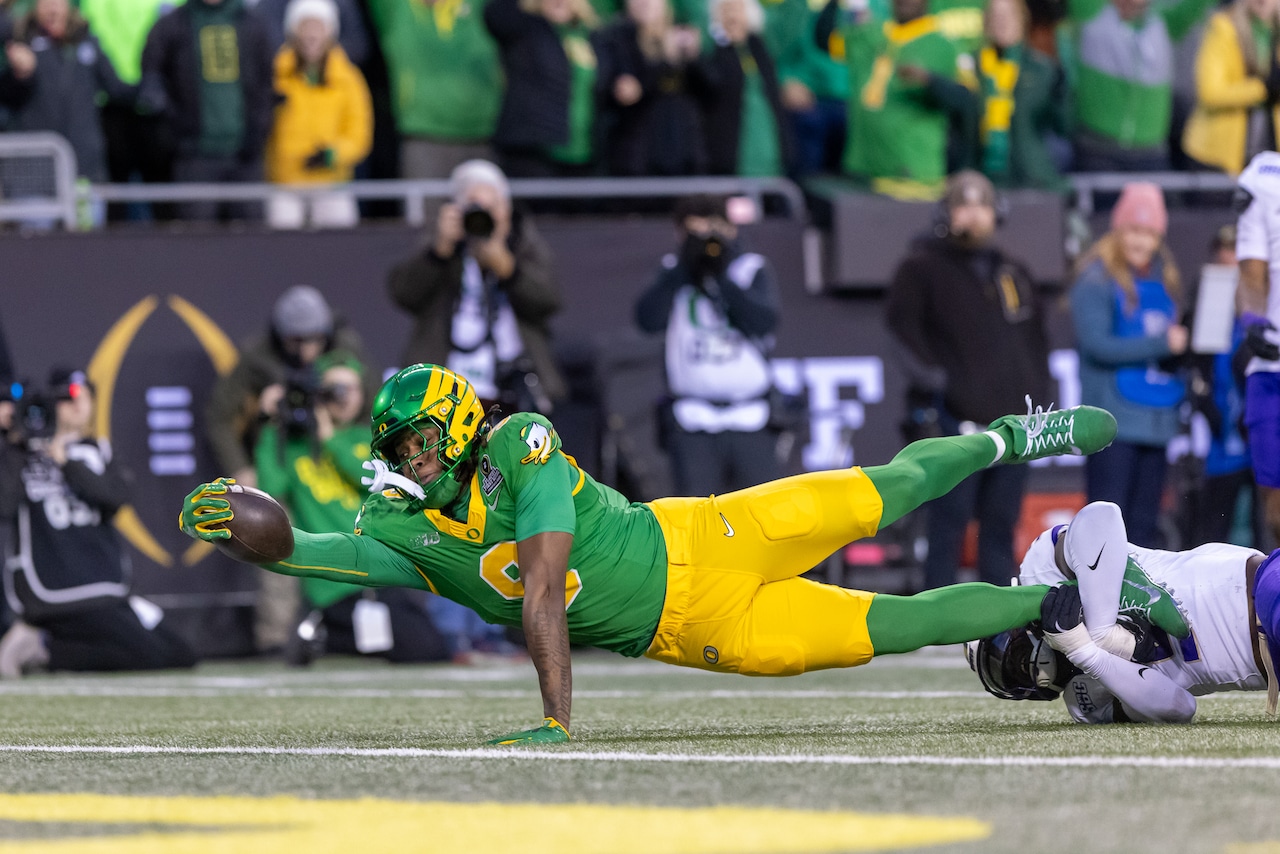
By Bill Carroll
Elite tight ends are not just another weapon. He is the unit that makes the weapons around him more effective. Put a tactically deployed tight end on the field, and the linebacker has a problem.
A force multiplier is not simply another soldier on the battlefield. It is a capability that makes the entire unit more effective without necessarily increasing its numbers. Increasingly, that is what the modern tight end is.
Top tight ends do more than catch passes. They change the mathematics of defense. Attach them to the formation, and they influence the box count. Move them into the slot and then force a linebacker into coverage. Split them wide, and they expose a matchup. Motion them across the formation to reveal defensive intentions before the snap. Leave them in-line and create an extra gap in the run game. That is a force multiplier.
The 2027 tight end class is compelling because of prospects that can create that kind of structural stress. Jamari Johnson and Trey’Dez Green enter the cycle with legitimate first-round traits. Benjamin Brahmer, DJ Vonnahme, and Terrance Carter Jr. offer different paths to high-value NFL roles. Behind them is a deeper middle class that includes Lawson Luckie, Jeremiah Hasley, Theo Melin Ohrstrom, Michael Masunas, and Brett Norfleet.
Scouting Framework
This is my scouting board, not a consensus ranking. The order is built around four factors:
- NFL projection
- Scheme fit
- Positional value
- What each player must prove during the 2026 season
Those priorities shape how I separate production from long-term value and how I project each tight end into an NFL role. My evaluation begins with five questions: Can he block, separate, create after the catch, or survive NFL physicality? Most importantly, does he force the defense to account for him in more than one way? Production launches the conversation. Versatility shapes it.
Tier 1 — Force Multipliers

1. Jamari Johnson — Oregon
Projection: Round 1 | Best Fit: Multiple / West Coast / Spread | Year-One Role: Starting move tight end
Johnson is the prototype for the argument I am making. He is not simply a big receiver wearing a tight-end number. Jamari has the athletic profile to work in the seam, the middle of the field, and the intermediate levels, with enough movement skill to contribute as a blocker.
Johnson averaged 9.1 yards after the catch per reception in 2025. The fluidity, route stems, and adjustment ability already prompt NFL conversation. Johnson could become a featured option in Oregon’s offense after playing behind Sadiq last season. That is both an opportunity and an examination. More targets will bring more defensive attention.
What I am watching: Whether he becomes a consistent enough run blocker to preserve formation ambiguity.
Force Multiplier Trait: Formation versatility.
2. Trey’Dez Green — LSU
Projection: Round 1 | Best Fit: Red zone / Vertical / Mismatch | Year-One Role: Starting tight end
Mismatch Profile
Green is the kind of prospect who can make defensive coordinators redraw the whiteboard. At 6-foot-6, he brings the size, length, and body control to function like a power forward when the ball enters his area.
Production and Projection
In 2025, he recorded twelve contested catches, second among FBS tight ends, while also showing legitimate speed and after-the-catch ability. His two-touchdown performance against Houston in the Texas Bowl illustrated the mismatch potential that makes him such a difficult assignment.
You do not need to throw Green the ball ten times to benefit from him. The defense still must prepare for him.
What I am watching: Whether his blocking and route detail rise to the level of his catch-point dominance.
Force Multiplier Trait: Catch-point dominance.
3. Benjamin Brahmer — Penn State
Projection: Round 2 | Best Fit: Multiple / Play-action | Year-One Role: Three-down rotational starter
Brahmer has the most traditional complete tight-end profile near the top of this board. At approximately 6’ 6” and 252 pounds, with 34-inch arms and an 82-inch wingspan, he has the dimensions to influence both phases.
He uses his frame effectively as a target and has the length to wall off defenders as a blocker. The remaining question is power. He must become a more consistent drive blocker and add strength through his lower half.
If that develops, Brahmer becomes exactly what NFL teams want: a player who does not force the offense to declare its intentions.
What I am watching: Functional power and consistent displacement against NFL-sized edge defenders.
Force Multiplier Trait: True dual-phase utility.
4. DJ Vonnahme — Iowa
Projection: Round 2-3 | Best Fit: Play-action / Multiple | Year-One Role: Developmental starter
Vonnahme may be one of the most fascinating athletes at the position. He ranked second among FBS tight ends in yards per route run at 3.10 in 2025 and threatened defenses with delays, wheels, and double moves.
His hands and tracking ability stand out. His blocking does not, at least not yet. That makes 2026 especially important. Iowa will give him opportunities to show whether he can become a complete player rather than a specialized receiving piece.
What I am watching: Blocking temperament, hand placement, and the ability to hold the point of attack.
Force Multiplier Trait: Route versatility.
5. Terrance Carter Jr. Texas Tech
Projection: Round 2-3 | Best Fit: Spread / RPO / Movement | Year-One Role: Receiving tight end
Carter is a stress test for defensive backs. Among FBS tight ends in 2025, he ranked first in missed tackles forced and third in receiving yards after the catch. 60 percent of his receiving yardage came after the catch.
He runs like a running back in space. That is the attraction. The limitations are size and blocking consistency. Carter can create matchup problems, but NFL teams will want evidence that he can stay on the field when the assignment requires him to block someone larger than he is.
What I am watching: Whether he can provide enough blocking value to avoid becoming personnel-specific.
Force Multiplier Trait: Run-after-catch creation.

Tier 2 — Multi-Phase Contributors
6. Lawson Luckie — Georgia
Projection: Round 3 | Best Fit: Multiple / Play-action | Year-One Role: Rotational starter
Developmental Foundation
Luckie has the SEC development background that matters at a position where physical maturity often shapes the projection.
Three-Down Pathway
He offers enough receiving ability to threaten underneath and enough blocking utility to earn a realistic three-down role. The question is whether those strengths can show up consistently within the same game plan. The next step is proving that all parts of his game can coexist consistently rather than appear separately.
What I am watching: A complete season of reliable route execution and point-of-attack work.
7. Jeremiah Hasley — Duke
Projection: Round 3-4 | Best Fit: Multiple / West Coast | Year-One Role: Developmental starter
Hasley is one of the more intriguing senior evaluations. His experience and physical profile give him a legitimate opportunity to climb with a productive 2026 season. He does not need to become the most explosive player in the class. He needs to show teams that he can process, execute, and remain useful across personnel groupings.
What I am watching: Whether his play speed and receiving production match the physical profile.
8. Theo Melin Ohrstrom — SMU
Projection: Round 3-4 | Best Fit: Spread / Multiple | Year-One Role: Move tight end
Melin Ohrstrom brings an attractive size-and-movement combination, particularly for offenses that detach the tight end and force the defense to identify coverage responsibilities. His ceiling depends on whether he can become more than a detached target and offer credible in-line snaps.
What I am watching: Functional strength and consistency when attached to the formation.
9. Michael Masunas — Texas
Projection: Round 3-4 | Best Fit: Multiple | Year-One Role: Developmental starter
Masunas fits the modern Texas developmental model: size, athleticism, and access to a role that can display both. The traits are present. The 2026 evaluation must determine whether those traits produce consistent NFL-level execution. He has a chance to move because complete tight ends are difficult to find, but projection cannot replace tape forever.
What I am watching: Snap-to-snap consistency as both a route runner and blocker.
10. Brett Norfleet — Missouri
Projection: Round 3-4 | Best Fit: Multiple / Play-action | Year-One Role: Rotational starter
Norfleet adds another player with starting potential to this tier. His value is the possibility that he can contribute to both phases without asking the offense to narrow the call sheet. If his blocking angles, route detail, and finishing consistency continue to improve, he can become one of the safer middle-round projections in the class.
What I am watching: Whether improved technique turns useful traits into dependable three-down value.

Tier 3 — Specialists With Starter Upside
The middle of this class is where the evaluation becomes more interesting. The players begin to specialize, and the question becomes whether the specialty is valuable enough to earn snaps while the rest of the profile develops.
| Rank / Player | School | Projection | Projected Role |
| 11. Andrew Rappleyea | Penn State | Round 4 | Receiving / red-zone specialist |
| 12. Kylan Fox | Purdue | Round 4-5 | Movement tight end |
| 13. Luke Reynolds | Virginia Tech | Round 4-5 | Vertical / seam threat |
| 14. Chris Corbo | Georgia Tech | Round 5 | Developmental blocker/receiver |
| 15. Dorian Thomas | California | Round 5 | Versatile project tight end |
| 16. Jaden Platt | Arkansas | Round 5 | Physical rotational option |
| 17. Elija Lofton | Miami | Round 5-6 | Move tight end |
| 18. Decker DeGraaf | Washington | Round 5-6 | Receiving-oriented tight end |
| 19. Garrett Oakley | Kansas State | Round 5-6 | Developmental blocker |
| 20. Brody Foley | Louisville | Round 5-6 | Multi-phase depth |
Tier 4 — Developmental Force Multipliers
- Walker Lyons — BYU | Round 6 | Athletic developmental target with formation flexibility.
- Jaleel Skinner — Louisville | Round 6-7 | Length and movement create a matchup-based developmental pathway.
- Jake Johnson — Auburn | Round 6-7 | Experienced projection whose value will depend on dependable multi-phase execution.
- Luke Hasz — Ole Miss | Round 6-7 | Receiving traits provide a path if he can establish a defined complementary role.
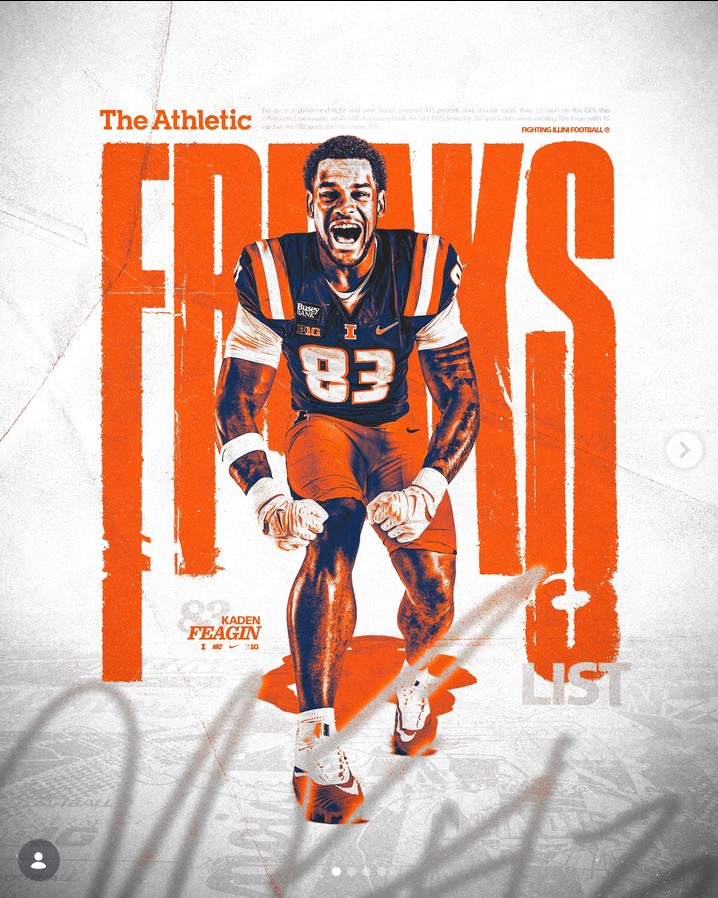
- Kaden Feagin — Illinois | Round 7 / Priority UDFA | A former RB/physical projection whose evaluation centers on role conversion and special-teams value.
The Dividing Line: Can You Force the Defense to Declare?
This is the question I would emphasize over the others. A tight end who:
- Catches 50 passes but can line up only in the slot is useful.
- Catches 50 passes and can block a defensive end has enhanced value.
- Can do both, motion across the formation without forcing the offense to substitute personnel, and can threaten the seam becomes a force multiplier.
The offense gains information. Motion him. Watch the linebacker. Does a corner travel, safety rotate, or defense bump the front? The tight end can answer those questions before the ball is snapped. This is actionable intelligence, not just receiving value.
The Force-Multiplier Scale Levels
1—Receiver: Can catch and provide basic route value.
2—Matchup: Creates problems for linebackers and safety.
3—Blocker/Receiver: Can remain on the field in both phases.
4—Formation/Situational Weapon: Can align in multiple locations and alter defensive structure.
5—Force Multiplier: Can dictate personnel, coverage, leverage, and communication simply by being on the field. That final category is where a first-round tight end must live.
Scheme Fit
Multiple / Positionless Offenses
Jamari Johnson, Benjamin Brahmer, DJ Vonnahme, Lawson Luckie
Vertical / Mismatch Offenses
Trey’Dez Green, Terrance Carter Jr., Andrew Rappleyea
Play-Action / Under-Center
Benjamin Brahmer, DJ Vonnahme, Brett Norfleet, Michael Masunas
Spread / RPO
Terrance Carter Jr., Jamari Johnson, Elija Lofton, Luke Reynolds
The scheme determines how much of a player’s toolkit is usable. The same principle that applies at running back applies here: fit over flash. Pass-Catching Is Only Half the Assignment
A mistake in tight-end evaluation is treating blocking as an accessory. It is not. Blocking determines whether the defense can identify the offense’s intentions from personnel. If the tight end cannot block, the defense can narrow the menu. If he can block well enough to demand respect while offering legitimate receiving value, the offense retains ambiguity.
That is the essence of the force multiplier. The best tight end does not merely win his matchup. He makes everyone around him more dangerous.
Strategic Takeaways
- The top of the class is stronger than the raw number of projected draft picks may suggest. Johnson and Green enter the cycle with the clearest first-round traits, while the next group contains several plausible Day 2 players.
- Traditional statistics cannot fully explain the position. Reception totals do not show whether a tight end changes coverage, improves a blocking surface, or provides the quarterback with pre-snap information.
- Blocking is the separator. Green, Johnson, and Carter attract attention because of their receiving ability. Brahmer and Vonnahme become more valuable if their blocking develops.
- Versatility equals value. A player who can align attached, detached, in the slot, in motion, and occasionally in the backfield creates more problems than a player who produces from one location.
- The best tight ends are force multipliers. They do not simply add another weapon. They multiply the effectiveness of the weapons already on the field.
After Action Report
The force-multiplier analogy fits because the modern tight end is not simply another weapon. He is the unit that makes the weapons around him more effective. Put a tactically deployed tight end on the field, and the linebacker has a problem. Put him in motion, and the safety must be adjusted. Split him wide, and the corner must account for him. Leave him attached, and the defensive line has another gap to defend. Now it multiplies that stress across an entire game. That is the position. That is the value.
The most important question in evaluating the 2027 tight end class is not, ‘How many yards can he catch?’ It is, ‘How many problems does he create for the defense before the ball is snapped?’ The answer will determine who merely plays tight end and who becomes a force multiplier