

 NFL
NFL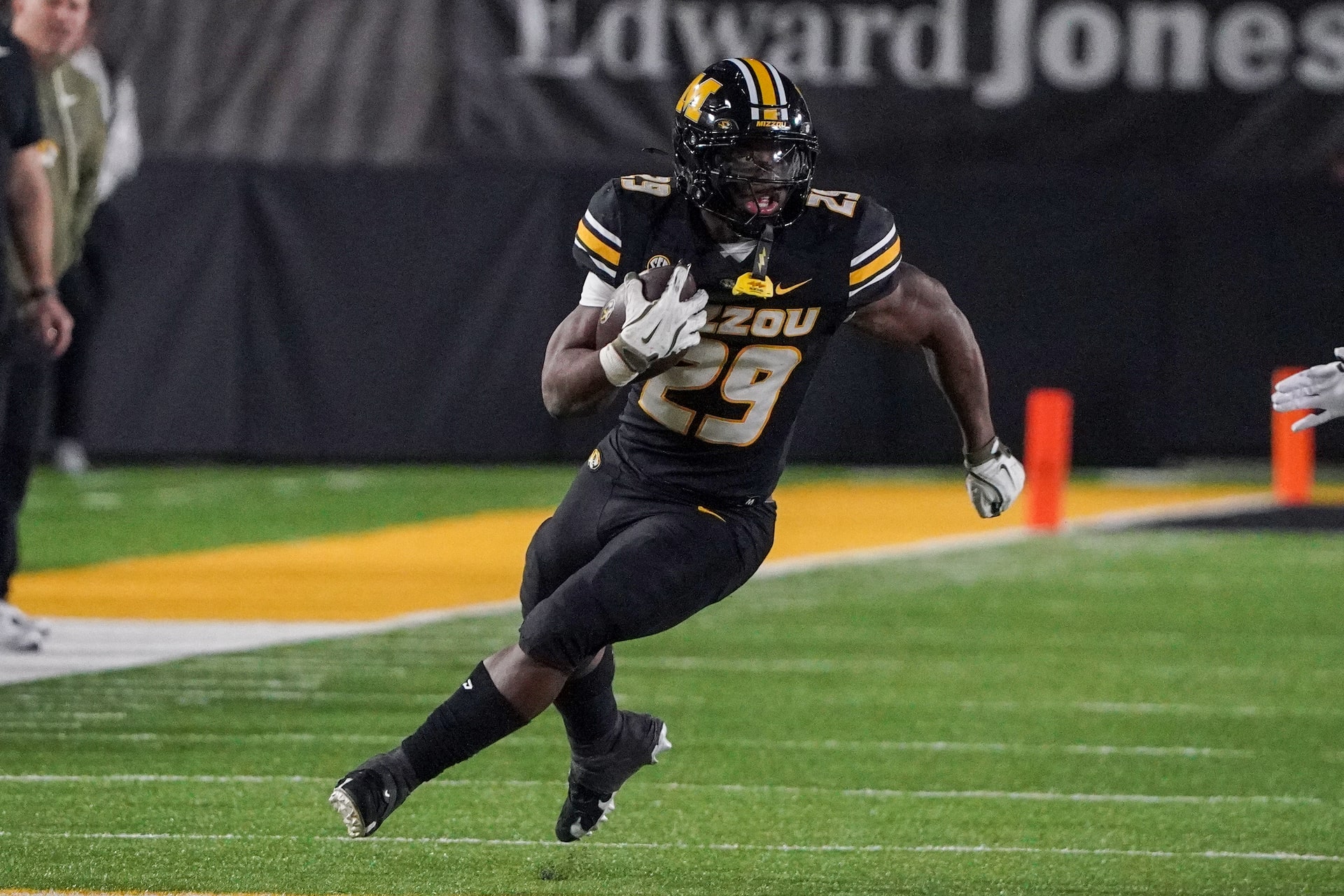
By Bill Carroll
This running back class is a Rorschach test for offensive coordinators. If you’re a wide zone zealot, you’ll see your next track‑meet angle‑route merchant. If you bend the knee to gap and duo, you’ll see downhill hammers who turn second‑and‑8 into third‑and‑2 with grim reliability. Production opens the conversation; role clarity and NFL translation clarify. Vision, processing, contact balance, explosive profile, passing‑game value, and scheme translation are the filters. The board reflects how efficiently a prospect can help you win your way, not how many Top 10 highlights a runner creates.
The macro view: this is a scheme‑sensitive class with a compressed middle. From RB5 to RB15, the separation is a whisper, not a chasm. The sweet spot sits in Rounds 2–4: pay for fit, not fireworks. In other words, fit over flash. Perhaps the bumper sticker your scouting department should have ordered in bulk back in December.
After a 2026 class that offered considerably less depth at the top, the next group arrives with more legitimate starting-caliber possibilities, and a better collection of tier-to-talent prospects seems to adorn this class.
Day 2 candidates and enough stylistic variety to make scheme fit matter. There is no universal agreement on RB1—and that’s probably a good thing. Kewan Lacy, Jadan Baugh, Ahmad Hardy, Nate Frazier and Justice Haynes have all received serious early consideration, while players such as Raleek Brown, Jordan Marshall and Hollywood Smothers give the class another layer of explosive talent.
The important word here is depth.
This is not simply a class with two or three backs who might hear their names called early. This group should help teams determine exactly what they want from the position. Do you need a gap runner who can shorten the game? A wide-zone runner who can press the edge and punish over pursuit? A space player who can become an extension of the passing game? A back who can protect the quarterback well enough to stay on the field?
Those questions will separate this class. My evaluation remains built around the same filters I used last year: vision, processing, contact balance, explosive ability, receiving value, pass protection, and scheme translation. Production gets you into the conversation. Role clarity determines whether you stay there.
TIER 1 — FEATURE BACKS / OFFENSIVE CENTERPIECES
- Ahmad Hardy* — Missouri: Ahmad Hardy is a compact, highly productive running back for the Missouri Tigers. He is 5’10” and weighs 209 pounds, combining elite contact balance with a low center of gravity. He is viewed as a premier 2027 NFL Draft prospect following dominant stints at Louisiana-Monroe and Missouri.
-
- Projection: Viewed as an early-down volume contributor and a mid-to-late 1st-round (14th to 25th range) elite value prospect with high competitive toughness.
- Status: Working back to full speed in 2026 following summer rehabilitation from being shot in the upper leg on May 10, 2026, in Laurel, Mississippi.
- NFL Note: But before the injury, the tape established something important: Hardy doesn’t need a clean crease to create yardage. He averaged 4.6 yards after contact in 2025.
-
Areas for Improvement
- Passing Game: Limited usage as a pass catcher (minimal receptions) and raw in route-running feel.
- Pass Protection: Needs to show more aggression and consistency stepping up to engage blitzing linebackers.
- Ball Security: Carries tightly but logged a few fumbles under heavy volume workloads.
- NFL Note: I thought he was by far the most talented RB in the class, pre-shooting. He is 100% cleared for rehab, but has no firm game return date yet, as he requires a full two-week, full-speed practice ramp-up. When I watch, I think of a more powerful Cam Akers.
- Jadan Baugh — Florida
Projection: Round 1–2
Best Fit: Gap/Duo/Inside Zone
Year-One Role: Feature/rotational starter
Baugh is the big-body counterpunch to the more explosive backs at the top of this class. At nearly 6’0″, 230, he brings mass without looking like a player who has sacrificed movement for power. He averaged 5.3 yards per carry with 1,170 rushing yards and eight touchdowns in 2025, while adding 33 receptions.
The appeal is clear: get him downhill and make the defense tackle him. Baugh has the potential to be a featured NFL runner if his receiving and pass-protection responsibilities continue developing. He has a ceiling of Najee Harris.
- NFL Note: He has accumulated 37 career receptions on 47 targets across his first two seasons (2024–2025) with the Florida Gators, turning them into 243 receiving yards and 3 receiving touchdowns. So his use has been middling, but he has produced. He has the frame to block, but it is an area of growth.
3. Kewan Lacy— Ole Miss
Projection: Round 1-2
Best Fit: Wide Zone / Inside Zone
Year-One Role: Feature back
Lacy enters the 2026 season with one of the cleanest RB1 cases in the class. He combines a compact build with long-striding acceleration, contact balance, and the ability to generate explosive runs without needing perfect blocking. His 2025 production explains why the league is already paying attention: Lacy rushed for 1,567 yards and 24 touchdowns on 5.1 yards per carry while adding 29 receptions. WalterFootball.com currently projects him in the Round 1–2 range, while Athlon has him atop its early 2027 rankings.
The receiving question is worth watching. PFF notes that his five drops were the most among running backs last season. But the larger question is simpler: Can he become the kind of back who makes an offense structurally easier to operate? Right now, it seems the answer is yes.
- NFL Note: Lacy led the FBS with 307 rushing attempts and all Power Four running backs with 24 rushing touchdowns, but his 3.3 yards after contact is solid, but not elite. I see his ceiling as Carnell “Cadillac” Williams.
- Nate Frazier — Georgia
Projection: Round 1–2
Best Fit: Gap/Duo
Year-One Role: Feature-back candidate
Frazier is a physical, decisive runner with the temperament NFL teams traditionally associate with successful Georgia backs. PFF drew comparisons between Frazier’s aggressive rushing style and Nick Chubb, noting that his work rate and no-nonsense approach stand out even though he has yet to produce a 1,000-yard season.
His 2026 season is about proving he can turn that physical profile into sustained feature-back production.
- NFL Note: Frazier has track speed, a best of 10.58 100m in high school and lower-body power, but can be too eager to bounce runs and misses some interior lanes.
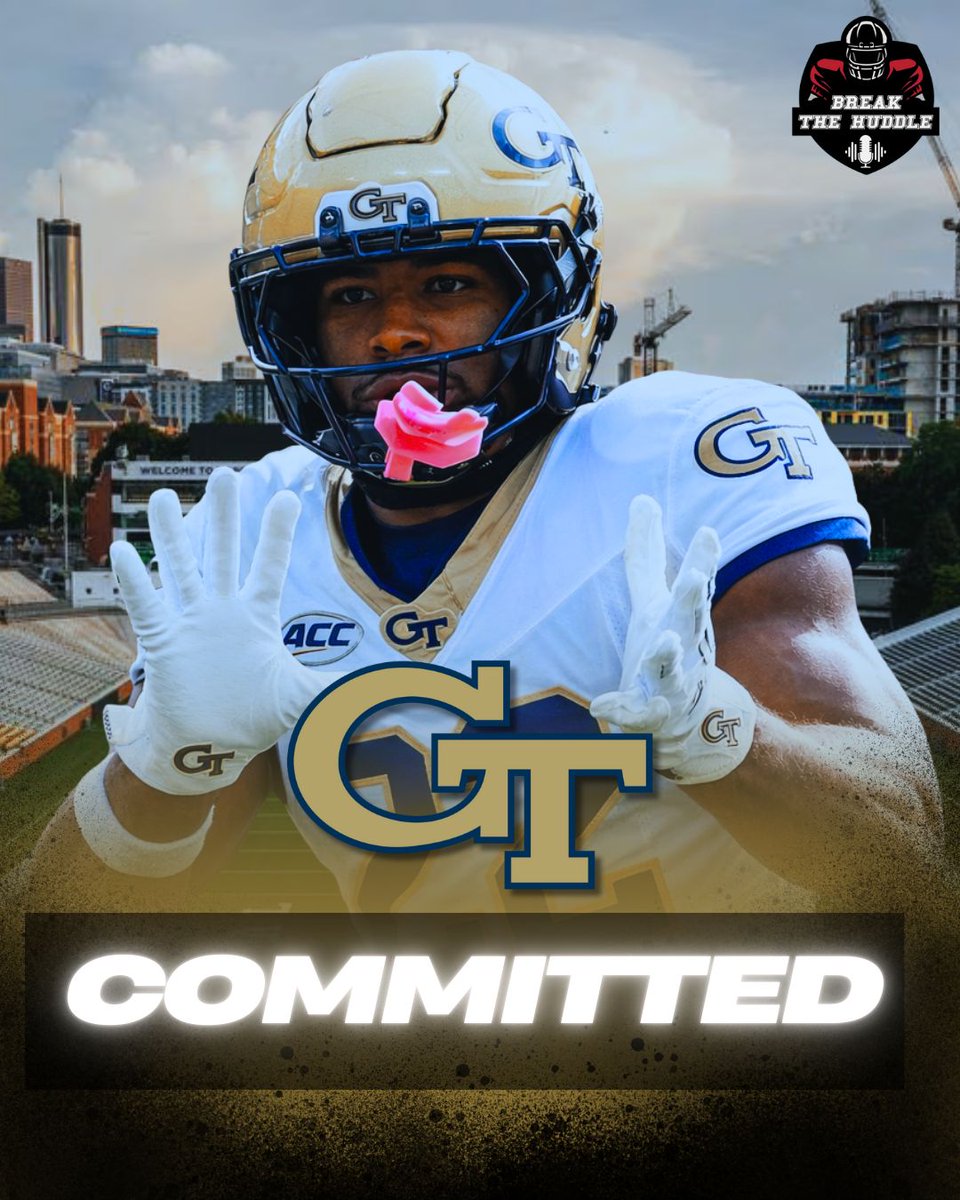
- Justice Haynes — Georgia Tech

The son of Verron Haynes
Projection: Round 2-3
Best Fit: Gap/Zone hybrid
Year-One Role: Rotational starter with three-down potential
Haynes remains one of the more naturally talented backs in the class. The move to Georgia Tech gives him another opportunity to establish himself as a featured offensive weapon.
He has the burst, balance, and receiving potential to operate in multiple personnel groupings. The question is volume and consistency. A full season of feature-back responsibility could push him back into the first-round conversation.
NFL Note: The son of UGA/NFL RB Verron Ulric Haynes, he has elite game speed, clocked at 21.5 MPH during a 75-yard touchdown run. I see him as a Travis Etienne Jr. level prospect.
TIER 2 — EARLY ROTATIONAL STARTERS
- Raleek Brown — Texas
Projection: Round 2–3
Best Fit: Spread/RPO/Wide Zone
Year-One Role: Change-of-pace weapon
Brown is one of the class’s most interesting space players. His acceleration and lateral agility make him particularly dangerous when the offense creates favorable numbers outside the tackles.
The NFL question is whether he can consistently generate yardage between the tackles and contribute enough in pass protection to stay on the field.
If he answers those questions, he has serious Day 2 value.
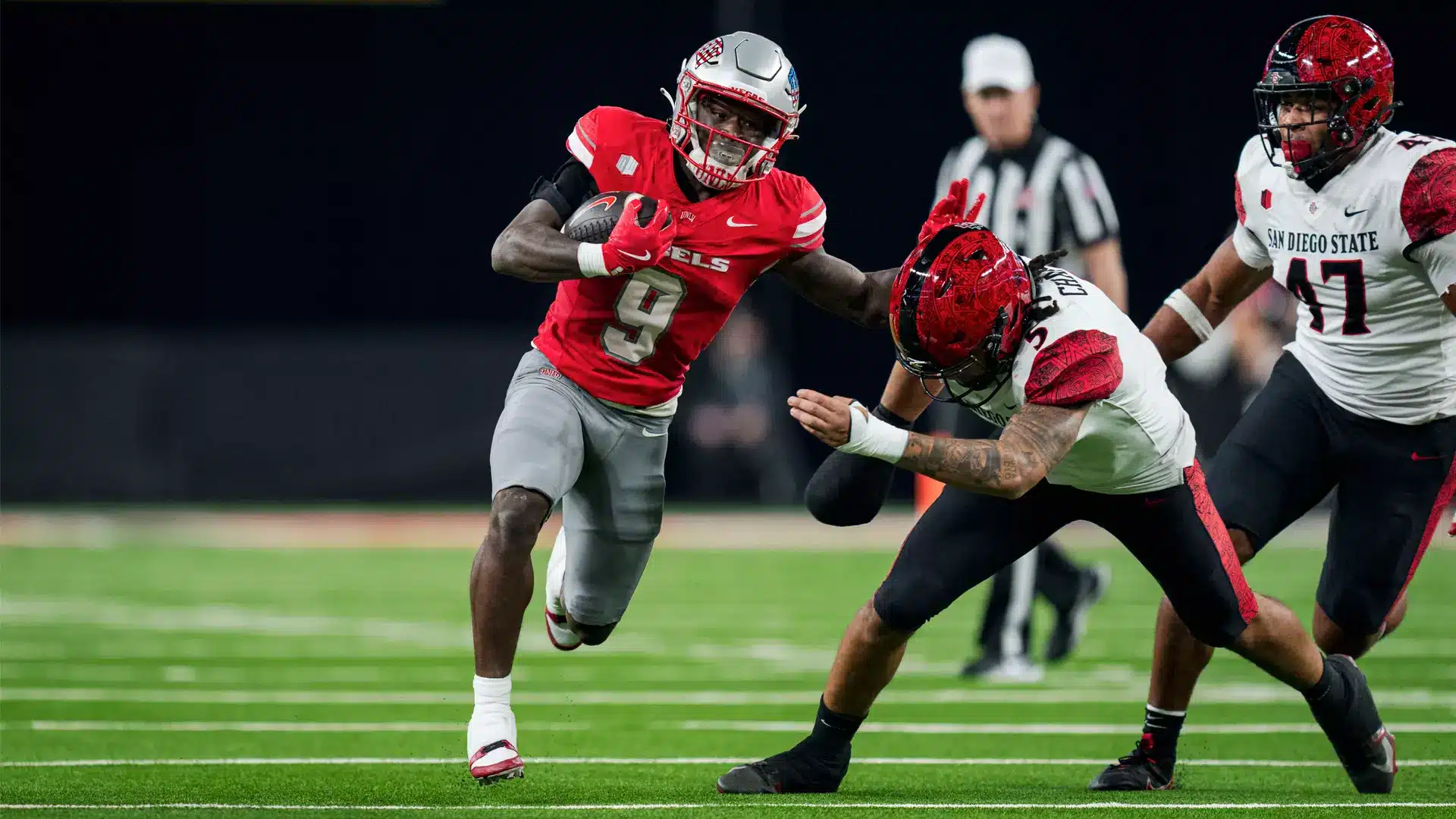
- Jai’Den Thomas — UNLV
Projection: Round 3
Best Fit: Inside Zone/Gap
Year-One Role: Rotational runner
Thomas is an intriguing developmental back because he combines physical running and offensive versatility. His 2026 season will determine whether he belongs in the national RB2 conversation or remains a regional evaluation.
- DeSean Bishop — Tennessee
Projection: Round 3–4
Best Fit: Inside Zone/Gap
Year-One Role: Rotational starter
Bishop brings the kind of downhill temperament that translates naturally to inside runs. He is a back I would expect to face considerable scrutiny in pass protection and on third down.
The NFL question isn’t whether he can run.
It is whether he can stay on the field.
- Daylan “Hollywood” Smothers — Texas
Projection: Round 3–4
Best Fit: Wide Zone/Spread
Year-One Role: Space back
Smothers has exactly the kind of nickname you would expect from a player whose game is built around speed.
He is a perimeter threat who can stress pursuit angles and create explosive plays when the offense gives him space. Pro Draft Scouting currently places him in the Round 3–4 range.
His next step is proving he can produce when the defense doesn’t cooperate.
- Wayne Knight — UCLA
Projection: Round 3–4
Best Fit: Spread/Wide Zone
Year-One Role: Change-of-pace back
Knight is a smaller, faster back whose value comes from acceleration and space creation. He is particularly interesting for offenses that use motion, RPO concepts, and perimeter manipulation.
- L.J. Phillips Jr. — Iowa
Projection: Round 4
Best Fit: Gap/Duo
Year-One Role: Rotational power back
Phillips brings a different flavor to the class: physicality and downhill intent. The Iowa environment should provide plenty of opportunities to evaluate whether his vision and contact balance hold against stacked boxes.
- Marcellous Hawkins — Virginia Tech
Projection: Round 4
Best Fit: Zone/Gap hybrid
Year-One Role: Developmental rotational back
Hawkins is a player who needs the 2026 season to establish himself beyond a traits-based evaluation. His ability to create after contact and contribute in the passing game will be important.
- Jordan Marshall — Michigan
Projection: Round 3–4
Best Fit: Inside Zone/Duo
Year-One Role: Rotational starter
Marshall has the physical profile and developmental environment to become one of the better all-around backs in the class. Phil Steele’s early board has him among its top 20 2027 backs.
His biggest opportunity is establishing himself as a complete player rather than simply another talented runner in Michigan’s crowded history at the position.
- Kente Edwards — Coastal Carolina
Projection: Round 4–5
Best Fit: Gap/Inside Zone
Year-One Role: Developmental back
Edwards represents the kind of prospect who can climb quickly if the production and athletic traits show up against better competition.
- Eli Gillman — Montana
Projection: Round 4–5
Best Fit: Gap/Inside Zone
Year-One Role: Rotational back/special teams
Gillman is exactly the kind of small-school runner who needs to be evaluated beyond raw production. The questions are speed, pass protection, and whether his vision translates when NFL defenders close running lanes faster.
TIER 3 — DEPTH WITH UPSIDE
- Dylan Riley — Boise State
Projection: Round 4–5 | Best Fit: Zone/Spread
Riley is an intriguing space-oriented runner whose 2026 season could determine whether he belongs in the Day 2 discussion. He was a HS 10.74 100M sprinter. Think of Shane Patrick-Henry Vereen.
- Wayshawn Parker — Utah
Projection: Round 4–5 | Best Fit: Wide Zone
Parker offers the movement skills to become an explosive rotational back—the evaluation centers on consistency and workload.
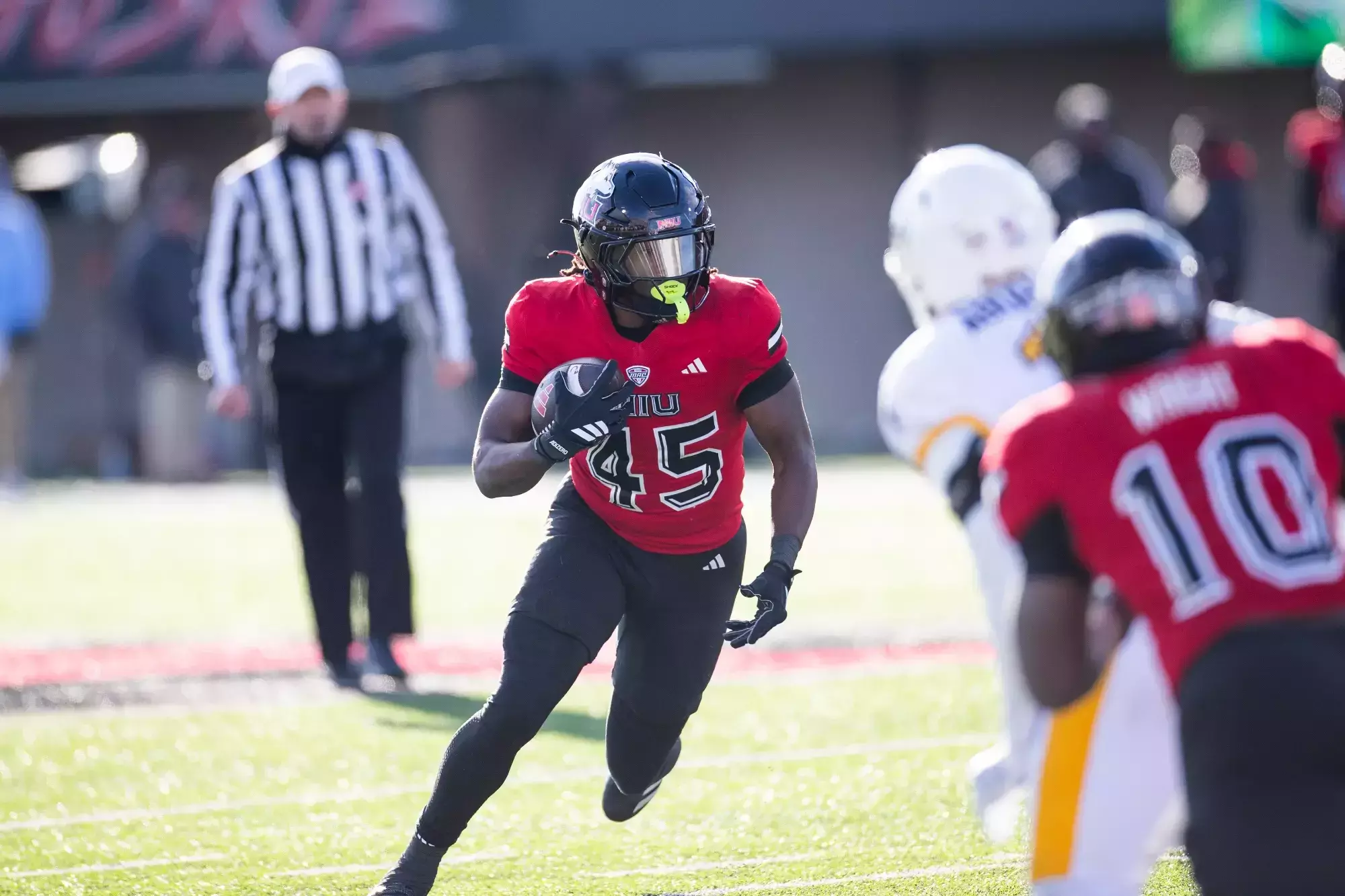
- Telly Johnson Jr. — Northern Illinois
Projection: Round 5 | Best Fit: Inside Zone/Gap
Johnson is a developmental runner whose physicality and production make him worth monitoring against MAC competition.
- Owen Allen — Air Force
Projection: Round 5 | Best Fit: Gap/Option/Zone
Allen’s evaluation begins with context. Air Force backs operate in an offense unlike virtually anything they will see in the NFL. The traits have to be separated from the system.
- Luke Yoder — Lehigh
Projection: Round 5–6 | Best Fit: Gap/Zone
Yoder is the kind of small-school back who can move substantially with strong fall tape. Vision, contact balance, and receiving utility will be critical.
- Dason Brooks — Idaho State
Projection: Round 5–6 | Best Fit: Inside Zone/Gap
Brooks brings legitimate developmental interest and should be a priority watch for scouts looking beyond the FBS.
- Ahmad Miller — Syracuse
Projection: Round 5–6 | Best Fit: Zone/Spread
Miller’s opportunity is to demonstrate that his athletic ability translates into consistent production and third-down utility.
- Jordan Fisher — UC Davis
Projection: Round 6 | Best Fit: Zone/Gap
Fisher is another FCS evaluation who belongs on the board because the class should have legitimate small-school depth.
- CJ Miller — Toledo
Projection: Round 6 | Best Fit: Gap/Zone hybrid
Miller brings a developmental profile with the potential to become a rotational contributor if the 2026 tape confirms his ability to create yardage without perfect blocking.
- Athean Renfro Jr.
Projection: Round 6–7 | Best Fit: Scheme dependent
Renfro rounds out the initial board as a developmental evaluation. At this stage, the goal isn’t to pretend the grade is finished. It is to make sure the player is on the fall watch list before everybody else starts talking about him.
THE SCHEME BOARD
This is where this class gets fun.
Wide Zone / Boot
Kewan Lacy
Raleek Brown
Hollywood Smothers
Wayne Knight
These are the backs who can stretch the defense horizontally before attacking vertically.
Inside Zone / Duo
Jadan Baugh
Nate Frazier
Jordan Marshall
DeSean Bishop
These backs offer the combination of patience, downhill acceleration, and contact balance required to make interior runs efficient.
Gap / Power
Jadan Baugh
Nate Frazier
L.J. Phillips Jr.
Kente Edwards
If your offensive line is built to create vertical movement, these are the backs you want investigating the damage.
Spread / RPO / Space
Raleek Brown
Hollywood Smothers
Wayne Knight
Dylan Riley
Give these backs room and make the defensive tackle in space. That is the assignment.
THE HIDDEN-VALUE POCKET
The most interesting part of this class may not be RB1.
It may be RB8 through RB20.
That is where you start finding backs who could be available on Day 2 or Day 3 but possess one NFL-quality trait that a creative offensive coordinator can weaponize.
That’s also why the 2026 season matters so much.
A back can climb this board without becoming a better runner.
Improve your pass protection.
Become reliable on angle routes.
Demonstrate legitimate short-yardage ability.
Prove you can run inside.
Show that the explosive plays aren’t entirely scheme-generated.
Those things change the evaluation.
PASS-PRO & RECEIVING: THE SUB-PACKAGE PASSPORT
The 2027 class has several backs with receiving upside, but the NFL will demand more than just screen passes and checkdowns.
The important questions are can he:
Run an angle route?
Identify the protection?
Block an NFL linebacker?
Motion out and create a coverage declaration?
Become a legitimate receiving option rather than merely a safety valve?
This is where backs such as Lacy, Brown, Haynes, Marshall, and Smothers have opportunities to separate themselves.
WHAT MAKES THIS CLASS DIFFERENT
The early consensus is that this is a deeper class than 2026, and the numbers support the general idea: PFN’s initial board identified 20 backs in the draftable range, including seven in its initial Top 100 and four in the Top 50. But depth can be deceptive. A deep class does not necessarily mean 15 NFL starters. But there are more paths to finding one.
The 2027 running back class offers:
- Potential first-round feature backs
- Multiple Day 2 runners
- Several scheme-specific prospects
- A legitimate FCS/small-school evaluation group
- Several backs with receiving upside
- A wide range of body types and running styles
And that makes this a much more interesting scouting exercise than simply identifying the five fastest players.
TAKEAWAYS
- RB1 remains unsettled.
Lacy, Baugh and Hardy have the strongest early arguments, while Frazier and Haynes have the talent to disrupt that conversation. The current public boards disagree on the exact order, which is appropriate at this early stage. - The Day 2 class may be the real story.
This group has enough depth for teams to find specialized starters without paying first-round prices. - Scheme matters.
The difference between a Round 2 player and a Round 4 player may have less to do with raw talent than whether the offensive coordinator actually knows what to do with the player. - Receiving and pass protection remain the swing traits.
Running backs who cannot stay on the field in obvious passing situations are increasingly difficult to value as feature players. - Don’t just scout the stat line. Scout the market share and production against good defenses.
A 1,200-yard season tells you something. It doesn’t tell you whether those yards came against light boxes, whether the player created them independently, whether he protected the quarterback, or whether he can replicate them when the defense knows exactly what is coming.
DRAFT-DAY CHEAT SHEET
Feature Back: Lacy, Baugh, Hardy, Frazier
Power/Gap: Baugh, Frazier, Phillips
Wide Zone: Lacy, Raleek Brown, Smothers
Space/RPO: Raleek Brown, Knight, Smothers
Small-School Watch: Gillman, Yoder, Brooks, Fisher
Potential Risers: Marshall, Riley, Parker, Hawkins
Pass-Game Watch: Lacy, Haynes, Raleek Brown, Marshall
CLOSING ARGUMENT
Running back evaluation remains a study in use cases rather than absolutes. The best back in this class may not be the one with the most ‘wow’ runs. He may be the runner who gets you four yards when the defense knows you need four. They may be the back who recognizes the A-gap pressure and keeps your quarterback upright. He may be the smaller runner who forces a linebacker to widen because he knows the angle route is coming. That’s why I like this group.
There are feature backs, specialists, developmental backs, small-school bets, space players, and hammers.
And somewhere in that pile is probably the next NFL star running back that nobody is talking about yet. The job between now and April is figuring out which one it is. And preferably before the rest of the scouting community does.