

 NFL
NFL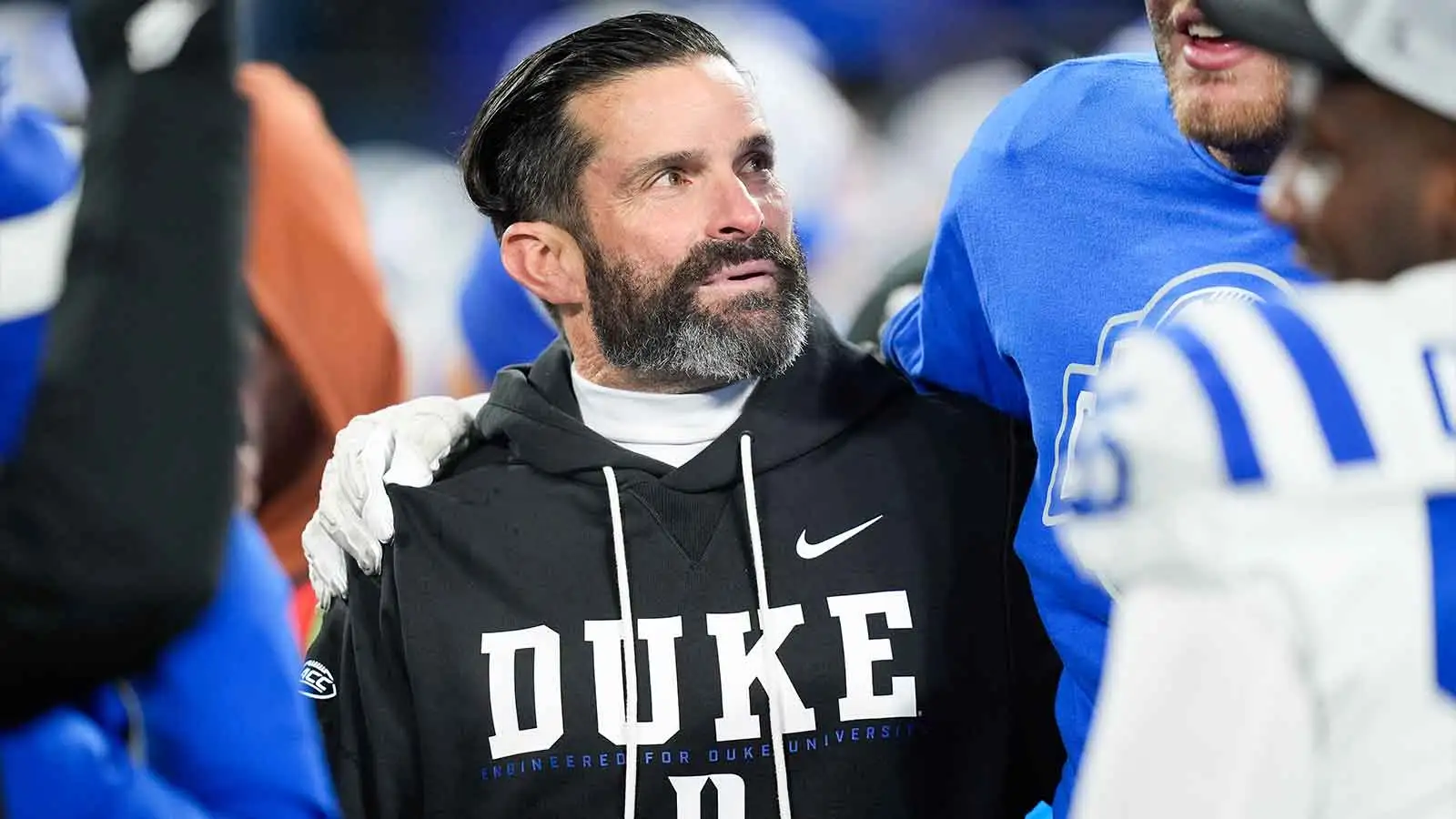
CHARLOTTE, N.C. — College football’s transfer portal has made roster turnover an annual reality, but Duke head coach Manny Diaz believes that how a program responds ultimately defines it.
Speaking at ACC Kickoff, Diaz addressed the unexpected departures of quarterback Darian Mensah and wide receiver Cooper Barkate, emphasizing that the focus inside the program quickly shifted from frustration to moving forward.
“It was unexpected,” Diaz admitted. “And the timing for sure, too.”
Rather than allowing speculation to spread throughout the locker room, Diaz said the team immediately held a meeting—not to vent emotions, but to establish a unified message.
“When something happens, you have to control the storytelling,” Diaz said. “If you don’t have a meeting and you have a locker room of 100 kids, there’ll be 100 different stories on how to react to that.”
For Diaz, creating one shared narrative was essential.
“It wasn’t about everybody airing out feelings,” he explained. “They didn’t have to like the story. They didn’t have to stay if they didn’t want to…they had to know what the story was. When we all left that room, we were all seeing the world the same way.”
That philosophy has become a cornerstone of how Diaz leads the program.
“If you don’t reset the storytelling, someone’s going to reset the storytelling and the narrative for you,” Diaz said.
His message to the team centered on why Duke has built a winning culture—and why no single player is bigger than the program.
“That’s how we win at Duke,” Diaz said. “No one is ever forced to stay at Duke. This program is bigger than any one person. We appreciate everyone who’s come to our program and, for whatever reason, left. We appreciate what they did when they were here. But we move on.”
The most telling moment came when Diaz described the mentality he expects his team to embrace.
“In our program, we will not be a victim,” he said. “Things don’t happen to us. They happen for us. We get to choose what happens to us next.”
Rather than dwelling on the losses, Duke immediately attacked the problem, adding quarterback Walker White through the transfer portal and turning its attention toward the future.
“We had a problem to solve. We’d go solve the problem,” Diaz said. “We thought bringing in Walker solved the problem.”
According to Diaz, that mindset has carried into offseason workouts.
“Our guys have shifted their mindset,” he said. “The way they’ve gone through our offseason, they look like they’re problem solvers.”
Can Duke Repeat Last Year’s Success?
Coming off an ACC championship season, Diaz also cautioned against reading too much into preseason projections.
While he likes the culture his team has built, he believes today’s college football landscape makes predicting success more difficult than ever.
“I know our guys culturally are doing the right things. I know we’re up for the fight,” Diaz said. “But I’ll be honest—we didn’t know this time last year.”
With transfers continuing to arrive after spring practice and players recovering from offseason surgeries, Diaz said training camp is where teams truly begin to reveal their identity.
“Training camp is really where your team truly comes together now,” he said.
That uncertainty is why Diaz dismisses preseason rankings altogether.
“Ranking teams in the preseason… it’s all guesses,” he said. “Nobody has any idea. Nobody would’ve thought we’d have won a year ago or that some of our best players would become who they became.”
Instead of worrying about outside expectations, Diaz believes the next wave of impact players will emerge just as they did last season.
For Duke, the formula remains simple: control the narrative, solve the next problem, and never allow adversity to define the program.
If the Blue Devils are going to defend their ACC title in 2026, Diaz believes that mentality—not preseason predictions—will determine how far they go.