

 NFL
NFL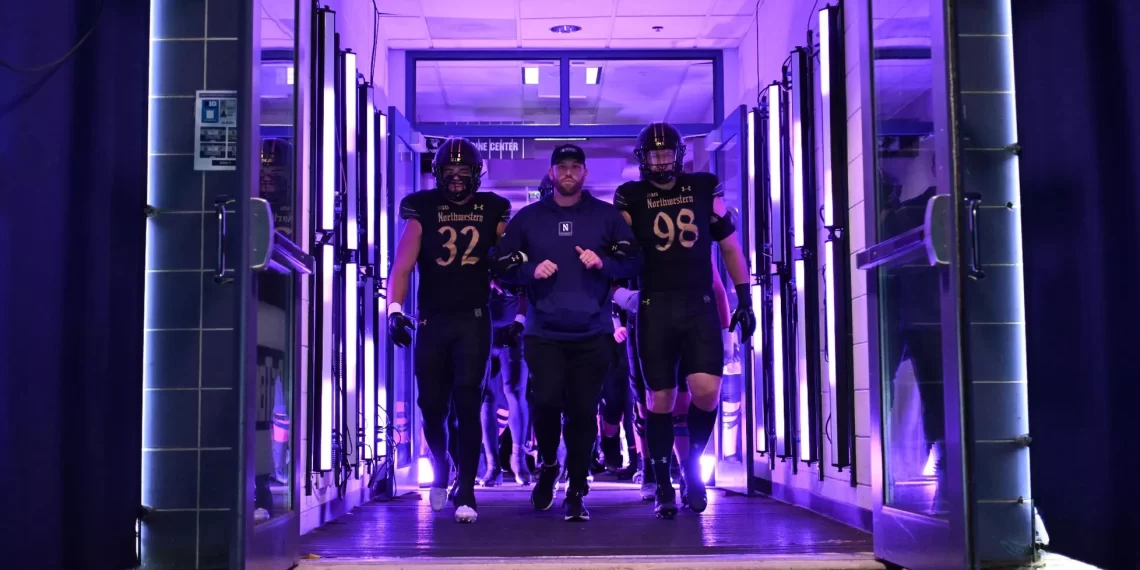
By Bill Carroll
Saturday, 3:30 p.m. Northwestern Medicine Field, Evanston, IL, Purdue football will march north once more into uncertain terrain, setting its lines against Northwestern in one of the most distinctive fields in the nation a temporary quarters perched just yards from the pallid waters of Lake Michigan, where wind howls like the Gamma-Gerät.
This Saturday at 3:30 p.m., the Boilermakers (2–4, 0–3 Big Ten) meet the Wildcats (4–2, 2–1) at Northwestern Medicine Field, a makeshift fortress erected while Ryan Field is being reconstructed. It is an odd venue for battle, stripped of grandeur but not of purpose, and both sides arrive bearing scars from earlier campaigns.
Northwestern has been victorious in the last two frays and pursues its 30th all-time victory in the series. Purdue, meanwhile, must rally its forces after a string of demoralizing defeats marked by mental errors, missed opportunities, and faltering execution. What awaits in Evanston is not merely a game, it is a test of resilience, the kind that reveals who still has fight left when the ground turns to mud.
Opening Barrage: The Somme of the Season
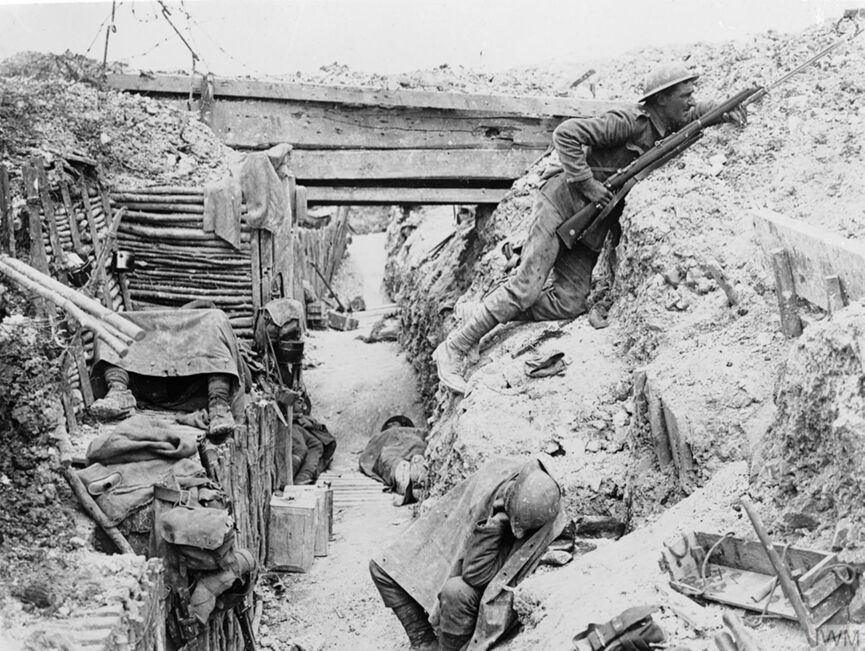
Like the British and French forces preparing their 1916 offensive on the River Somme, Purdue and Northwestern are seeking momentum and hoping to dodge attrition. Purdue’s campaign has been marred by inconsistency. Promising advances often collapse under their own weight a dropped pass here, a blown coverage there. Attacks that gain a few yards only to be pushed back by counter-fire. Head Coach Barry Odom‘s troops have shown flashes of discipline, but sustaining pressure has proved elusive.
The Wildcats, under David Braun, are no longer the disorganized unit of last season. Instead, they’ve regrouped into a steady defensive force with an opportunistic offense, playing like trench warfare, grinding, deliberate, but rarely breaking formation. This, then, is the Somme of their seasons: both teams entrenched, both aware that progress will be costly.
Purdue: A Front-line Under Fire
For Purdue, the problem is less courage than coordination. The Boilermaker offensive line has too often resembled the pockmarked terrain of northern France, uneven, battered, and prone to collapse under pressure. Quarterback Ryan Browne is a young company commander, but his composure cannot mask protection breakdowns that have left him exposed. His command decisions come under duress, his escape routes narrow, and his accuracy suffers facing a fast closing enemy.
The Bolermakers’ running game, led by Devin Mockobee, has at times looked like a successful breaching maneuver, brief bursts of success, only to stall when his line falters. If Purdue hopes to hold ground in Evanston, it must sustain drives as an army sustains its advance: by logistics, patience, and control of the trenches.
The Battle of the Somme was one of the most bitterly contested and costly battles of the First World War, lasting nearly five months. But, it is often the first day of the battle that is most remembered. The offensive began on 1 July 1916 after a week-long artillery bombardment of the German lines.
Advancing British troops found that the German defenses had not been destroyed as expected so many units suffered extreme casualties with little progress.
Northwestern: Defending the Ridge
Northwestern’s defensive ranks, while not elite, are disciplined. Ranked 72nd nationally in yards per play allowed (5.6) but 27th in points per play (19.5), they may bend under bombardment yet refuse to break. Still, third down has been their weak flank, opponents convert 46% of their attempts. If Purdue can exploit that vulnerability, it may finally gain the upper hand.
But this defense is like a well-dug trench unit, tough in the red zone, quick to adapt, and capable of holding position when others would crumble. The Lakefront winds and the compressed confines of their temporary field only enhance their defensive advantage.
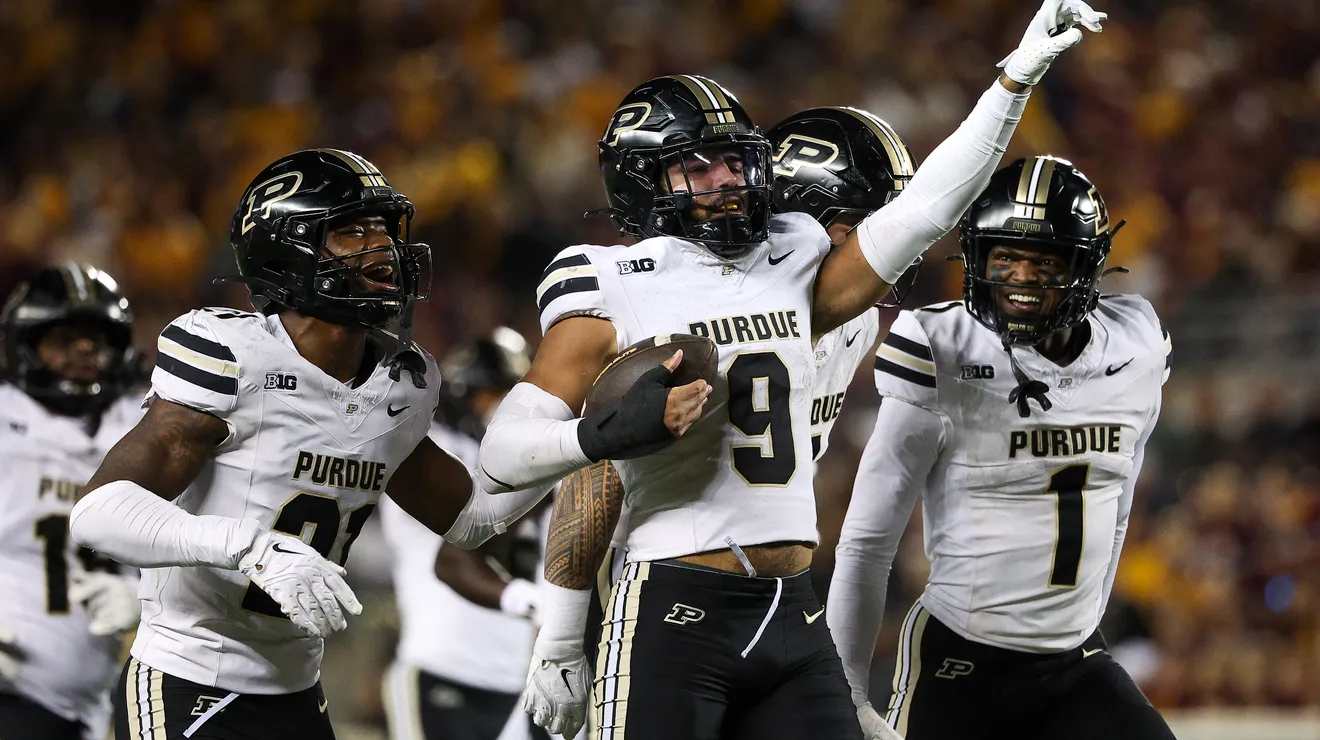
Purdue’s Defense
The Wildcats’ Offensive Counteroffensive
Quarterback Preston Stone and running back Caleb Komolafe, who recently set career highs in carries (27) and rushing yards (119) against UCLA (9/27), the Wildcats’ first 100-yard rusher since Evan Hull at Purdue, form the heart of Northwestern’s attack. Their approach is not explosive but methodical, like a creeping barrage designed to inch forward yard by yard. The loss of Cam Porter to injury means that Komola’s role of making steady runs and catching short passes keeps the chains moving and the clock counting.
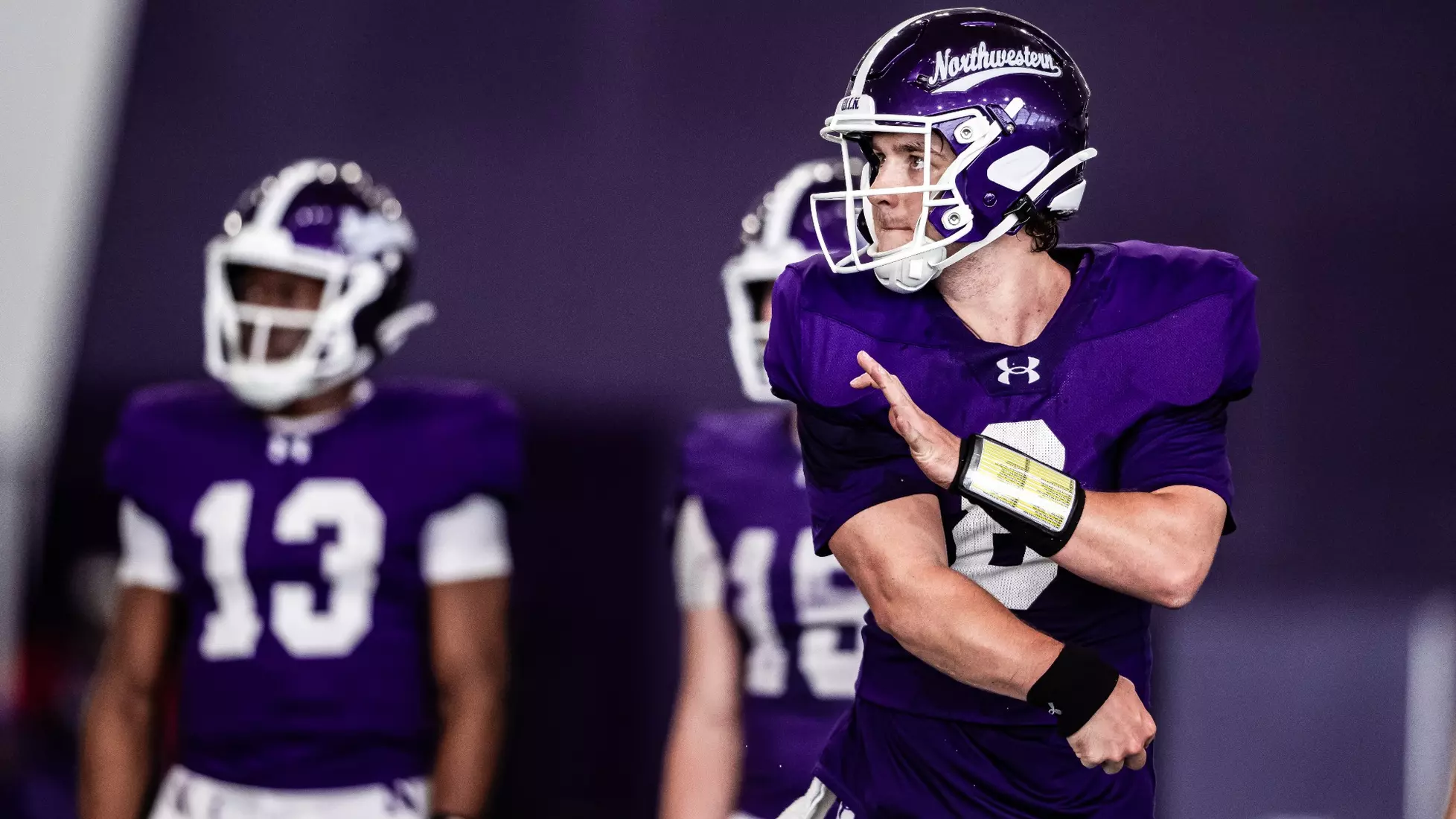
If Purdue’s defensive front cannot control first down, it will be forced into reactive positions, the football equivalent of fighting uphill, through barbed wire.
Tactical Objectives: Breaking the Stalemate
Both teams arrive knowing victory depends on who adapts faster. Purdue’s objective is to stretch Northwestern’s defense horizontally, using motion and misdirection to isolate match-ups on the edges. Browne must read quickly, release faster, and rely on short gains rather than deep bombs.
Northwestern, looks to suffocate Purdue’s tempo bleed the clock, shorten possessions, and keep Browne off the field. Expect the Wildcats to grind like infantry advancing under cover of smoke, testing Purdue’s tackling and discipline.
Stone’s interceptions have all been in Northwestern’s two defeats. It’s a pattern as stark as a trench map: when he keeps the ball out of enemy hands, the Wildcats advance. Northwestern’s fortunes rise and fall with the steadiness of their signalman under fire.
The Weather and the Terrain
The wind off Lake Michigan is no a factor; its unpredictable gusts turn passes into wounded ducks and punts into grenades. The field, hemmed in and intimate, amplifies crowd noise, compressing space, in a claustrophobic environment, befitting a trench. Those who win here will be those who endure discomfort and keep their bearings amidst the chaos.
The Generals’ Dilemma
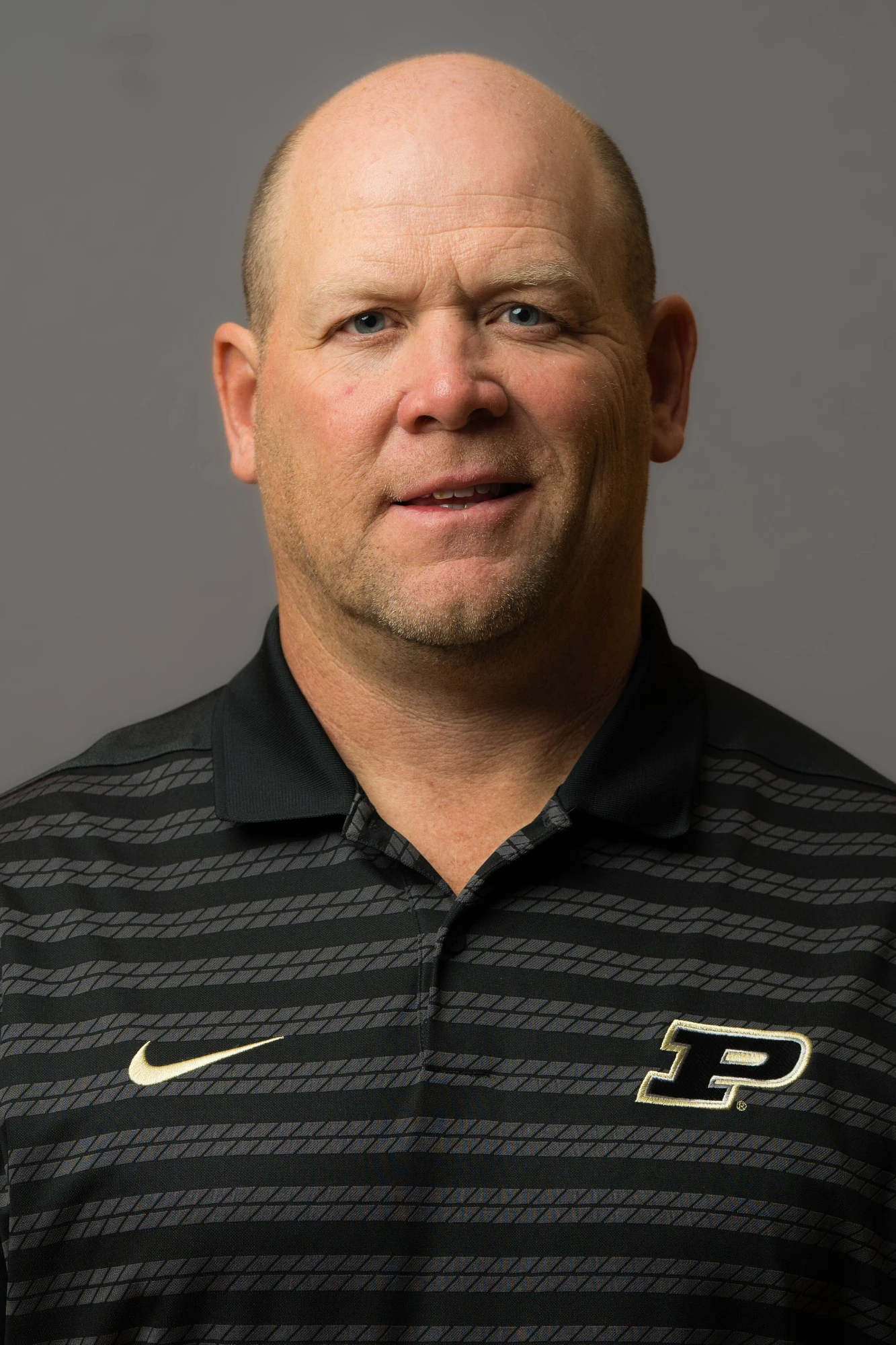
Barry Odoms’ first campaign as Purdue’s commander has been a lesson in patience and pragmatism. His troops are young, talented, inconsistent, but willing charges, in need of cohesion. The question is whether he can rally them for a late-season push or whether the season devolves into a retreat.
David Braun, on the other hand, has managed a quiet renaissance in Evanston. Once written off as a caretaker, he’s forged a disciplined, opportunistic outfit that guts out wins but wins nonetheless. In a season of attrition, the Wildcats are survivalists, the kind of team that thrives in no-man’s-land.
Historical Parallel: The Lesson of the Somme
The Battle of the Somme was conceived as a swift breakthrough offensive, breaking German lines. Instead, it was a grinding slog, months of bombardment for mere yards. Yet, in the ordeal, the British and French armies hardened. The lessons learned about coordination, communication, and adaptation forged them.
So too with Purdue. The Boilermakers’ early-season failures may serve as an epitaph or as education. Every misread, every blown assignment, every interception are costly lessons written in metaphorical mud. The question is whether they will learn fast enough to avoid another stalemate. Northwestern, meanwhile, embodies endurance, a reminder that sometimes survival equals victory.
Keys to the Battle
Purdue Offensive Line vs. Northwestern Pass Rush:
- The outcome may hinge here. If Browne has time, Purdue can compete; if not, the offense will fracture under bombardment.
- 3rd Down Efficiency: Northwestern struggles here; Purdue must capitalize.
- Turnovers: Whoever makes fewer mistakes will likely control the field position war.
- Weather and Wind: Expect this to be a low-scoring, possession-driven contest.
Prediction: Attrition by the Lake
This game will not be pretty, nor should it be. It will be a skirmish fought between two programs seeking footing amid shifting ground. Northwestern, buoyed by home advantage and steadier execution, holds the stronger defensive ridge. Purdue has firepower but not lacks the coordination to sustain the assault.
Final Verdict:
Northwestern 23, Purdue 20
The Boilermakers will fight valiantly but fall just short, undone by the same small lapses that have haunted them all season. Purdue’s campaign has been increasingly sabotaged internally. Via a series of self-inflicted wounds that would make any regiment falter. The Boilermakers have turned the ball over at least twice in each of their last four engagements, their turnover margin now stands at a grim –10, worst in the Big Ten.
In a league where possession is territory, Purdue keeps surrendering ground before the enemy even fires a shot.Like the British at the Somme, they will leave Evanston battered yet wiser, a team learning the hard way that victory is rarely won in one grand charge, but through a thousand disciplined steps forward.