

 NFL
NFL
By Keith Richards
On Saturday night, the Colorado Rapids tied LAFC 2-2. While it was a good result for Colorado, it was not the result they needed. Other results in the Western Conference did not go in their favor, and the Colorado Rapids were eliminated from the 2025 MLS Cup Playoffs. A season that started with so much hope crashes out again with unfulfilled hope. So, what went wrong with the 2025 Colorado Rapids?
While it’s tough to say that the Colorado Rapids were close to being a championship contender, it’s also tough to say they were only the 21st-best team in MLS this season. To understand what went wrong with the 2025 Colorado Rapids, you have to look at the roster, the coaching, the front office, and the ownership. So, let’s dive into it and find out what went wrong with the 2025 Colorado Rapids!
The Roster
We’ll start on the ground floor and work our way to the top. When the season started, I didn’t feel as if the Rapids had a championship roster. However, I did think that Colorado had a roster that should finish in the top six in the Western Conference. So…what went wrong with the roster? First, let’s look at the roster at the beginning of the season (not including players on loan):
- Defenders – Chidozie Awaziem, Reggie Cannon, Michael Edwards, Andreas Maxsø, Ian Murphy, Keegan Rosenberry, Sam Vines, Jackson Travis
- Goalkeepers – Zack Steffen, Adam Beaudry, Nico Hansen
- Midfielders – Josh Atencio, Cole Bassett, Ted Ku-DiPietro, Oliver Larraz, Djordje Mihailovic, Connor Ronan, Wayne Frederick, Alex Harris, Ali Fadal, Daouda Amadou, Sam Bassett, Omir Fernandez
- Forwards – Kevin Cabral, Rafael Navarro, Darren Yapi, Calvin Harris, Kimani Stewart-Baynes
Eight months later, the Colorado Rapids roster is drastically different. Again, not counting players out on loan, this is what the Rapids roster looks like today:
- Defenders – Keegan Rosenberry, Sam Vines, Reggie Cannon, Andreas Maxsø, Rob Holding, Ian Murphy, Noah Cobb (on the team as a loan from Atlanta United), Rafael Santos
- Goalkeepers – Zack Steffen, Adam Beaudry, Nico Hansen
- Midfielders – Josh Atencio, Cole Bassett, Ted Ku-DiPietro, Oliver Larraz, Connor Ronan, Wayne Frederick, Alex Harris, Daouda Amadou, Sam Bassett, Alexis Manyoma, Paxten Aaronson
- Forwards – Rafael Navarro, Darren Yapi, Calvin Harris, Kimani Stewart-Baynes
By the time the dust settled on the second transfer window, the Colorado Rapids were a drastically different team. When it was all said and done, the Rapids would be without Kevin Cabral, Chidozie Awaziem, Djordje Mihailovic, and Omir Fernandez. One of those departures (Awaziem) was entirely out of the team’s control.
As reported, Chido wanted to be close to family. Padraig Smith and the organization did right by him by transferring Awaziem to FC Nantes. The other departures, however, tell a different story. The transfer of Omir Fernadez was a business decision, I think most would agree with. While he did see a slight resurgence before the move, Fernandez never lived up to his contract. He wasn’t the biggest contract on the team, but one that was easy to move. With the number of wingers the Rapids will have next season, it just made sense—pretty open and shut case with this one.
With Kevin Cabral, it’s not that complicated either. The move to bring Cabral to Colorado was like many moves of the Padraig Smith Era: Questionable but with a chance of promise. Kevin Cabral’s tenure in Colorado could be used as an example of what went wrong over the past four years. Money being spent in all the wrong places could be the title of the documentary of the Padraig Smith era in Colorado.
What went wrong with Kevin Cabral is that he never lived up to his contract. You want to know what’s crazy about that? It could have been worse. Cabral was the highest-paid player on the Rapids roster, but never the best player. If there was one saving grace, it’s that the LA Galaxy footed half the bill. Even still, the Cabral experiment was a disaster that the team could not recover from, affecting them in many ways.
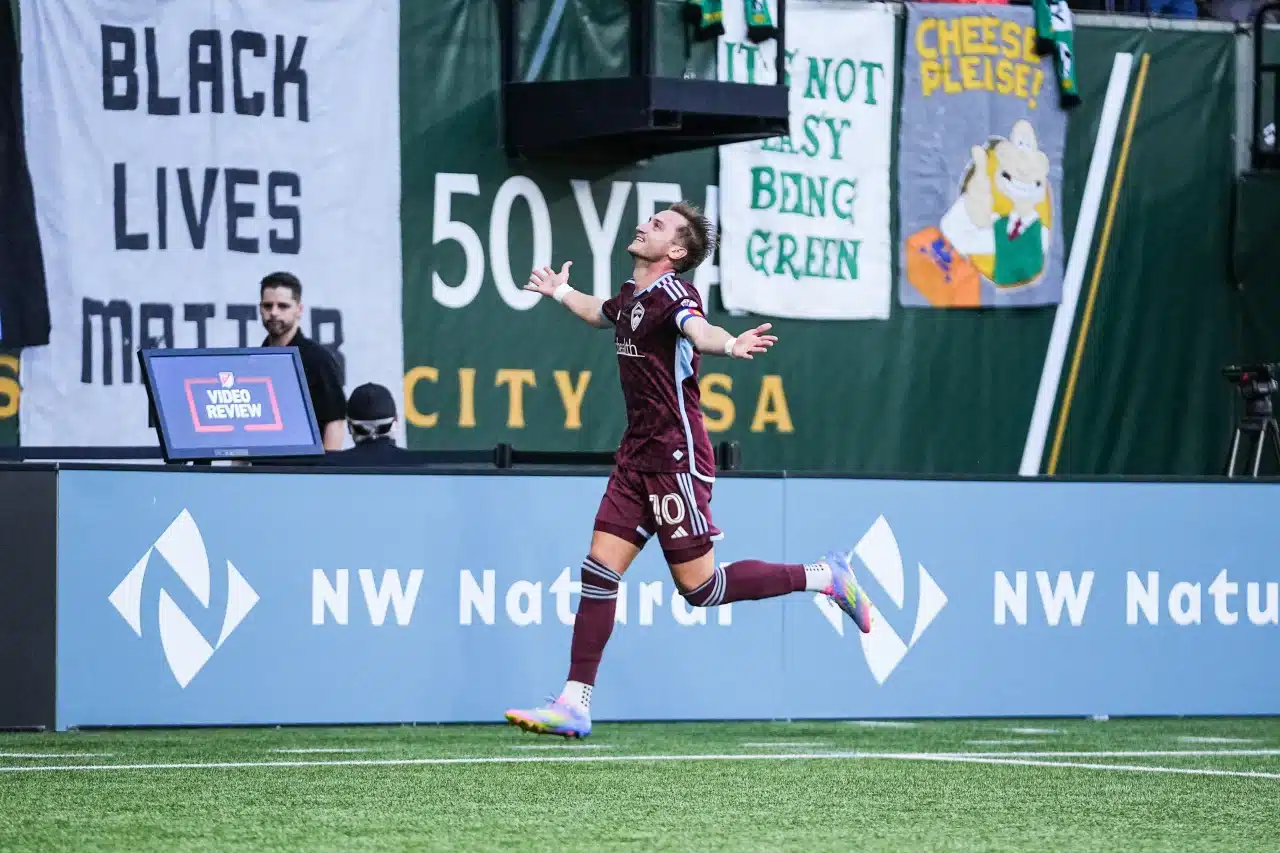
That leaves Djordje Mihalovic. The departure of Djordje Mihailovic shook not only the Rapids community but also the entire MLS community. It happened so fast! Before the Club Tijuana Leagues Cup match, we were just told that Mihalovic missed the match due to personal reasons. The very next day, we got a Bogert bomb that Djordje would be shipped to Toronto FC on a record deal.
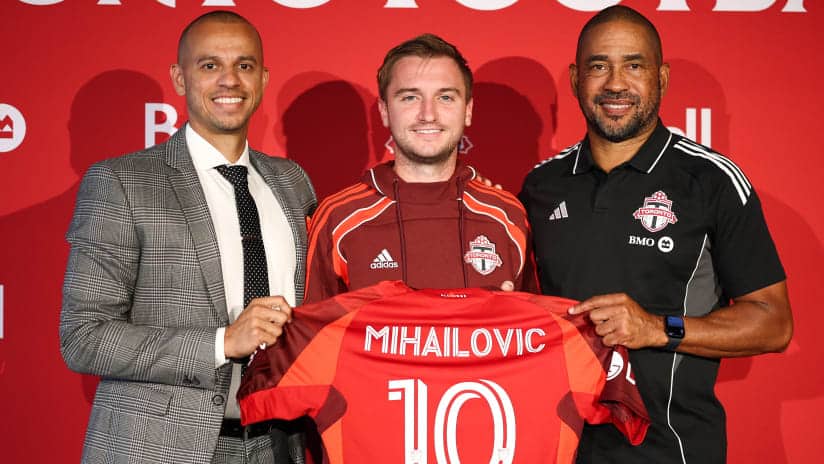
What went wrong there? Why would Mihailovic want to leave? Why would Padraig Smith agree to the deal? We don’t have the exact answers to those questions, but I think we can take an educated guess. It was roster mismanagement and a lack of vision for the club. Djordje Mihailovic stated, “After speaking with Jason [Hernandez] and Robin [Fraser], I can sense the ambition from the organization to get back to the top of the league, and their vision for this project truly excites me. I am happy to be a part of an environment like this.” I don’t think there’s much reading between the lines there.
Mihailovic, without saying it exactly, was not happy with the direction of the team and the management of the roster. While I can argue that players need to perform better on the pitch without so much supervision, most of what went wrong with the 2025 Colorado Rapids roster falls directly at the feet of the coaching and front office. Let’s discuss the coaching now.
The Coaching
A roster, no matter who constructs it, is the coach’s responsibility. When I say it’s the coach’s responsibility, I mean it’s up to the coach who plays, when they play, and how much they play. Conversely, a coach can be dealt a bad hand in relation to the roster he is given, but we’ll come back to that in a later segment. For now, the focus will be on Chris Armas’ management of the Rapids roster.
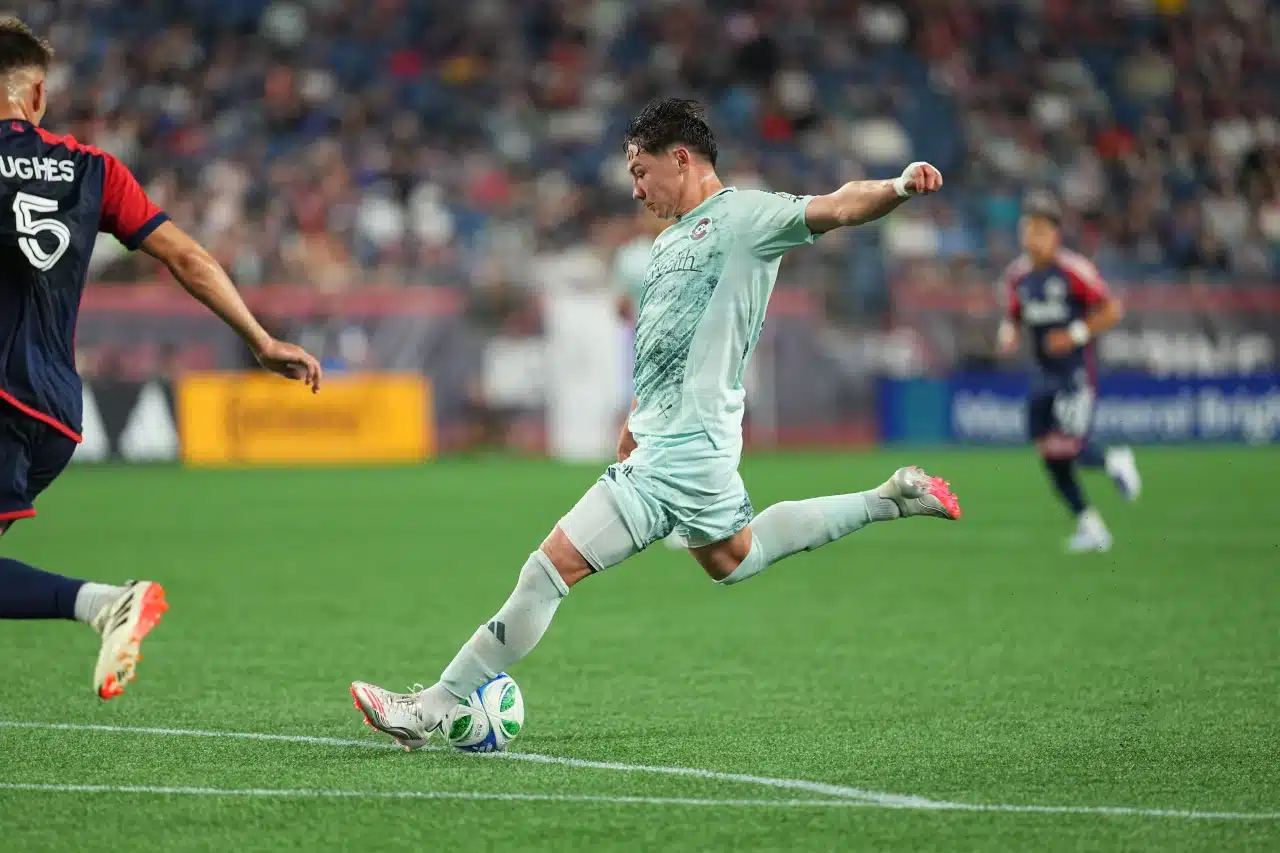
The season seemed to get off track kind of from that point. Over the last ten matches, the Rapids went 3-6-1. With a doubt, there were some tough opponents during that stretch, like San Diego, Portland, and Orlando. However, many of those matches felt like winnable matches, and that’s even accounting for the injury to starting goalkeeper Zack Steffen. The losses to DC United and San Jose were terrible. While Colorado always struggles against Portland, it feels like a match they should have come away with at least a point.
However, the worst in that stretch is likely the draw to New England. Yes, they were on the road. Yes, they were without Mihailovic, but they were up 3-0 before walking away with just a point. Coincidentally, that’s the end of that ten-match stretch of 3-6-1. In hindsight, it doesn’t feel like Armas and the squad ever recovered from there. So, what went wrong with the 2025 Colorado Rapids from that point?
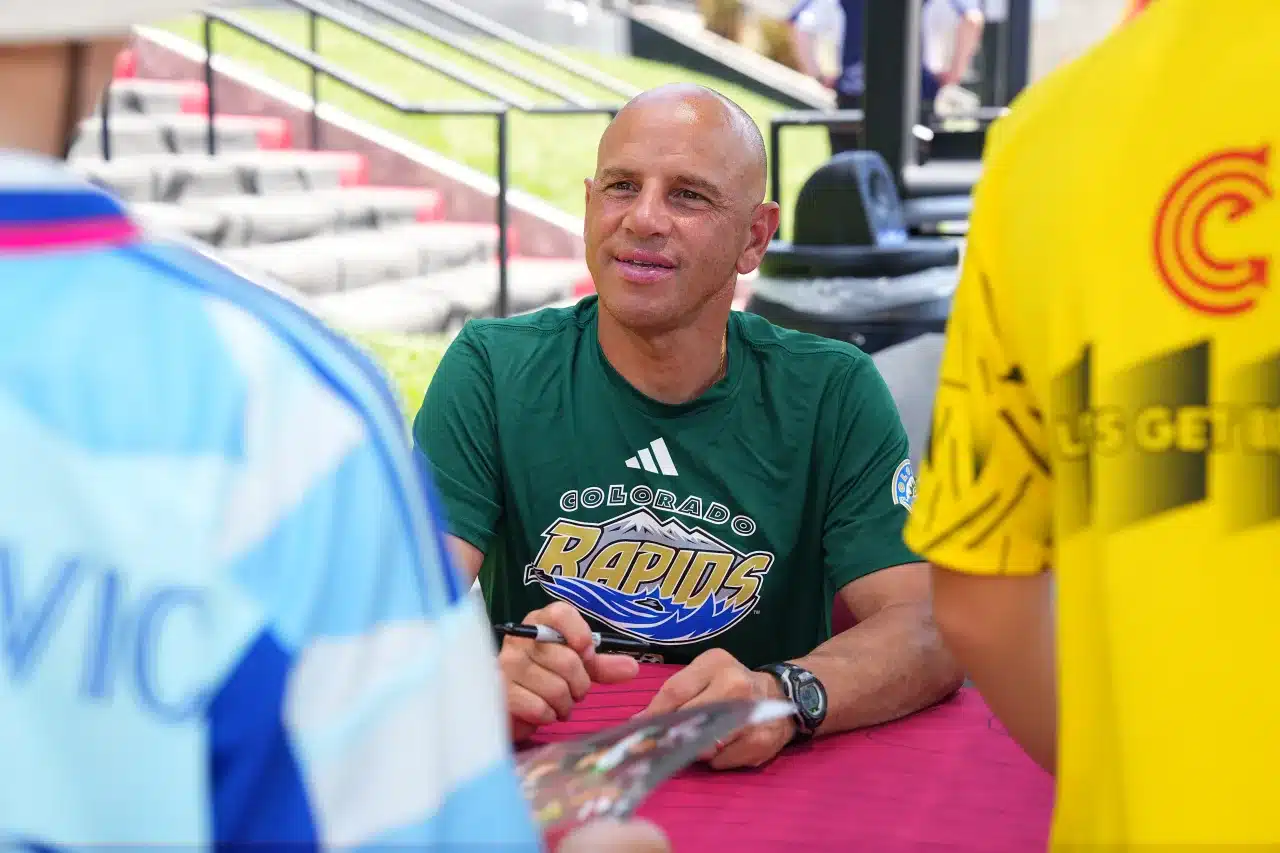
We’ve established that Coach Armas did well in many ways with a roster that was plagued by injury. Still, there were many ways in which some questioned Armas’s roster decisions. Arguably, the most significant question mark was the use of former designated player Kevin Cabral. Of course, Chris would feel an obligation to have one of the roster’s most expensive players on the pitch as much as possible. However, even at his salary, Cabral’s production neither justified his playing time nor his salary.
Towards the end of his time with the Rapids, it seemed that many players were frustrated with Kevin. While Armas could not decide to move Kevin Cabral off the team, it was within his power not to put him on the pitch. One of Chris’s best traits, which can also be one of his worst, is his belief in players. Despite all the evidence, he believed a productive version of Cabral would emerge, but that was never going to happen. Because of that, the team dropped valuable points they needed to make the playoffs.
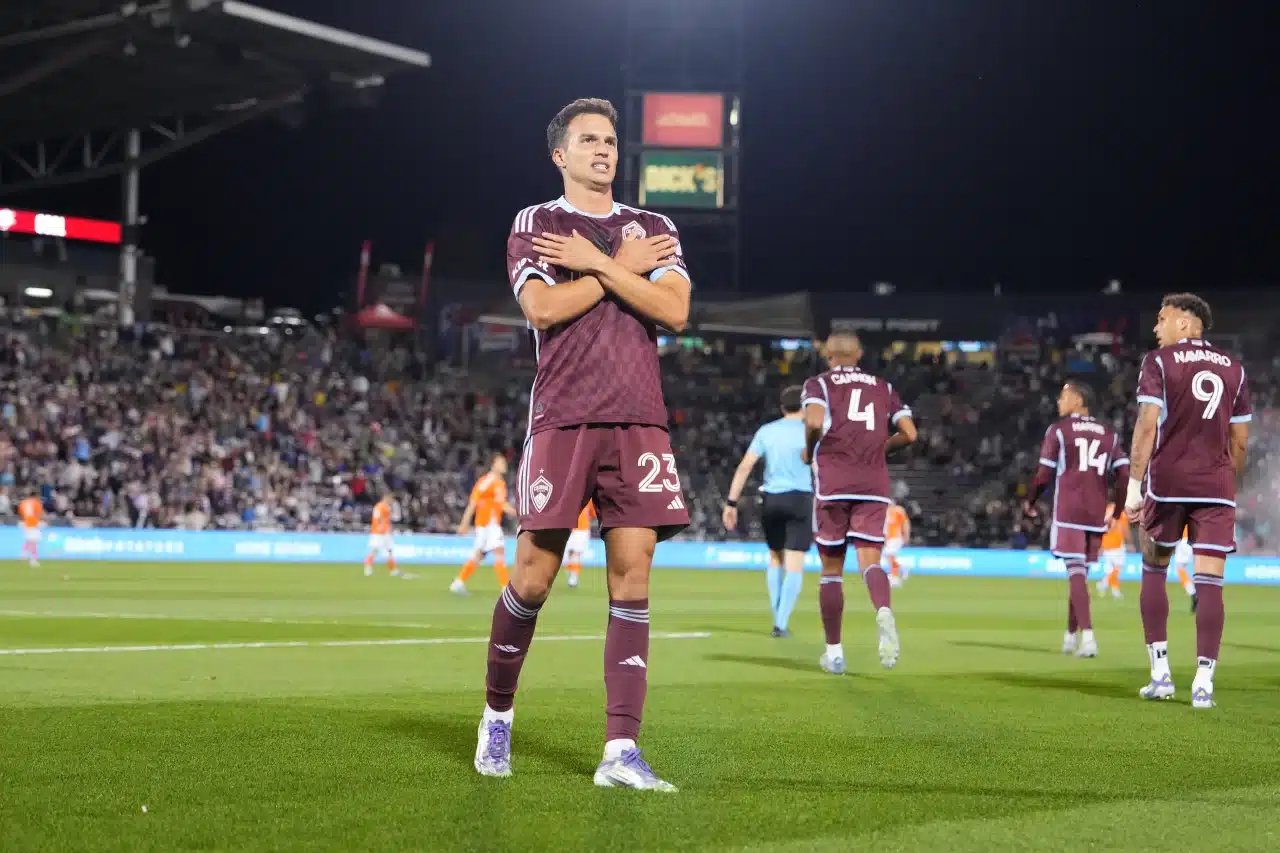
Outside of Kevin Cabral, another point of contention was the shape of the team on the pitch. Again, there are many instances where Chris was able to manipulate the shape to achieve positive results. However, there are many instances where Armas seemed a bit stubborn about the shape, which did not lead to positive results. Throughout the season, we saw the team in a 4-2-3-1, a 4-4-2, a 4-3-3, a 4-2-2-2, a 3-4-3, and possibly more.
In some instances, the fluid shape was beneficial. Pressure was taken from Rafael Navarro when that shape contributed to breakout seasons by Darren Yapi and Calvin Harris. That, however, only goes as far as fit against the opponent. Where the stubbornness comes in, in my opinion, is using specific shapes that didn’t seem to be the right shape against some opponents. Additionally, there appears to be some pushback regarding the position of certain players within those shapes.
One of the most significant points of contention this season was the position of midfielder Cole Bassett on the pitch. Cole’s natural, and preferred, position is the 8. He thrives as a box-to-box midfielder. However, Bassett spent most of the season as a left winger. It was an evident frustration for Cole throughout the season.
One reason behind it is that Chris wants to get players like Larraz and Ronan on the pitch as well. Another possible reason is that maybe Armas trusted Bassett more on the left wing than Ku-DiPietro. However, when you bring in a player like Alexis Manyoma, it seems like a perfect opportunity to move Cole back to his natural position. That didn’t happen.
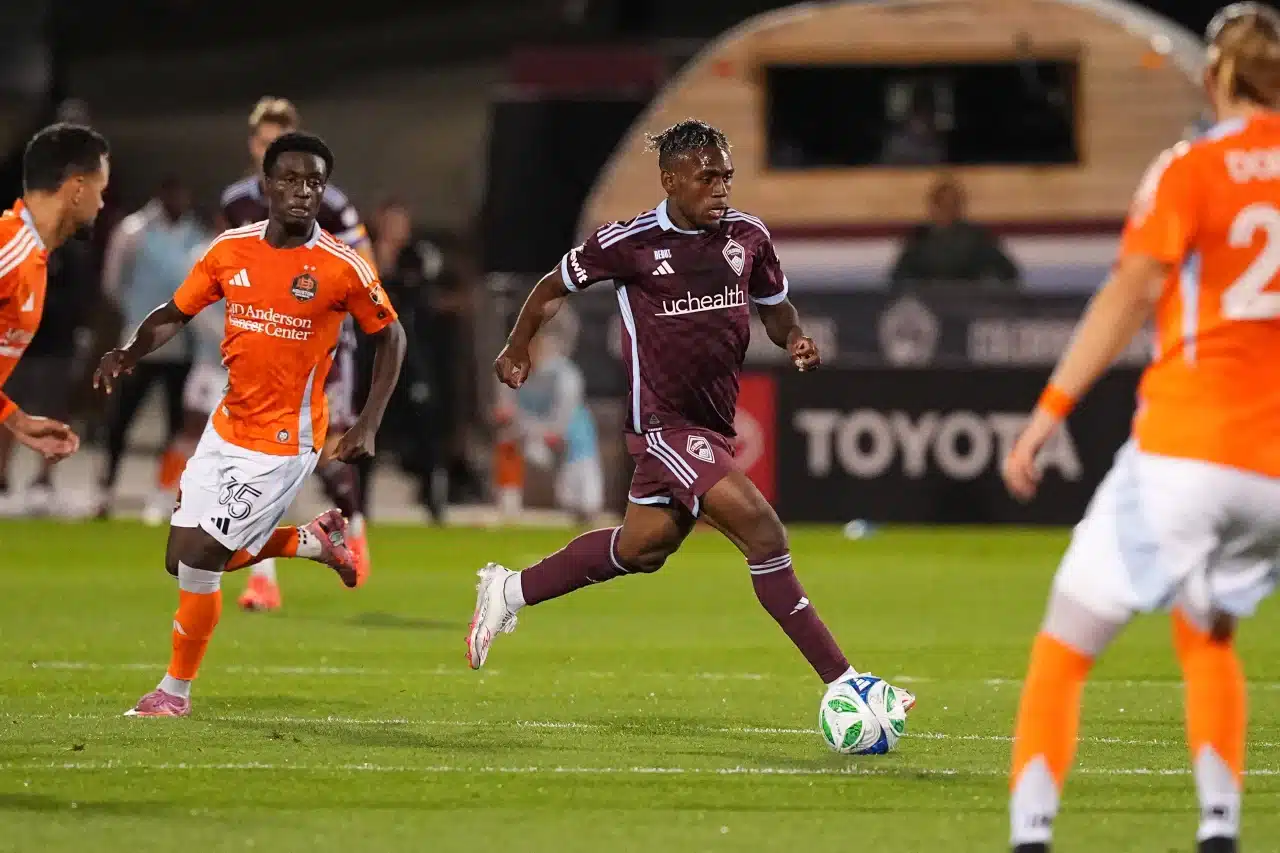
I asked Chris about the decision to have Alexis Manyoma as an unused sub in one match. Chris stated, “One of the challenges, like I said, was that late in the season, when you bring in players in, there are reinforcements, which we like, big positive. But again, just helping understand how play and all the fine details that are important. We also want to set him up for success. The more information we get, we realize what he can give.”
Armas would continue, “Then we were deciding, essentially, between Yapi and Manyoma. We went with the guy that we see, at home, who can score goals and can get fans going.” Ok, a lot to unpack with that. Certainly, Darren Yapi has been a revelation this season. I can more than understand the logic. However, in that match, Ted Ku-DiPietro is the other sub. Alexis Manyoma can play on the left. Why not sub Alexis there?
As has been said often throughout this article, Chris Armas could only work with the roster he was given. At times, he did well in that regard. Other times, he did not. However, the roster available is the responsibility of the front office. So, what went wrong with the front office in the 2025 season?
The Front Office
After the Decision Day draw against LAFC, Cole Bassett said something exciting. Bassett was asked about what he would have liked to see better about the last stretch of the season. Cole stated that consistency and being better were needed. In a follow-up question, Bassett was asked if part of that consistency was finding a system that works.
Cole replied, “Obviously, we’d love consistency, but I think it has to do with so many moving parts. Chris is trying to put his best players on the field at the same time. So, it’s so hard for him to be able to stick to one system when you’re constantly losing players and maybe not bringing in pieces that we need.” In my opinion, Bassett’s statement is a message for the front office. I’m not foolish enough to believe I couldn’t be wrong, but I feel I’m right. It goes back to the transfer for Djordje Mihailovic.
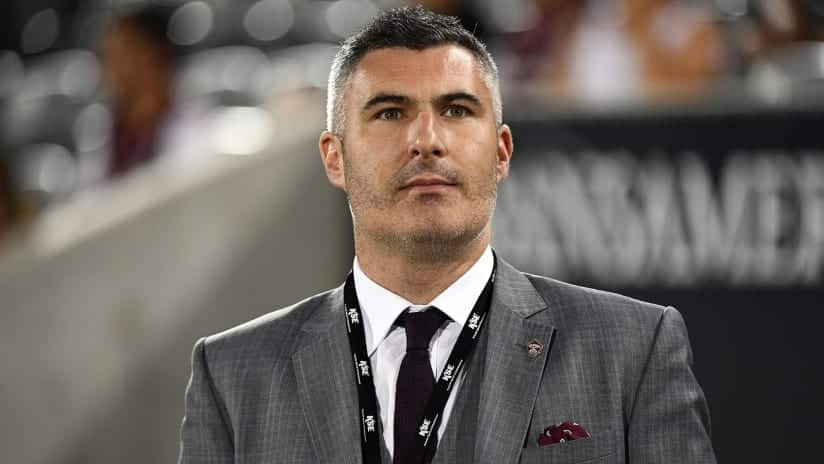
What went wrong for the Rapids Front Office in 2025 is the same issue that has persisted for years. If you recall from above, Mihailovic specifically stated, “After speaking with Jason [Hernandez] and Robin [Fraser], I can sense the ambition from the organization to get back to the top of the league, and their vision for this project truly excites me. I am happy to be a part of an environment like this.”
What Djordje says is a sentiment that has been shared by other former players as well. In fairness, Padraig Smith has his hands tied by the team’s ownership. Smith has to play Moneyball. Padraig and his team have to find pieces to improve the team with limited resources. In that regard, Smith has done well with some players over the past couple of seasons. Rafael Navarro, Chidozie Awaziem (while he was here), and Djordje Mihailovic were successful acquisitions. We cannot say the same for all acquisitions.
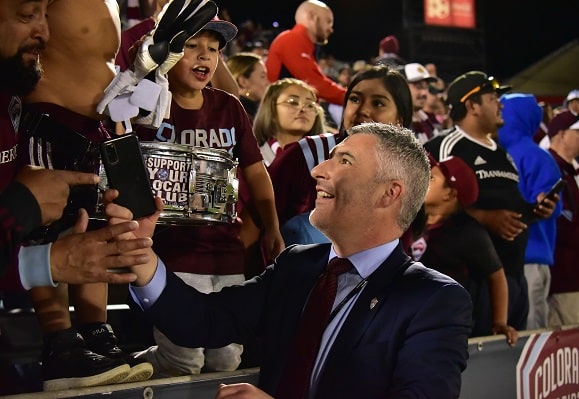
The Kevin Cabral experiment was an objective failure; there’s no disputing that. Other acquisitions that did not work out in the end include Lamine Diack, Omir Fernandez, Sidnei Tavares, and Marko Ilic. Additionally, there are some players we could argue for depending on what happens this offseason. Many will not realistically blame Smith for having to play Moneyball, given the ownership he must contend with. However, in that system of player acquisition, you need a higher success rate than Padraig has.
Now, Padraig Smith does deserve credit for how quickly the Rapids were able to turn the Djordje Mihailovic transfer proceeds into the acquisition of Paxten Aaronson. It was a move that Rapids fans did not believe possible, given the team’s history of not using funds for outgoing players. However, quietly, the team did a phenomenal job with the proceeds from the sale of Moise Bombito as well. Conversely, it goes back to Cole Bassett’s point. The team still hasn’t found a proper replacement for Bombito.
Additionally, whether Aaronson will be the appropriate replacement for Mihailovic is up for debate. It’s too small a sample size to make that decision now, but a lot of resources and faith are now on the shoulders of Paxten. If that fails, it won’t be good for Padraig and the Front Office—just another strikeout for a team with a bad batting average in the plate of player acquisition.
So, what’s next for the Rapids? After a turbulent secondary transfer window, the club could be in for a lot more movement this offseason. Stay tuned to Team NBS as I will be covering that soon!