
 NFL
NFL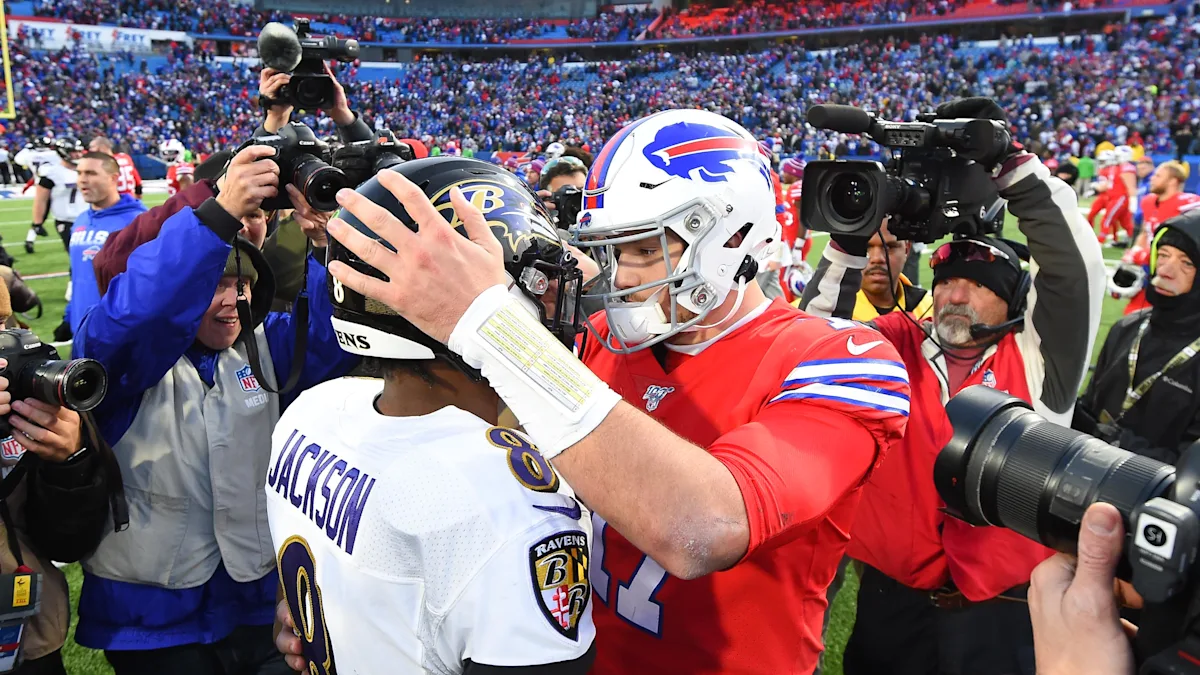
By: Randall Slifer
NFL week 1 has finally arrived, and the Bills start their season off with a marquee matchup versus the Ravens. Buffalo and Baltimore split the series 1-1 last year, with Buffalo taking the most crucial game in the playoffs to advance to the AFC Championship. Neither of last year’s games should be tape on how to defeat your opponent in week 1 of this season. Buffalo was riddled with injuries during the regular season, and the playoff game was snowy and unconventional in how it played out in January.
It is almost a split decision on how much this game matters when it comes to the season as a whole. Week one is week one. Most NFL teams start slow because you do not see much full-speed football during the offseason, and game plans are truly set until you can watch teams’ tendencies and weaknesses and exploit them.
There are sixteen more games to play and shake out the playoff picture, but the top three teams in the AFC (Chiefs, Ravens, Bills) all understand they need to be the number one overall seed and the bye week to push each team closer to the Super Bowl. This game could be a factor in a tie-breaker situation when the end of the regular season hits.
Let’s take a look at what could be deciding factors in this week’s marquee matchup:
What will the Ravens’ offense look like?
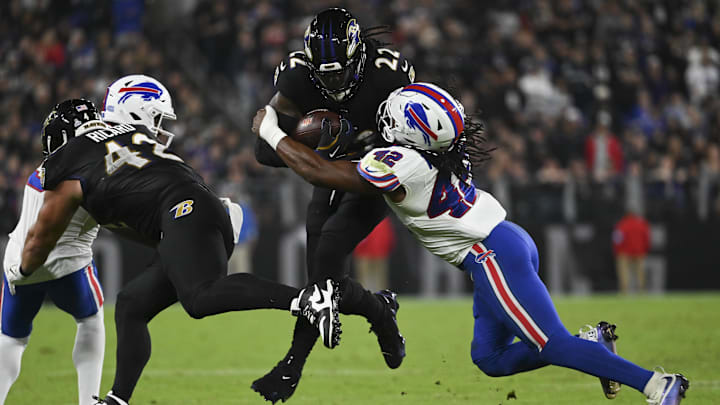
The Ravens may have some pivotal pieces on the offense missing for week one of the regular season. Notably, Isaiah Likely has been ruled out, and Patrick Ricard is questionable.
Patrick Ricard is the best blocking fullback in the league, and he is used frequently in their personnel. This allows the Ravens to disguise a run play or a pass play so well that defenses must always prepare for two plays and react in a split second.
Mark Andrews and Isaiah Likely are a top-three tight end duo in the league, and Baltimore uses both tight ends frequently on the field at the same time. This helps block in the run game and creates heavy mismatches between Andrews or Likely and smaller defensive backs.
Let’s take a look at their success when they use pieces like two tight ends or using a running back and a fullback on the same play:
22 Personnel (2 TE, 2 RB) – Used most in the league
.42 EPA when passing & 0.13 EPA when rushing (6th overall EPA)
21 Personnel (2 RB, 1 TE) – Used 3rd most in the league
.50 EPA when passing & 0.08 EPA when rushing (8th overall EPA)
12 Personnel (1 RB, 2 TE) – Used 5th most in the league
.50 EPA when passing & 0.16 EPA when rushing (1st overall EPA)
11 Personnel (1 RB, 1 TE) – Used the least in the league
.19 EPA when passing & 0.00 EPA when rushing (4th overall EPA)
As you can see, Baltimore heavily relies on using two tight ends and two running backs in their system. If Patrick Ricard and Isaiah Likely are both out, Baltimore will need to rely on 11 personnel much more than they have ever used in 2024. Even if Baltimore sticks with running multiple running backs and tight ends, it will be significantly weaker using Justice Hill and Charlie Kolar.

Will Joe Brady make the leash longer in week one?
Josh Allen’s lowest average depth of target has been since Joe Brady stepped into the offensive coordinator position. This is not a bad thing, as Buffalo has been able to control the time of possession through a good run game and limit turnover-worthy plays by creating separation through confusion. Now, Separation was still a problem, and it is something we need to fix this year.
Buffalo did not change their offensive mantra of “Everybody Eats”. Last year, Buffalo’s wide receiver room was built with taller guys in the back of the room, like Mack Hollins and Marques Valdez-Scantling. This year, Buffalo went and got some quick, speedy route runners in Joshua Palmer and Elijah Moore.
One thing that would put Baltimore on its heels early would be showing the ability to throw deep passes that we rarely saw in 2024. Last year, Josh Allen threw only 72 targets with air yards over 20, the lowest in the past five years. Instead of playing hard-nose ball, Buffalo could take it old school (the early 2020 days) and show a little bit of air raid early in the game to force Baltimore to readjust the wrong way in the second half.
Keon Coleman has had a breakout offseason and looks like he is poised and ready to win in contested catch situations and in the red zone. Elijah Moore has not dropped a ball of 20 air yards or more since his rookie season in 2021. Joshua Palmer is Buffalo’s best route runner, who can create separation in the intermediate and open up the field in all facets. Dalton Kincaid is healthy and weighing the correct tight end weight this year, and he will be a heavy mismatch in the middle of the field to open up the sidelines for their wide receivers.

Can the Buffalo defense stop this Ravens’ high-powered offense?
Buffalo beat Baltimore in the playoff game with a bend, don’t break defense, forcing turnovers that ultimately worked perfectly in a snow game. Buffalo cannot repeat that strategy in week one of this season, because it is not realistic on an opening night that will be 52 degrees and maybe a couple of clouds floating in the sky.
Buffalo focused on defense in the draft, picking defense with the first five picks of the 2025 draft. Deone Walker and TJ Sanders look to make an immediate impact in the interior of the defensive line, while Landon Jackson can bring some run defense and pass rush on the edge.
From 2021 to 2023, Lamar Jackson’s pressure-to-sack ratio averaged right around 20%, which means for every five pressures Lamar saw, one pressure led to a sack. In 2024, Lamar got that down to a measly 11%, which means one out of ten pressures led to a sack.
Buffalo can bring interior pressure to collapse the pocket and force Lamar to make decisions quicker, and be able to get him on the ground more often. Buffalo’s goal should be to get that pressure-to-sack ratio back up to 20% in this game. In both matchups last year, Buffalo totaled only three sacks on Lamar Jackson.
Buffalo will need to force Lamar into risky situations and get him on the ground at the same time. Baltimore may not be able to use 22, 21, or 12 personnel as successfully as they did in 2024 with the injuries at hand. This can set up the Baltimore offense for some shaky situations, and Buffalo will have the ability to create more pass rush in the weaker personnel systems they are not accustomed to.
Baltimore plays Buffalo Sunday night at 8:20 EST/7:20 CST as one of the top marquee matchups of the week. Buffalo is favored by -1.5 coming into the game, which is basically an even line with Buffalo having the edge due to being home.
The total for the game is 51.5, which I believe is predicted as a slow start for both teams in the first half. Personally, I think that home-field advantage plays a pretty hefty part in this week’s one-heavy-bout matchup. Buffalo’s ability to sleep in their own bed and follow their normal routine is something not talked about enough as an advantage. Buffalo was also undefeated at home last year because Bill’s fans are like no other.
Regardless of the outcome, I expect Buffalo and Baltimore to see each other one more time, in one of the most important postseason games for both organizations in a long time. Expect fireworks and a show Sunday night.