

 NFL
NFL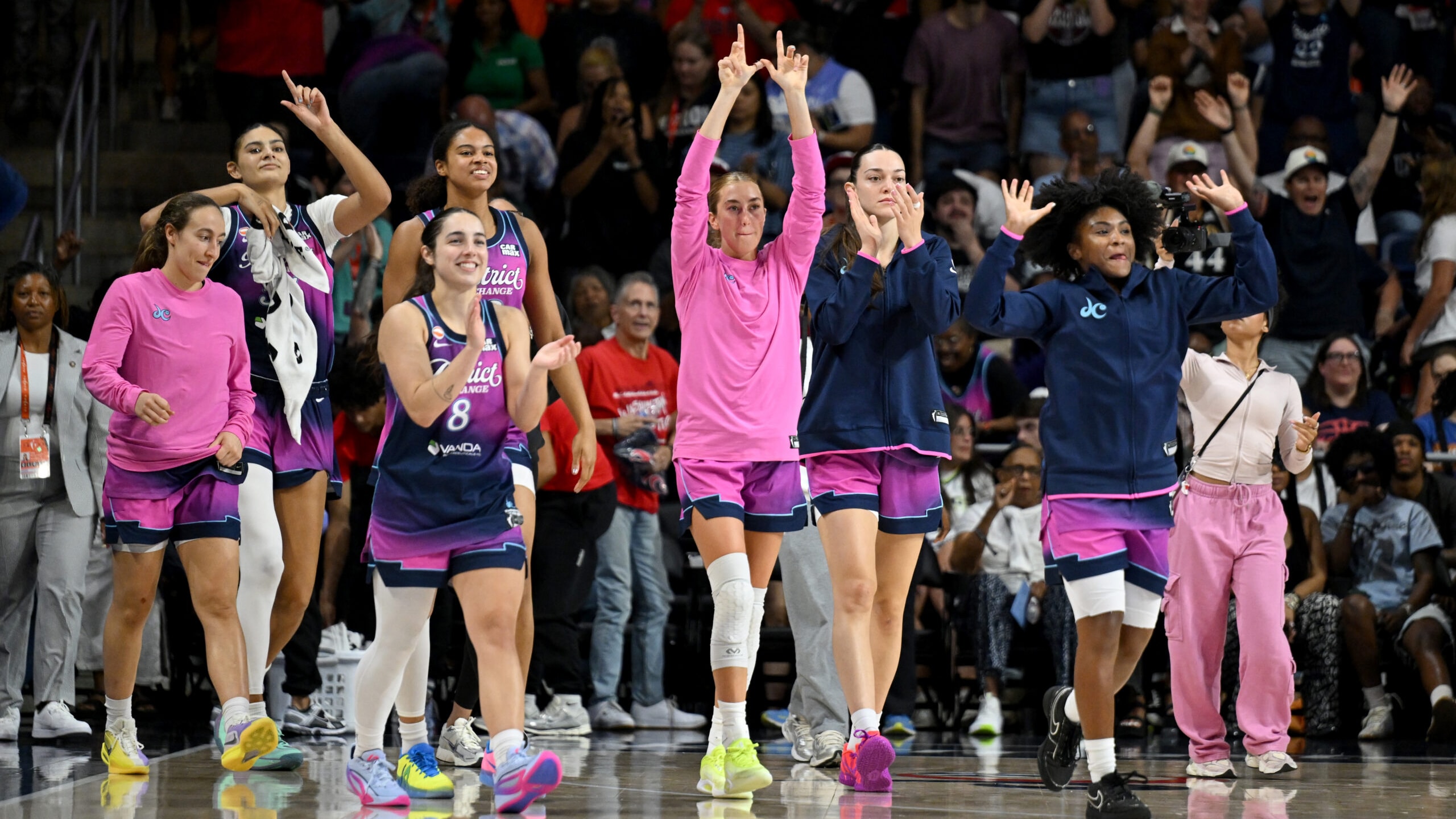
Mystics fans have learned to be patient.
Too patient, perhaps. But still some crashing out from time to time.
For years, “the future” has been the selling point. Young players. Development. Draft picks. Building a foundation. Trust the process.
But something has changed with the Washington Mystics.
The future has started winning in the present.
After Sunday’s 95-75 victory over Phoenix, the Mystics had won seven consecutive games and improved to 19-12. What was supposed to be another chapter in a rebuilding project has become one of the most intriguing stories in the WNBA.
And Washington should stop treating it like an accident.
The Mystics are young — extraordinarily young. Earlier this season, they were described as the second-youngest team in WNBA history, with an average age of about 24. That youth was supposed to explain the mistakes, the inconsistency and the growing pains.
Instead, it is becoming part of their advantage.
Sydney Johnson understood from the beginning that this team would need time. When Washington started the season 2-1, he cautioned against getting carried away.
“We certainly haven’t arrived,” Johnson said.
He was right.
But he may have underestimated how quickly his team would learn how to travel.
The Mystics have not simply collected wins during this streak. They have shown the traits that make young teams dangerous: toughness, confidence and an increasing belief that the game does not have to dictate their response.
Washington came back from a 20-point deficit against Dallas. It survived a late Atlanta rally. Then it handled Phoenix with the kind of control that would have been difficult to imagine from this team earlier in the season.
That evolution matters more than the winning streak itself.
Shakira Austin, Sonia Citron and Kiki Iriafen have given Washington a young core around which a franchise can realistically build. But the most encouraging development is that the Mystics no longer appear dependent on one player to rescue them.
They are beginning to look like a team.
Austin has been particularly important. Her physical presence inside gives Washington an identity that opponents cannot easily erase. But she has also been candid about the team’s growing pains. After an early loss to Dallas, she admitted, “We just didn’t have enough recognition of what to do or where to go.”
That sentence says as much about the Mystics’ progress as any winning streak.
Because young teams learn by failing.
The question is whether they learn quickly enough.
Washington appears to be doing exactly that.
Johnson has repeatedly emphasized “being tough and together,” regardless of the result. That philosophy sounded like a developmental slogan when the season began. Now it looks more like the team’s personality.
And that is why it is time to reconsider the language surrounding the Mystics.
They are still young and still make mistakes. They still have plenty to prove.
But “rebuilding” can become a convenient excuse to postpone expectations.
Washington doesn’t need to do that anymore.
The playoffs will bring a different level of pressure. Opponents will study the Mystics differently. Close games will become heavier. Young players will have to prove that seven victories can become eight, and eight can become something much bigger.
This team may not be ready to contend for a championship.
But that isn’t the most important question anymore.
The important question is whether Washington has finally found the beginning of something sustainable.
The answer increasingly looks like yes.
For years, the Mystics asked their fans to believe in tomorrow.
Now they are giving Washington a reason to believe in today.