

 NFL
NFL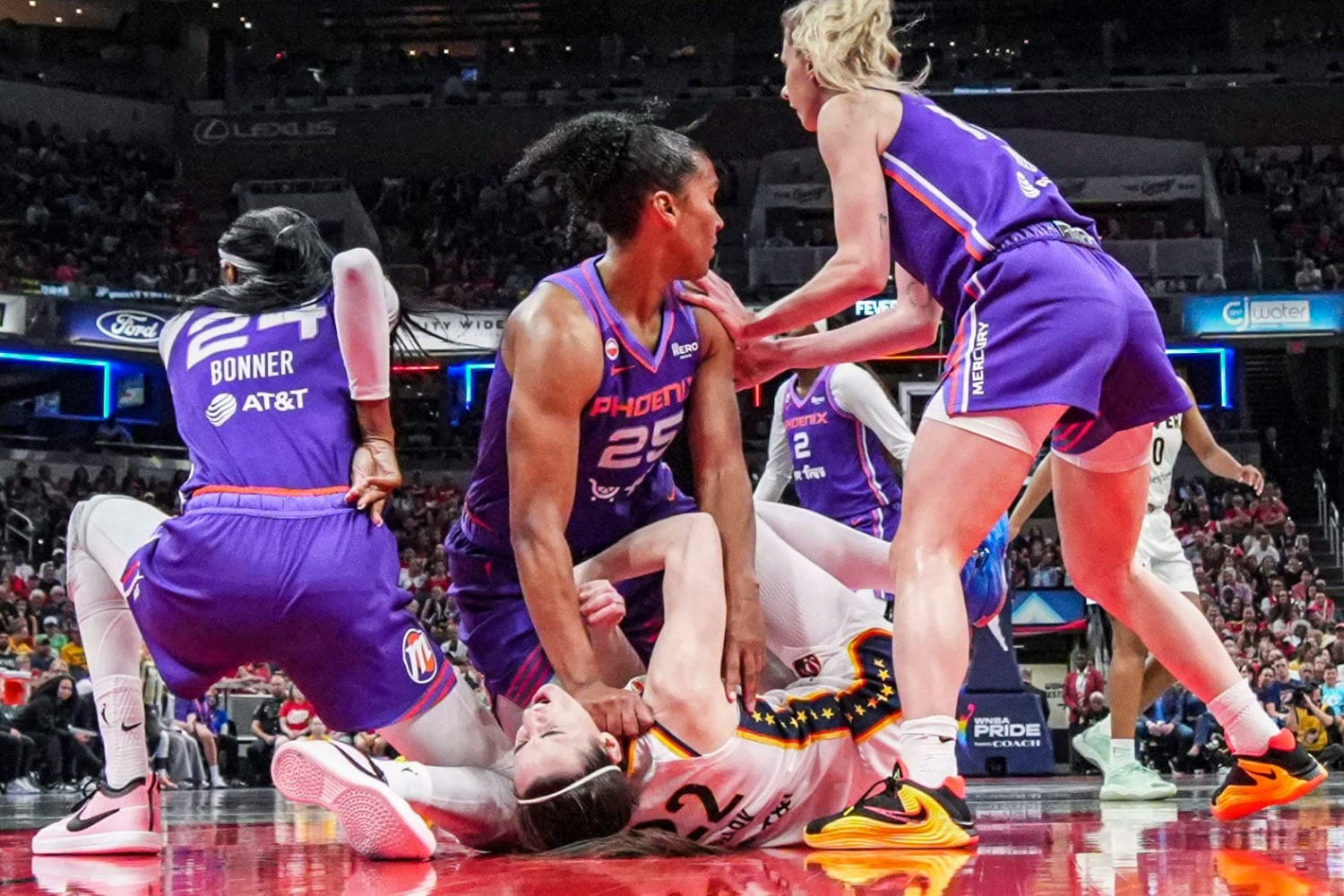
Certain moments in professional sports transcend the outcome of the game. These events become cultural touchstones, not due to the on-court action, but because the ensuing reactions reflect broader societal dynamics.
The Women’s National Basketball Association (WNBA) experienced such a moment during the recent summer season.
During a game, Phoenix Mercury veteran Alyssa Thomas fouled Indiana Fever guard Caitlin Clark. Although the play lasted only seconds, league officials later upgraded the contact to a Flagrant 2 and suspended Thomas for one game. Typically, such disciplinary action would resolve the issue.
Instead, the incident sparked a broader public discussion.
Within hours, the incident dominated sports television, social media, podcasts, and political commentary. Each replay was scrutinized, fueling debates about race, popularity, officiating, media coverage, and the future of women’s basketball.
The play itself ceased to be the central issue.
Instead, the public reaction became the primary focus.
This distinction is important because it highlights the WNBA’s transformation over the past two years. For decades, league officials have sought greater visibility, higher ratings, larger audiences, and broader cultural relevance. The arrival of star athletes like Caitlin Clark, Angel Reese, and Cameron Brink has helped achieve this attention.
However, increased visibility entails certain challenges.
Controversial decisions now reach beyond basketball circles. Rivalries are amplified, and each hard foul can become a national debate before players even leave the court.
Clark, whose arrival has coincided with record attendance and viewership, holds a unique position in American sports. She is not only a talented rookie and franchise cornerstone, but also represents the league’s commercial growth and is central to broader discussions about gender, race, media coverage, and celebrity.
This situation places significant pressure on Clark and all players who share the court with her.
Routine basketball plays rarely seem ordinary when they involve the league’s most prominent athlete.
These circumstances do not justify dangerous or reckless play. Professional sports consistently distinguish between physical competition and unnecessary contact. The league’s suspension of Thomas shows officials determined the play exceeded acceptable boundaries.
However, acknowledging this does not require casting one player as a villain and another as a perpetual victim.
Professional basketball is inherently physical. Screens are forceful, rebounds are contested, and tempers can escalate. These aspects are not unique to the WNBA or new to sports in general.
What is new is how quickly public narratives form, often before facts are fully understood.
Within days, Thomas reported that she and her family received abusive messages and death threats online. Such reactions are increasingly common after high-profile sports controversies, but their normalization should concern all stakeholders in professional athletics.
Critique of athletic performance is an inherent aspect of sports.
However, threats and harassment are not acceptable components of athletic competition.
Clark has repeatedly rejected abusive behavior toward opponents and emphasized that competitive basketball should not excuse personal attacks (Even though it should be clearer). Her position deserves more attention than it often receives amid viral outrage.
The league, meanwhile, faces a challenge that extends well beyond officiating.
As the WNBA becomes a major professional sports league, its leadership must recognize that disciplinary decisions alone are no longer enough. Transparency, clear communication, and consistency are essential.
Fans will disagree about individual calls. They always have.
Confidence is undermined when similar incidents appear to receive different treatment based on who is involved.
Professional leagues build credibility not by eliminating controversy, but by showing that their standards apply equally to every player, team, and game.
The media also shares responsibility.
Modern sports coverage increasingly rewards conflict over context. Television panels and social media favor certainty over nuance. Complex situations are reduced to binary choices: dirty play or overreaction; victim or aggressor; hero or villain.
Reality rarely fits those categories.
The WNBA’s remarkable growth deserves coverage that matches the sophistication of the basketball. This requires resisting the urge to frame every contentious moment as part of a culture war.
The league has reached an inflection point.
The league is attracting unprecedented audiences, corporate investment, and public interest. These developments create opportunities that players and executives have pursued for decades.
They also ensure that future controversies will unfold under an even brighter spotlight. Whether that spotlight strengthens or distorts the league will depend on everyone involved: league officials committed to consistency, journalists to context, athletes to professionalism, and fans to remembering that competitors are human beings before they become symbols.
The foul that sparked this latest debate will eventually fade into the archives.
The lessons from its aftermath should not.
They offer a preview of what the WNBA must navigate as it enters its most consequential era, where the measure of success is not only by attendance and ratings but also by the league’s ability to preserve the integrity of its game amid unprecedented public attention.