

 NFL
NFL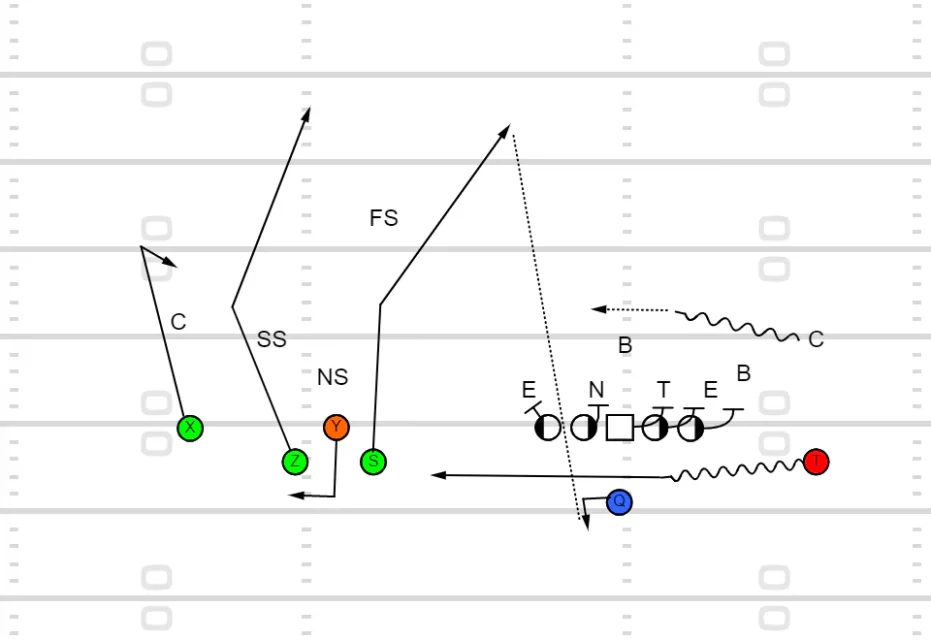
By Bill Carroll
In part one of this article I laid out, in broad strokes the key players and stylistic comparisons and contrasts that I feel will decide these games. If you are not something of a football nerd, that may suffice. But if you are the person who has heated arguments regarding the the virtues of “Dragon” as a passing concept versus “Drive” versus Cover-3, then this is for you!
Chiefs On Defense
Tactical keys (The final chapter)
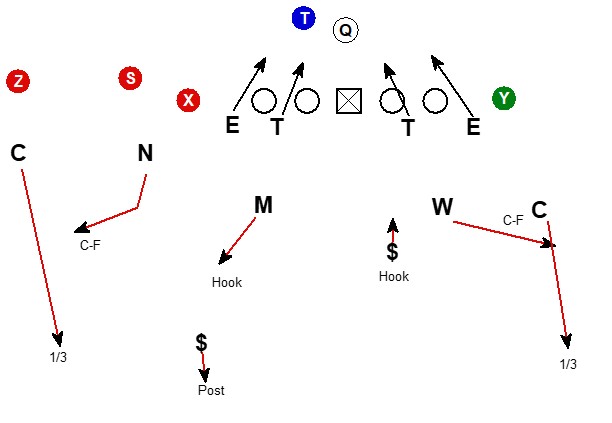
- Use late coverage shifts to disrupt timing: Use disguise to late‑rotate into Robber/3‑Buzz, contest dig/over and boundary comebacks that Bo Nix favors.
On Offense
- Explosive re‑creation: Mahomes needs designed explosives off play‑action, using motion and either re‑centering Kelce/Rice as two‑man option game to attack intermediate seams versus Vance Joseph’s zone rules. “Snag” or “Drive” can stretch those zones with speed.
- Zone structures—Cover 2, Cover 3, and quarters all have inherent vulnerabilities in the seams between defenders, particularly the space between flat defenders and hook/curl players or between hook/curl defenders themselves. Two high-efficiency concepts, Snag and Drive systematically exploit these voids by creating layered conflicts and forcing defenders into binary decisions. Also, Mahomes needs to take off, at times, to take advantage of soft 2-deep safety looks.

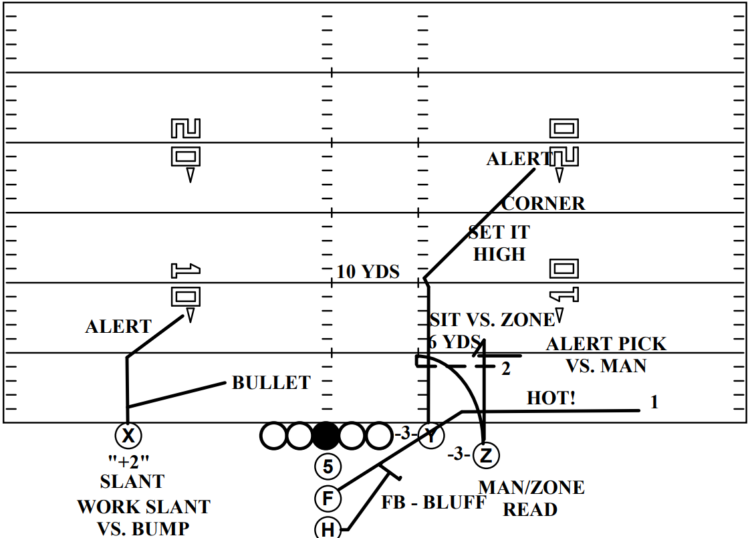
Image Via The Weekly Spiral Snag Concept: Triangular Stress
- Structure: Three routes form a triangle:
- #1: 5–6 yard snag/spot route settling in the hook void.
- #2: Corner route stretching the deep third or quarter defender.
- #3: Flat/arrow route widening the flat defender.
- Coverage Stress: The triangle creates simultaneous horizontal and vertical stretches. If the flat defender widens to the arrow, the snag sits uncontested; if the corner-back jumps the snag, the corner route opens.
- Quarterback Progression: Read flat defender first → throw snag if he widens; alert corner if safety rotates down; flat as outlet.
- Why It Wins: Snag isolates linebackers in hook zones and exploits Cover 3’s curl/flat spacing, forcing defenders to declare leverage early.

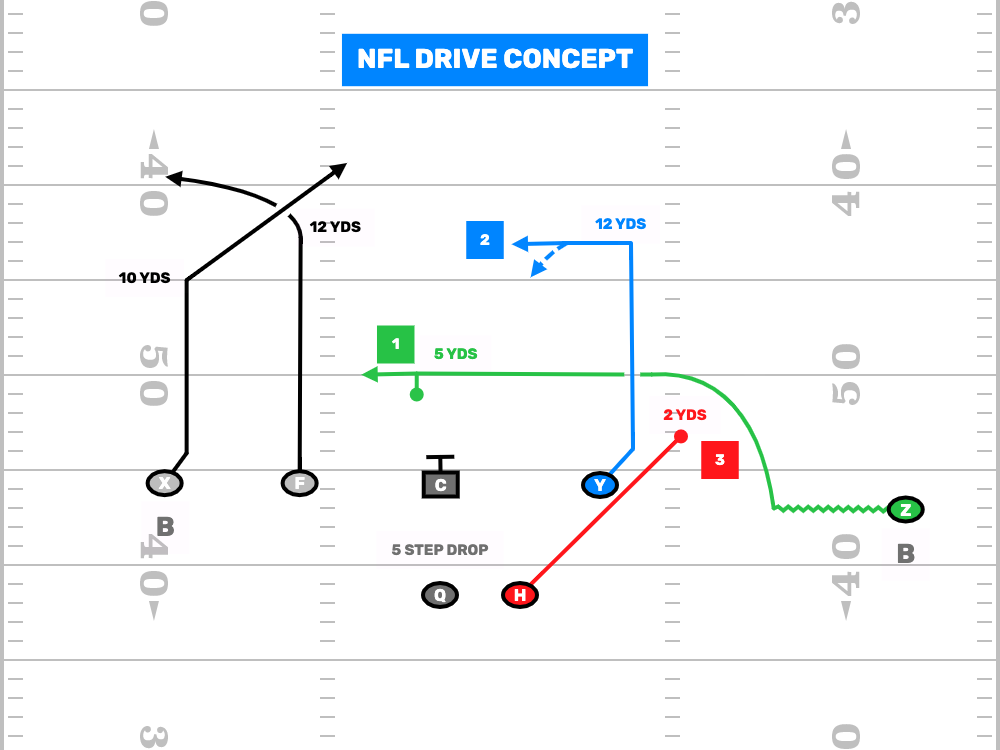
Image Via 1st Down Playbook-firstdown.playbooktech.com Drive Concept: Horizontal-Vertical Overload
- Structure: Typically combines a deep “Dig” [Deep In Route] (or post-dig) with a shallow cross and a flat route, creating a three-level stretch.
- Coverage Stress: Hook/curl defenders must either carry the dig into intermediate depth or rally to the shallow/flat, leaving one zone uncovered. Against Cover 3, the curl defender cannot match both vertical and horizontal threats.
- Example: Dig route from X receiver paired with RB flat creates a 3-on-2 against hook defenders, a classic overload.
- Quarterback Progression: Key the hook defender → if he sinks, hit shallow or flat; if he drives shallow, rip the dig behind him.
Why These Concepts Are Effective
- Zone Weaknesses: No zone coverage can defend all three levels simultaneously without perfect spacing and communication.
- Conflict Creation: Both concepts manufacture leverage by forcing defenders to choose between two threats, guaranteeing a void elsewhere.
- Application: Ideal against Cover 3 and Cover 4, where curl/flat defenders are stressed by layered routes and timing precision.
- Structure: Three routes form a triangle:
Key passing concepts that blend horizontal and vertical elements include:
-
- Snag Concept: This involves a three-receiver side where a corner route provides the vertical stretch, while a snag (short curl/in) and a flat route create the horizontal conflict underneath. The quarterback reads the defender assigned to the flat/sideline and decides whether to throw deep or short based on the defender’s movement.
- Sail Concept: A three-level passing play that sends receivers on deep (vertical), intermediate (corner/sail), and flat (shallow horizontal) routes. This stretches the defense in multiple dimensions, creating clear windows for the quarterback against types of zone coverage.
- Dagger Concept: This play uses a deep vertical route (seam) to occupy the safeties and a deep “dig” (intermediate in-breaking) route behind it, combined with a shallow drag route from the backside. It creates both vertical and horizontal stress across the middle of the field.
- Smash Concept: An outside receiver runs a short hitch/curl route while an inside receiver runs a deep corner route. This creates a “high-low” vertical stretch on the corner-back or flat defender, forcing them to choose between the two routes.
- Get Marquise “Hollywood” Brown, Brashard Smith, Tyquan Thorton and Xavier Worthy on the field at the same time and use a mix of horizontal and vertical concepts like:
Concept: Four Verticals with Jet Sweep Influence vs. Chargers Coverage Rules
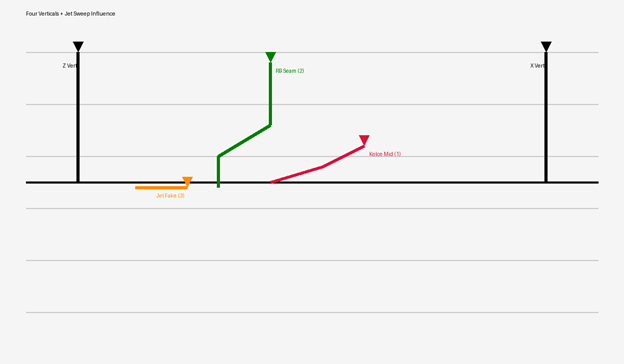
This play begins as a traditional Four Verticals concept, but it’s modified to stress the Chargers’ defensive structure and rules. The adjustment introduces a jet sweep motion fake (3) across the formation, which forces the second-level defenders, in particular the linebackers and safeties in quarters or match coverage in order to honor horizontal flow before recovering vertically. That hesitation creates a seam for the running back (2) to release up-field.
Primary Components
- Travis Kelce (TE) – Middle Read/Dig Adjustment
Kelce works off the vertical stems, settling or bending across the middle against match coverage. Against Chargers’ quarters or cover-6 looks, this route exploits the conflict between inside linebackers and safeties who widen with jet motion. - Running Back – Seam Release
After the jet sweep fake, the RB releases vertically through the seam. This is the critical stress point: Chargers’ pattern-match rules often assign the RB to a linebacker or safety. The horizontal-to-vertical transition creates leverage, especially if the LB bites on the sweep. Brashard Smith’s speed makes this more of a threat. - Jet Sweep Motion – Eye Manipulation
The motion forces rotation and communication in the secondary. Against Jesse Minter’s disciplined quarters, the jet fake can trigger a “push” call, momentarily widening the flat defender and opening the seam.
Why It Works Against the Chargers
- Pass Rush Discipline: Chargers rank top-10 in sacks (Tuli Tuipulotu leads with 10). Moving the pocket and using jet motion slows edge pursuit.
- Coverage Stress: The Charger’s defense leans on match principles. Horizontal motion plus vertical release creates assignment conflict.
- Personnel Match-ups: Travis Michael Kelce vs Derwin James in space is favorable if James is forced to play high safety responsibilities. The RB seam isolates a linebacker—ideal against Chargers’ heavier fronts.
Mahomes’ Progression
- First read: Seam route by RB (2) if LB widens or hesitates.
- Second read: Kelce (1) on the dig or settle vs. rotated coverage.
- Alert: Outside verticals for boundary shots if safeties overplay the middle.
Coaching Point
Run this from 11 personnel with Rice in jet motion to force nickel rotation. Use play-action look to hold interior defenders. Expect quarters or cover-6; if Chargers spin to cover-3 buzz, Kelce becomes primary.
Base Concept: Four Verticals with Jet Sweep Influence
- Purpose: Stress quarters/match coverage rules by combining horizontal eye candy with vertical stretch.
- Key Reads:
- RB seam (after jet fake) vs. LB leverage
- Kelce on dig vs. rotated safeties
- Mahomes look to the boundary verticals if safeties overplay middle
Complementary Concept 1: RPO Variation – Jet Sweep + Glance
Structure:
- Pre-snap motion: Same jet sweep look to force rotation.
- Run element: Inside zone to RB.
- Pass element: Glance route by X receiver (Tyquan Thornton) behind second-level defenders.
Why it works vs. Chargers: - Harbaugh’s defense often spins safeties late; jet motion widens hook defenders.
- If LB flows to jet or run fit, glance window opens for Mahomes.
Coaching Point: - Mahomes can tag Kelce on a bubble or quick out to hold flat defender.
- Use tempo to prevent defensive substitution.
Complementary Concept 2: Play-Action Shot – Post-Over-Seam
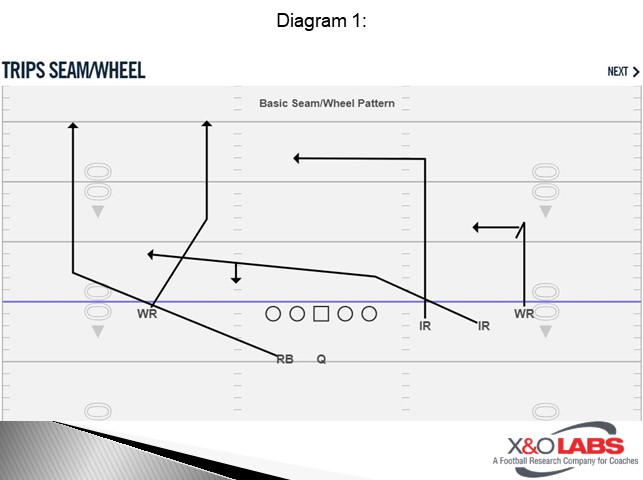
Structure:
- Personnel: 12 (Kelce + Noah Gray) to invite base defense.
- Action: Wide zone fake to RB; Mahomes boots opposite.
- Routes:
- X receiver: Deep post
- Kelce: Crossing Over route
- RB: Wheel/Seam release
Why it works vs. Chargers:
- Harbaugh’s front is aggressive defending the run; play-action freezes edge rush and safeties.
- Mahomes must buy time for the Post-Over combo to attack quarters coverage: post vs. safety, over vs. LB depth.
Coaching Point: - Mahomes must sell the run fake with strong OL displacement; using Kelce as primary if safeties stay high.
Game-Specific Adjustments
- Chargers Pass Rush: 35 sacks this season; move launch points (boots, sprint-outs).
- Coverage Tendencies: Quarters/cover-6 with match rules; stress with motion and layered routes.
- Personnel Matchups: Exploit Kelce vs. Derwin James in space; RB seam vs. LB (Henley).
This may be cliched “heavyweight fight”, but clever strategy and nimble thinking will be the decisive factor.