

 NFL
NFL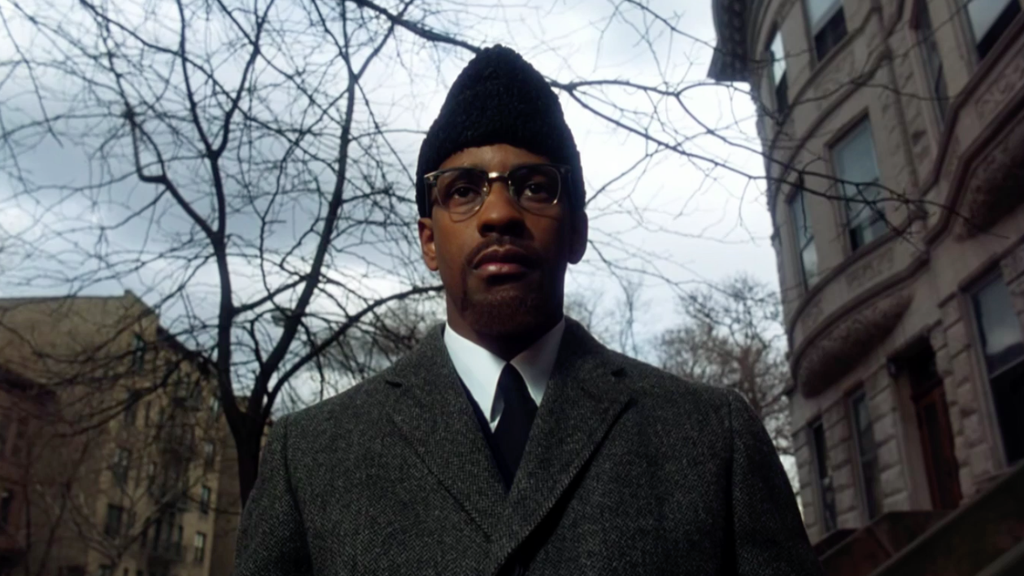
By: Matt Overton
The Sixth Joint
Spike Lee’s 1992 biopic on the life of accomplished and controversial civil rights leader Malcolm X is a towering achievement. Ambitious in scope and execution, this film is 202 minutes of rousing drama that will fill in a lot of details left out by the American education system. Featuring a historic performance from Denzel Washington, there isn’t a minute wasted in this emotional epic as we witness X’s transformation from a country thief to an inspirational global leader.
Leading such a trail-blazing and transformative life, where does one begin to tell the tale of Malcolm Little? The film sets out during the War Years, when he was nothing more than a vagabond living an oppressed life in Massachusetts. The beginning of the film was at odds with how I assumed a biopic of this nature would unfold, but that is just the life of Malcolm X at play. A man who constantly confounded the masses and rose from a life of crime and obscurity to strike at the heart of America’s racial divide. At the outset, Malcolm dresses and acts like a gangster, does lots of drugs, sleeps around town with white women, and hangs out with generally undesirable people. It isn’t until his incarceration and his discovery of Islam that his transformation into Malcolm X becomes recognizable.
There are many pitfalls to the biopic genre at large, and Malcolm X may succumb to some of them, but Spike Lee skirts a lot of them by making this film about a lot more than just Malcolm’s life. We witness the tumultuous time period he lived in through his eyes, but his struggle mirrors millions of others. The film is about Malcolm X as much as it is about civil rights, Black History, Black Intelligence, Black Mobility, Black Creativity, and much more. It is a deeply religious film, embedded with Muslim beliefs and teachings that flesh out his character and educate the audience, who are probably like me and know nothing about Islam.
Through every facet of this production, it is clear that Spike Lee poured his heart and soul into making this film. He was a well-established filmmaker by 1991, but his work here makes it seem like he had everything to prove. It wasn’t an easy production either; the whole of Black America was keen on seeing this film do Malcolm justice, and Spike could feel the pressure. Couple that with some financial speed bumps that necessitated 911 calls to prominent African-Americans for emergency funding, and I can imagine the making of this film was equal parts exhausting and liberating.
Malcolm X is a monumental film in terms of its significance and its enduring legacy. To depict such a figure over numerous decades in a three-and-a-half-hour film was no small feat, but if I’ve learned anything about Spike Lee, it’s that he takes his Black History as seriously as he does his filmmaking. Denzel’s performance is one of the most powerful and poignant I’ve ever witnessed in my entire life, and the subject matter is deftly handled with respect. I’m overjoyed to own this film, as it will become a cornerstone of my personality and is rightfully one of the most important movies ever made.