

 NFL
By: Bill Carroll
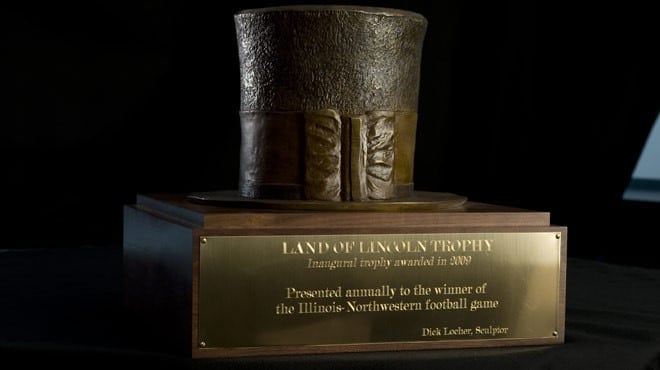
- Established: 2009, replacing the retired Sweet Sioux Tomahawk after an online fan vote
- Design: Bronze replica of Abraham Lincoln‘s stovepipe hat, designed by cartoonist Dick Locher and cast by sculptor Don Reed.
- Dimensions & Weight: Sits on a 14 x 14-inch wooden base and weighs 28.5 pounds total
- All-Time Rivalry Series: Illinois leads 59–55–5 through the 2025 season (Illinois won 20–13 on November 29, 2025)
- Next Game: Scheduled for Saturday, November 28, 2026
Last year I opened my season summation of the Nortwestern Wildcat’s season thusly:
Northwestern closed the 2025 season 6–6 overall, 4–5 in the Big Ten, with a 20–13 loss to Illinoisfor the Land of Lincoln Trophy. The season is reminiscent of the five stages of the Wilderness Campaign, revealing a program that fought hard, absorbed steady pressure across a long schedule, but lacked a decisive turning point.
The regular-season finale brings together two 6–5 teams whose records look similar, but whose underlying identities are markedly different. Northwestern has been the more efficient and balanced team across the season, while Illinois has relied on its passing game, discipline, and ability to manufacture explosive plays.
Saturday’s meeting at Ryan Field in Evanston is scheduled for 12:30 p.m. ET/11:30 a.m. CT on Big Ten Network. Illinois enters at 6–5 overall and 4–4 in the Big Ten, while Northwestern is 6–5 overall and 3–5 in conference play.
Tale of the Tape
| 2026 statistic | Northwestern | Illinois |
| Overall record | 6–5 | 6–5 |
| Big Ten record | 3–5 | 4–4 |
| DVOA | Not publicly available | Not publicly available |
| Adjusted net EPA/play | Approximately +0.16 | +0.03, 63rd nationally |
| Offensive EPA/play | +0.22, 17th | +0.15, 56th |
| Defensive EPA/play allowed | +0.06, 45th | +0.178, 115th |
| Points per game | 28.6 | 26.1 |
| Points allowed per game | 20.2 | 23.9 |
| Offensive yards per game | 403.1 | 374.2 |
| Defensive yards allowed per game | Approximately 365.8 | 377.5 |
| Offensive yards per play | 6.3 | 6.0 |
| Defensive yards per play allowed | 5.5 | 5.7 |
| Third-down offense | 41.4% | 45.7% |
| Turnover margin | +6 | –3 |
Northwestern’s EPA figures show the stronger two-way profile. The Wildcats rank 17th in offensive EPA per play and 45th in defensive EPA allowed, whereas Illinois ranks 56th offensively and 115th defensively. Illinois’ adjusted net EPA margin is +0.03, but its non-adjusted margin is –0.08, illustrating how schedule and opponent strength affect the evaluation.
The traditional statistics tell a similar story. Northwestern averages 28.6 points and 403.1 yards while allowing 20.2 points per game. Illinois produces 26.1 points and 374.2 yards but concedes 23.9 points and 377.5 yards.
A Rivalry at the End of Two Retreats
Both teams arrive at the Land of Lincoln Trophy game searching for a reversal. Northwestern has dropped four consecutive games after opening the season 6–1. The Wildcats lost to Oregon, Iowa, Ohio State, and Minnesota, scoring only 17.5 points per game during that stretch. Their most recent defeat, 20–17 at Minnesota, was another close game in which the Wildcats had a late opportunity but could not create the decisive scoring drive.
Illinois followed a four-game winning streak with consecutive losses to UCLA and Iowa. The Illini scored a combined 31 points in those defeats and committed five interceptions, including two in the 34–17 loss to Iowa. More than an in-state rivalry, this a contest between two bowl-eligible teams trying to prevent a promising season from collapsing under the weight of a prolonged retreat.
Northwestern’s Campaign: Efficiency Without a Finish
Season snapshot: Northwestern’s 6–5 record understates how effective the Wildcats were during the first two months. They defeated Colorado, Penn State, Michigan State, and Rutgers, reached the national rankings, and produced one of the country’s most efficient offenses before the recent four-game slide.
The Wildcats still average 6.3 yards per play and have accumulated 403.1 yards per game. Their offense gains 224.8 yards through the air and 178.3 on the ground, giving Northwestern has better balance than Illinois. The Wildcats also carry a considerable turnover advantage, having thrown only one interception all season while producing a +6 turnover margin.
Key strengths
- Offensive efficiency: Northwestern’s +0.22 offensive EPA per play ranks 17th nationally. Even after the recent downturn, the Wildcats remain capable of creating efficient early-down offense.
- Explosive passing potential: Northwestern averages 8.5 yards per pass attempt. Griffin Wilde has 57 receptions for 920 yards and six touchdowns, an average of more than 16 yards per catch.
- Defensive scoring control: The Wildcats allow 20.2 points per game and 5.5 yards per play. They have held seven opponents to 21 points or fewer.
- Ball security: Northwestern has lost four fumbles and thrown only one interception through 11 games. That restraint has kept the Wildcats competitive even when their offense has stalled.
Key Concerns

- Quarterback health and continuity: Aidan Chiles remains the offense’s most dynamic quarterback, but Nicco Marchiol has been asked to lead the unit during Chiles’ absence. The uncertainty affects Northwestern’s designed quarterback runs, deep passing, and third-down packages.
- Declining scoring output: Northwestern scored at least 34 points in five of its first seven games. It has not reached 30 points during the four-game losing streak.
- Pass protection: The Wildcats have allowed 31 sacks. Illinois has not generated sacks consistently, but obvious passing situations could still expose Northwestern’s protection.
- Third-down defense: Opponents are converting approximately 40.7% of their third downs. That is dangerous against an Illinois offense converting at nearly 46%.

Illinois’ Campaign: Explosive Passing, Uneven Efficiency
Season snapshot: Illinois has alternated between impressive tactical victories and costly breakdowns. The Illini defeated Oregon 21–10, survived Michigan State 38–37 in overtime, and won at Maryland. They also lost at home to Purdue and surrendered at least 31 points against Duke, Ohio State, Michigan State, and Iowa.
Illinois averages 26.1 points and 374.2 yards per game. Illiois’ identity is built on the passing game: 238.7 passing yards per contest but only 135.5 rushing yards. The Illini’s +0.15 offensive EPA per play is respectable, but their +0.178 defensive EPA allowed ranks 115th nationally.

Key strengths
- Third-down execution: Illinois converts 45.7% of its third downs, one of the clearest statistical advantages in the matchup. Sustaining drives will be essential against a Northwestern defense that is stronger at preventing points than it is at consistently getting off the field.
- Passing-game production: Katin Houser has thrown for 2,449 yards and 20 touchdowns. His primary target, Collin Dixon, has surpassed 1,080 receiving yards and scored 13 touchdowns.
- Explosive-play capacity: Illinois ranks among the national leaders in offensive explosiveness. The Illini’s explosive-play rate and ability to strike vertically provide a path to scoring even when the rushing attack is contained.
- Penalty discipline: Illinois averages only 36.3 penalty yards per game, giving the Illini an opportunity to avoid the self-inflicted field-position losses that often determine rivalry games.
Key concerns
- Turnovers: Illinois has thrown 10 interceptions and enters with a –3 turnover margin. Houser has five interceptions over the last two games, including three against UCLA and two against Iowa.
- Defensive efficiency: The Illini allow 0.178 EPA per play, 44.5% success, and 377.5 yards per game. Their defensive EPA ranking indicates that opponents have too often stayed ahead of schedule.
- Fourth-down defense: Opponents have converted 16 of 24 fourth-down attempts, a 66.7% success rate. Northwestern should be prepared to remain aggressive near midfield and inside the Illinois 40-yard line.
- Rushing consistency: Illinois averages 135.5 rushing yards per game. The Illini managed only 28 rushing yards against Iowa, leaving Houser to attempt 39 passes in a predictable offense.
The Tactical Draw
On season-long efficiency, Northwestern owns the advantage. The Wildcats score 2.5 more points per game, gain nearly 29 more yards, allow 3.7 fewer points, and possess the better offensive and defensive EPA profiles, but recent results, however, complicate things.
Northwestern’s offense has become less explosive with Chiles unavailable, while Illinois’ passing game remains capable of attacking a secondary that must respect Dixon on every down. At the same time, the Illini’s turnover vulnerability matches up poorly with a Northwestern defense that has intercepted 10 passes.
The result is a matchup in which neither side can rely exclusively on its season averages. Northwestern must prove that its earlier efficiency can survive the current quarterback situation. Illinois must demonstrate that its passing volume can produce points without also producing short fields for the Wildcats.
Decisive Engagements
-
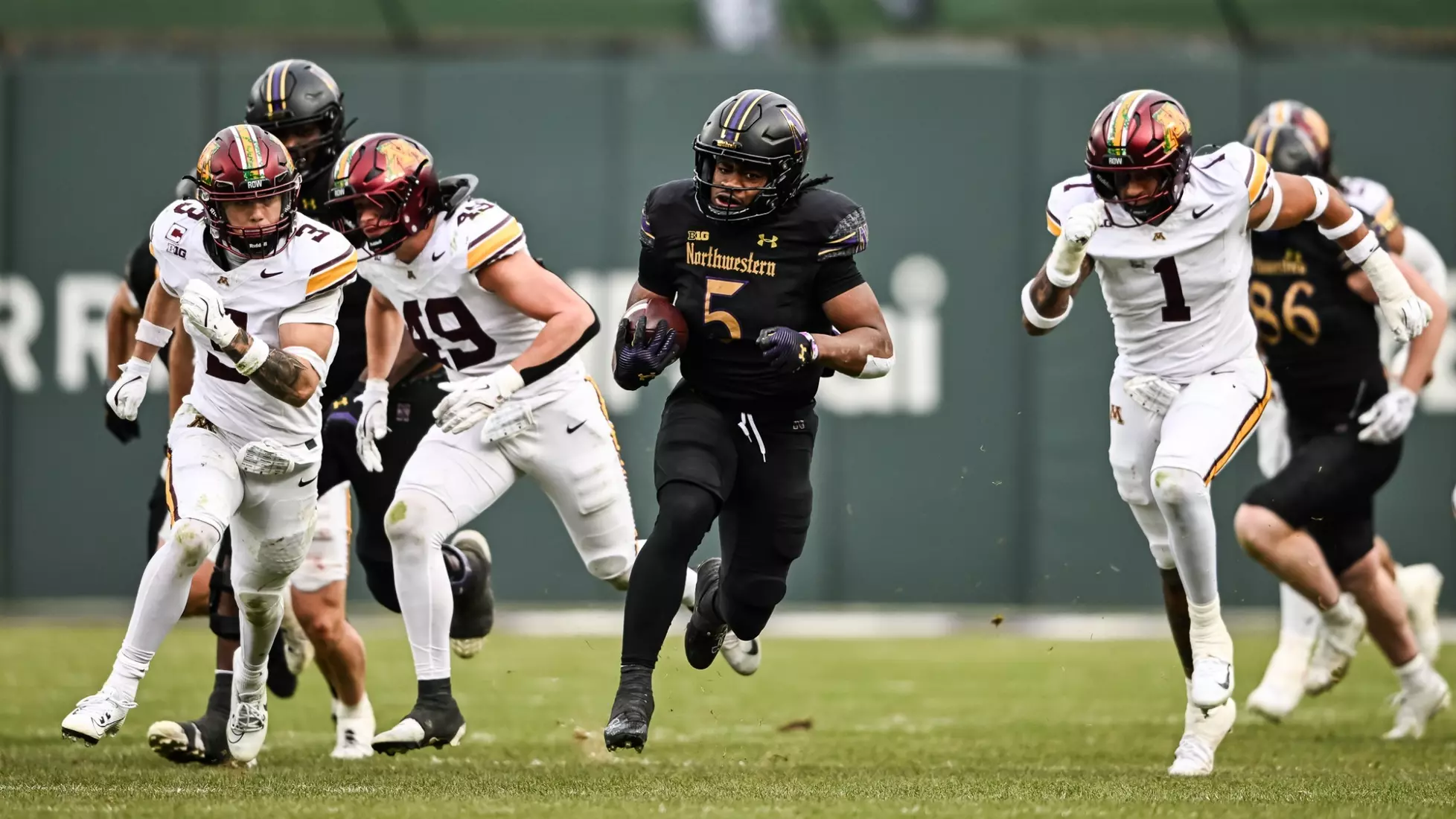
Northwestern’s running backs against the Illinois front
Caleb Komolafe leads Northwestern with 806 rushing yards and five touchdowns, while Joseph Himon II has added 441 yards at 7.3 yards per carry. Illinois allows 141.1 rushing yards per game and has been more vulnerable through the air than on the ground, but establishing the run would protect Marchiol and limit obvious passing downs.
Northwestern’s objective: Reach at least 170 rushing yards and keep the offense out of third-and-long.
-
Collin Dixon against the Northwestern secondary
Dixon is Illinois’ most dangerous offensive player. With more than 1,080 receiving yards and 13 touchdowns, he is both a high-volume target and a scoring threat. Northwestern allows 214.6 passing yards per game and has generated 10 interceptions, but Dixon’s size and production will test the Wildcats’ coverage structure.
Northwestern’s objective: Hold Dixon below 90 receiving yards and force Illinois to sustain drives through secondary targets.
-
Illinois’ third-down offense against Northwestern’s situational defense
Illinois converts approximately 45.7% of its third downs, while Northwestern allows opponents to convert 40.7%. If Houser consistently reaches manageable third downs, Illinois can control possession and keep Northwestern’s offense on the sideline.
Northwestern’s objective: Hold Illinois below 40% on third down and create at least four three-and-outs.
-
Turnover margin
This may be the game’s defining statistic. Northwestern has committed only five turnovers, while Illinois has committed 11. The Wildcats’ +6 turnover margin stands in direct contrast to the Illini’s –3 margin. Northwestern’s objective: Finish at least +1 in turnover margin. If the Wildcats reach +2, Illinois’ path to victory becomes considerably narrower.
Turning Point
The first team to produce an explosive play after a defensive stop may seize control. Northwestern wants to turn the contest into a disciplined, field-position battle in which its defense and ball security create extra possessions.
Illinois wants to stretch the field, hit Dixon or Hudson Clement vertically, and force the Wildcats out of their preferred methodical approach. The critical moment is likely to come when one offense crosses midfield facing fourth-and-short.
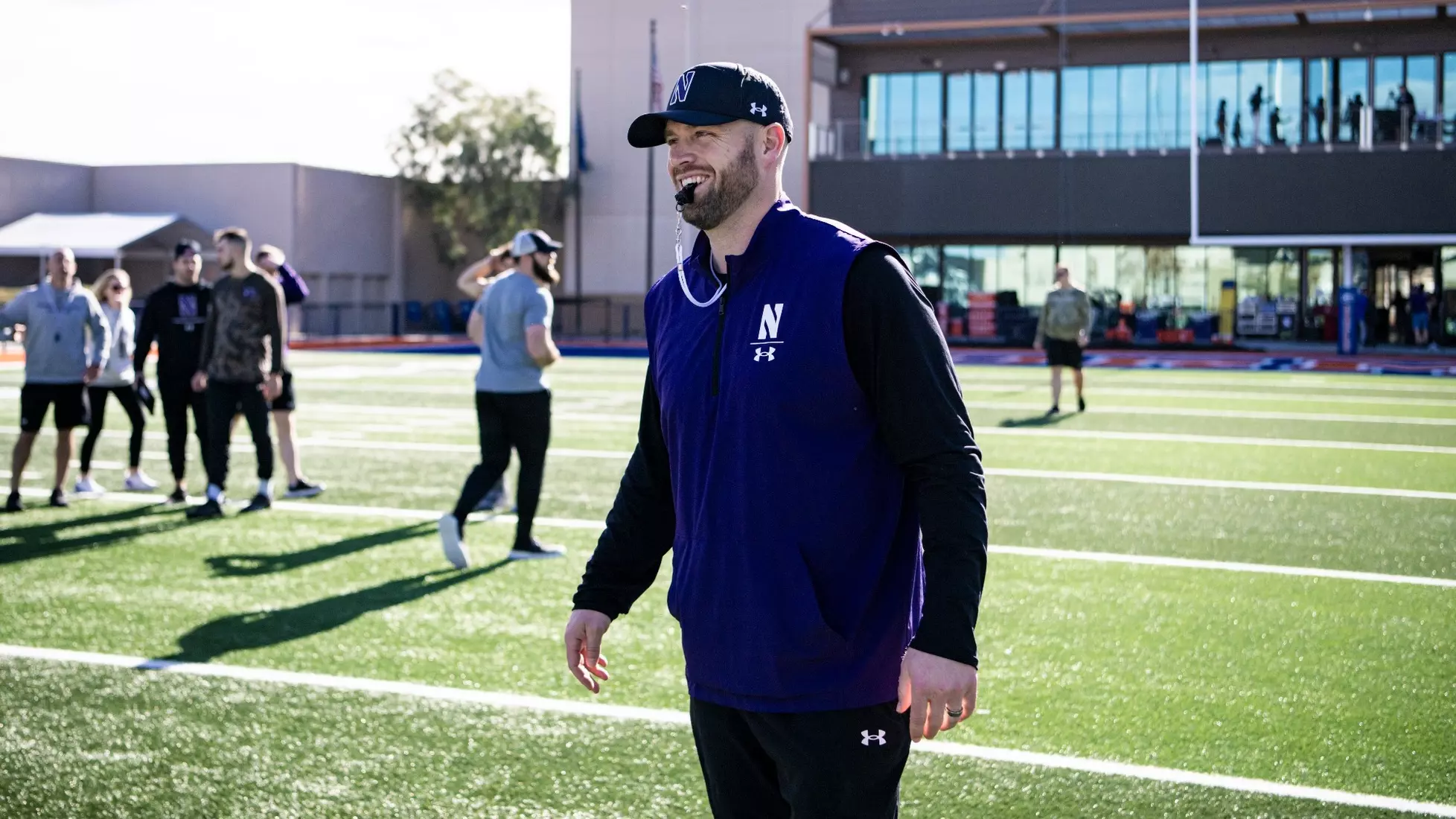
Illinois has struggled on fourth down offensively, converting only 36.8%, while allowing opponents to convert 66.7%. Northwestern has converted 57.1% of its fourth-down attempts. Those percentages should encourage David Braun to be aggressive when the Wildcats reach Illinois territory.
Paths to Victory
Northwestern
- Control the game on the ground: Give Komolafe, Himon, and the quarterback run package enough opportunities to reach 170–190 rushing yards.
- Protect the football: Northwestern cannot surrender the turnover advantage that has helped support its 6–5 record.
- Bracket Collin Dixon: Force Houser to work through his full progression rather than repeatedly targeting his 1,000-yard receiver.
- Win on third down: Illinois’ 45.7% conversion rate must be pushed below 40%.
- Remain aggressive: Attack Illinois’ vulnerable fourth-down defense rather than settling for conservative punts from plus territory.
Illinois
- Start efficiently: The Illini cannot afford another slow offensive opening after scoring only 31 combined points over the last two games.
- Create manageable third downs: Illinois is at its best when Houser can use play action rather than operate against obvious pressure.
- Generate takeaways: Northwestern rarely gives the ball away, but Illinois likely needs at least one short field to offset the Wildcats’ defensive advantage.
- Contain Northwestern’s backs: Force Marchiol to win from the pocket and test Northwestern’s pass protection.
- Finish drives: Field goals will not be enough if Northwestern’s early-season offensive efficiency reappears.
Prediction: Northwestern 27, Illinois 23
Northwestern’s four-game losing streak makes this a closer call than the full-season numbers suggest. Illinois has the game’s most productive receiver in Dixon, the better third-down offense, and enough passing explosiveness to challenge the Wildcats deep. However, Northwestern holds the more meaningful structural advantages: better overall EPA efficiency, more offensive balance, a stronger scoring defense, home-field advantage, and a substantial edge in turnover margin.
The Wildcats’ ability to protect the football should ultimately matter more than Illinois’ passing-yardage advantage. Expect Illinois to move the ball and keep the game close into the fourth quarter. Northwestern’s running game, defense, and one late takeaway should provide the decisive difference.