
 NFL
NFL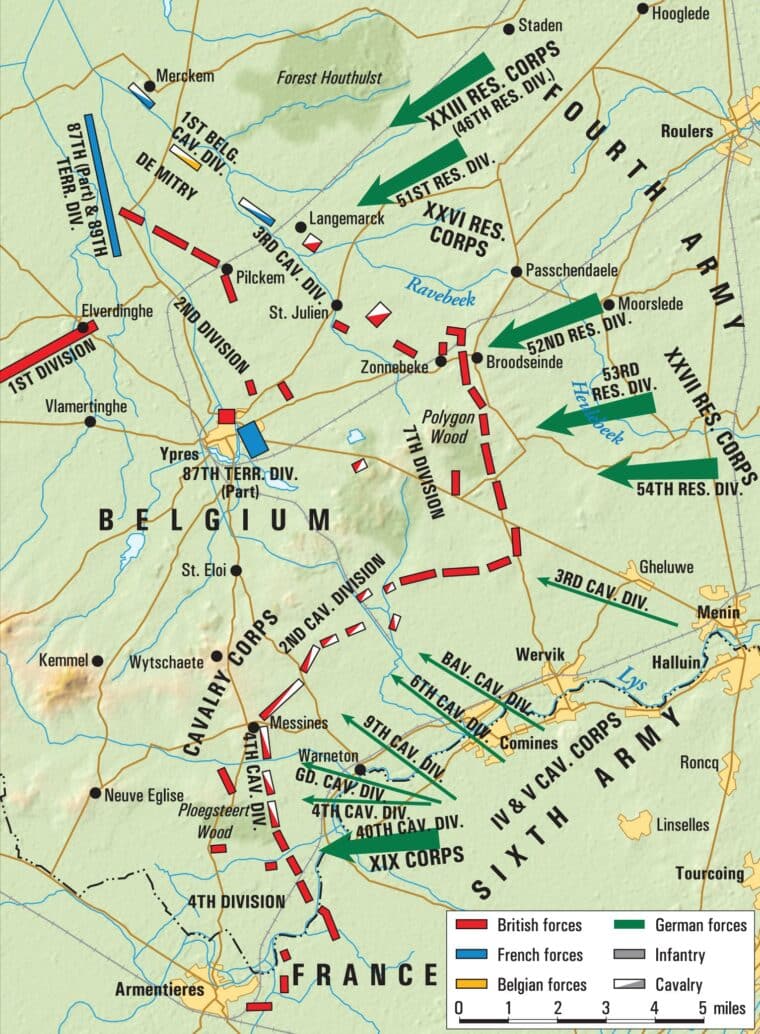
By Bill Carroll
October 19, 1914. Near the Belgian city of Ypres, two armies clashed in the first of three titanic struggles for control of the Western Front. The German advance had been blunted at the Marne, and now began the “Race to the Sea” with each side seeking to outflank the other, digging trenches as they went. It was a battle of endurance, adaptation, and nerve.
Fast forward to today: Wrigley Field becomes a stand-in for Ypres. Two Big Ten forces, Minnesota and Northwestern, march toward their own, each armed with distinct philosophies, each seeking leverage in a season defined by attrition and opportunity.
Offensive Fronts: The Push for Territory
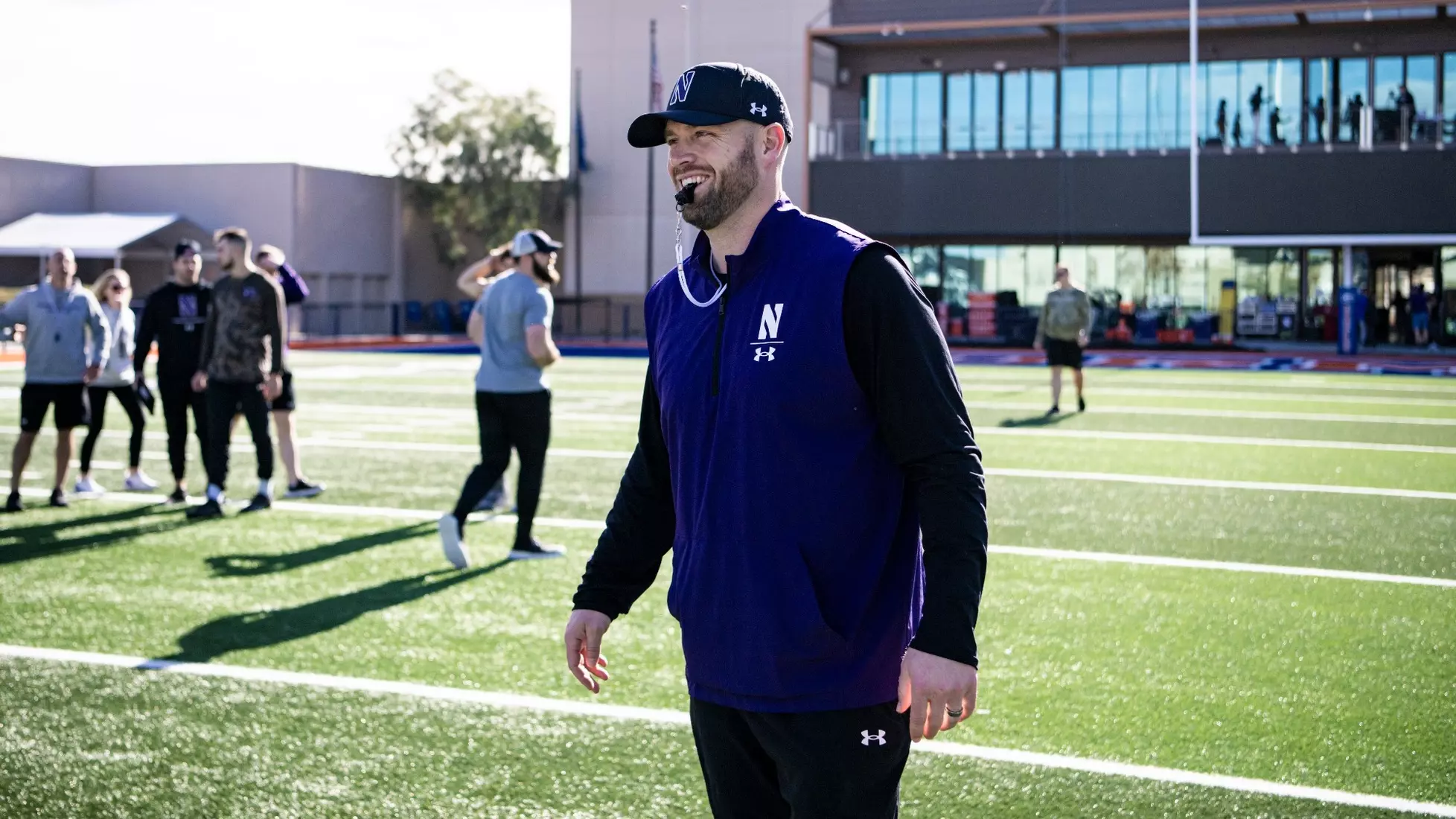
Northwestern, under David Braun, uses tactics like John Denton Pinkstone French, 1st Earl of Ypres, a cautious general. His Wildcats deploy a ball-control offense, a trench-by-trench advance designed to protect the football at all costs. With OC Zach Lujan scripting a “master s-level” scheme, Northwestern runs the ball on 55% of snaps, grinding out 4.7 yards per carry. The mantra? Hold the line, minimize risk. Just 10 turnovers in 2024 and an NCAA-record single fumble underscore their discipline. Like the French at Ypres, they trade speed for security, hoping patience outlasts pressure.
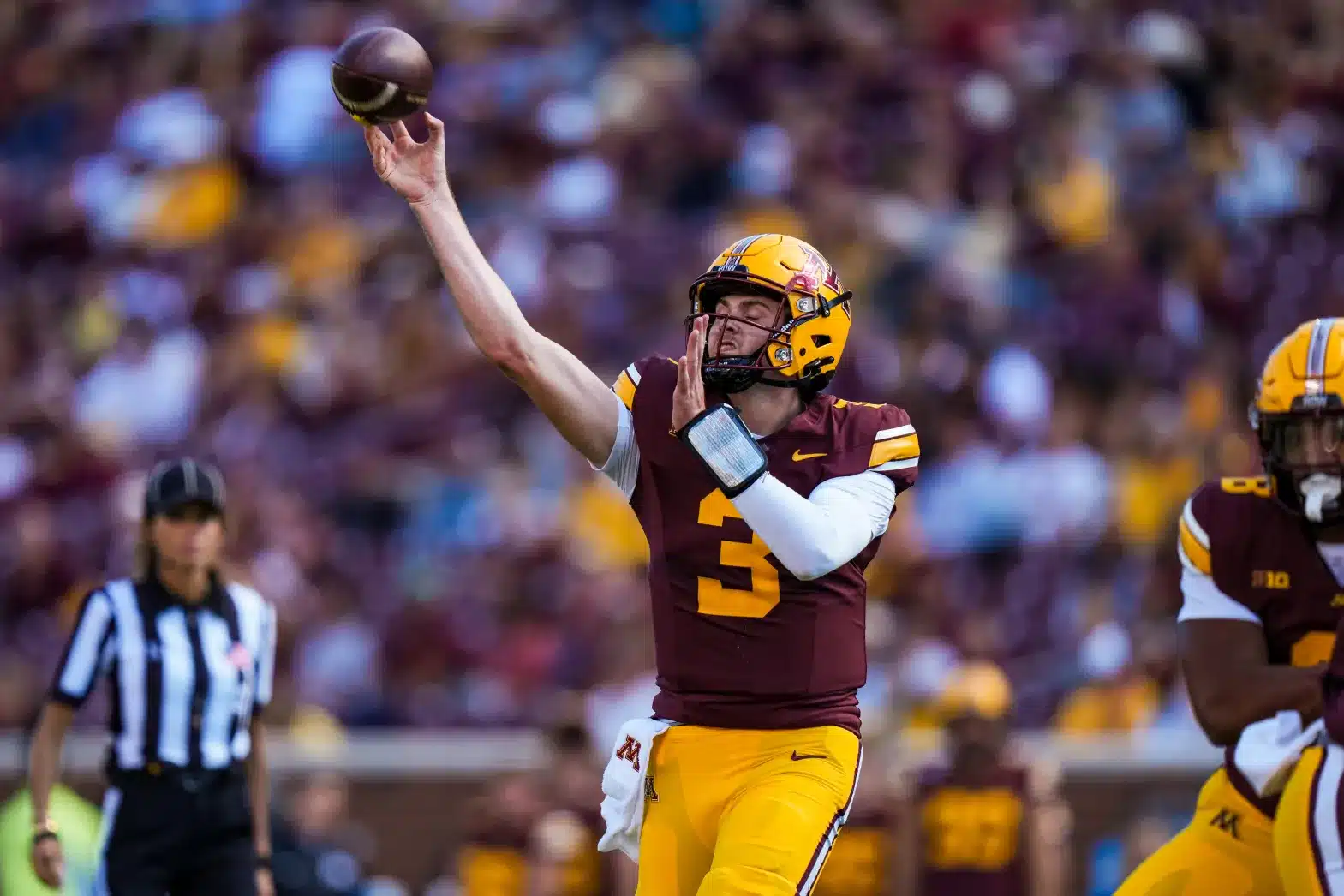 Minnesota counters with a spread-style attack, a more fluid maneuver akin to the Germans’ push for open ground. Rupprecht Maria Luitpold Ferdinand was a creative and dynamic leader whose efficient and effective formations achieved their objectives. Under a similar leader, P.J. Fleck’s Gophers pass on 56% of plays, weilding quick drops and RPOs stretching defenses horizontally. RS freshman QB Drake Lindsey, a towering 6’5” presence, commands the aerial assault with 1,881 yards and 11 TDs. Behind him, RB Darius Taylor and Fame Ijeboi provide balance, but the Gophers’ true strength lies in tempo and precision, artillery strikes rather than bayonet charges.
Defensive Lines: Trenches and Counterstrikes
David Braun’s Wildcats dig in with an aggressive 4-3 scheme, forged in the crucible of his NDSU days. They forced 22 turnovers last season, continuing to prize discipline and gap integrity. Last week, versus a more talented Michigan team, they forced five! Think of them as the entrenched French forces, unyielding, methodical, waiting for mistakes. LB Mac Uihlein (85 tackles in 2024, 45 solo stops, 25 assists, 6 TFLs, and 4 INTs this year) and S Robert Fitzgerald (92 tackles) anchor a unit that bends but rarely breaks.
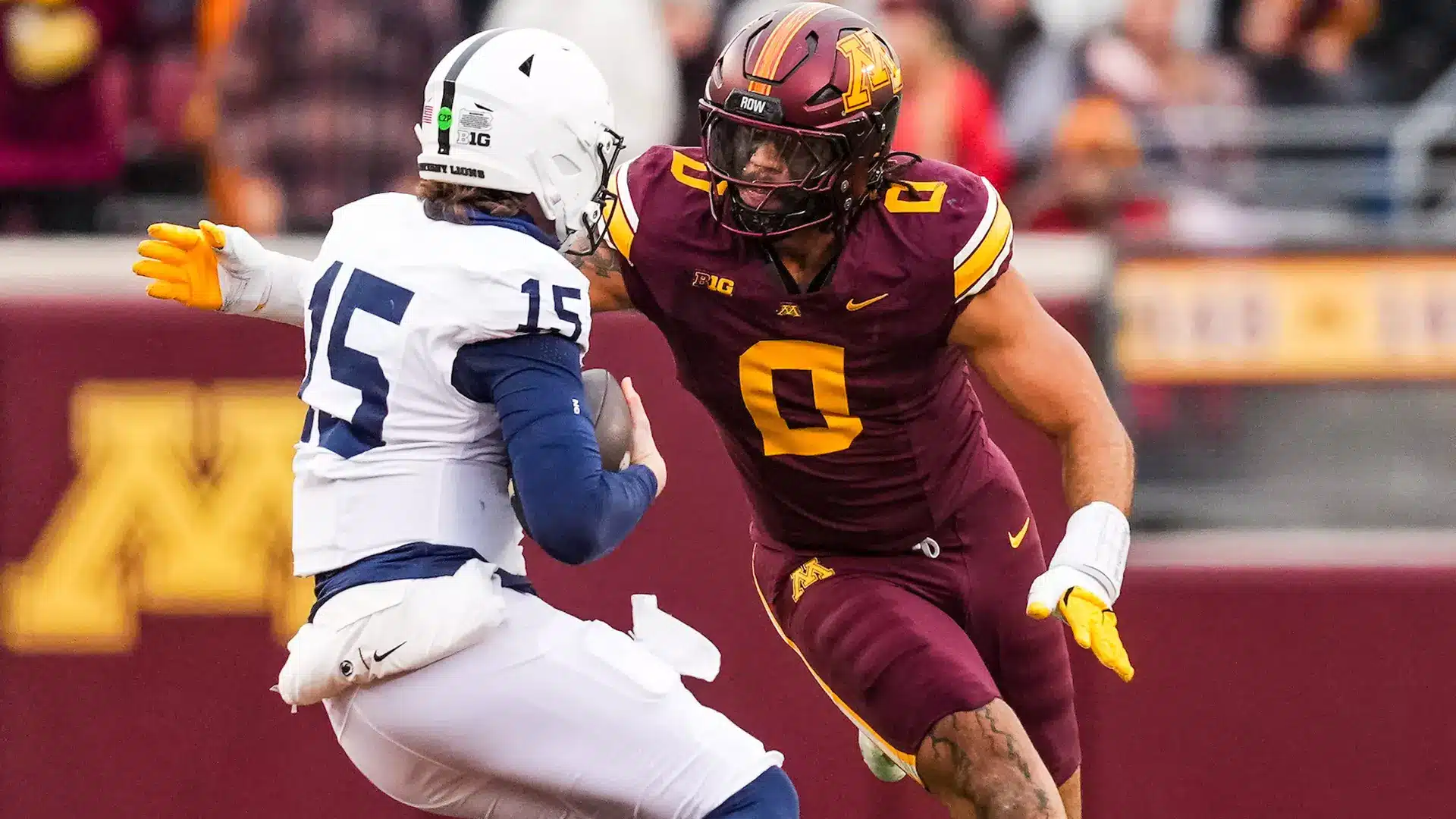
Minnesota, by contrast, fights with mobile ferocity. Their 4-2-5 base morphs into pressure packages, sending waves of rushers like shock troops. DE Anthony Smith (8.5 sacks, 11.5 TFLs) leads the charge, flanked by LB Devon Williams and Maverick Baranowski. The Gophers led the nation in blitz rate and sacks last year, and under DC Joe Rossi, expect no quarter. If Northwestern is the trench line, Minnesota is the over-the-top raid.
Key Terrain: The Line of Scrimmage
Statistically, the battle hinges on ground control. Northwestern averages 4.7 yards per rush, while Minnesota’s defense allows just 3.4. Flip the script, and Minnesota’s run game sputters at 3.6 YPC against a Wildcat front that yields 4.6. In other words, if Northwestern can sustain its ground game, it shortens the field, limiting Minnesota’s possessions, as holding at Ypres meant denying the enemy a path to the Channel.
Final Dispatch
Like Ypres, this clash will not be won in a single charge but in countless small victories, holding on third downs and three or more, red-zone stands, forced turnovers. Minnesota brings surprising firepower and speed; Northwestern counters with discipline and attrition. One side seeks to break through; the other to hold firm.
Prediction? In 1914, the lines froze, and winter set in. Here, expect a similar grind: a game decided in the trenches, where patience and precision matter more than flash.
Projected Score: Minnesota 27 – Northwestern 23.
Each team’s performance against those Big Ten West rivals suggests how the match-ups might go: Northwestern showed it can shut down Wisconsin’s offense, while Minnesota’s recent victory over Illinois (and a convincing Michigan State win) shows it can handle similar Big Ten competition.