

 NFL
NFLGrowing The Game
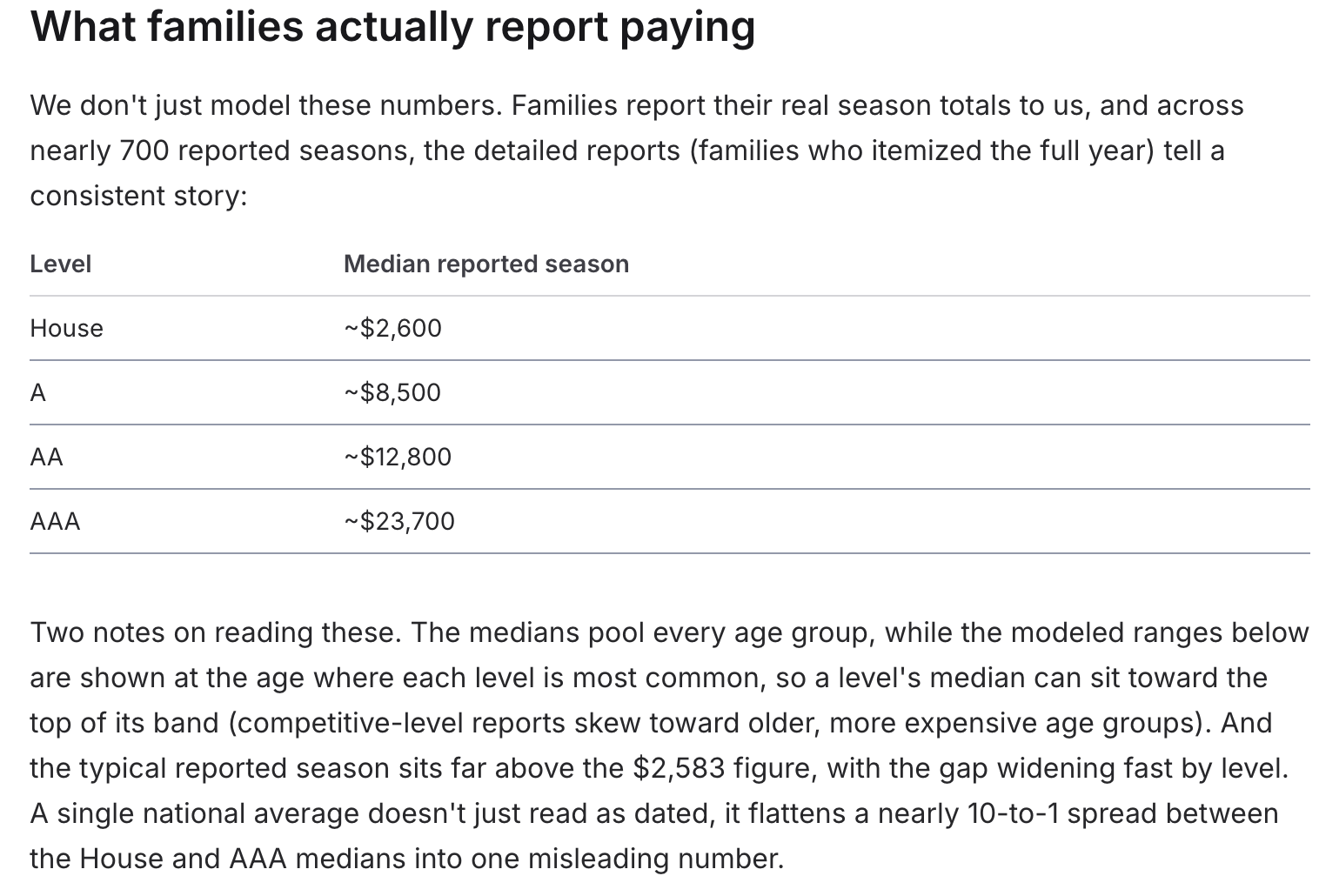
The NHL has always been the littlest brother of the “Big 4” North American Sports leagues. There are numerous factors at play here, the main one being how prohibitive the weather is in most of the United States. You can’t just go outside and play hockey the way you can go to a park and hoop or toss the ball around with your pops. Ice hockey has notoriously become incredibly expensive for families.
 Despite this, the NHL has seen a surge in popularity recently, largely due to certain Netflix shows, a thrilling Olympics, and the success of franchises in non-traditional markets. Recently, the Dallas Stars unveiled plans for a $3 billion entertainment complex to serve as the team’s future home. The DALLAS, TEXAS hockey team is investing $3 billion into the game of hockey in the metroplex. With this type of projected growth, the NHL is bound to make some bold moves. Even with a few speed bumps, the NHL is flourishing. The NHL revenue was reportedly between $7.5 and $8 billion last season.
H-Town
 After the repeated success of teams like Tampa Bay, Florida, and Carolina, the expansion sounds like a no-brainer. These markets have huge amounts of money, potential fans, and tax incentives for players. Houston seems like a slam dunk for an NHL market. Recently, the war between Houston and Austin for an NHL franchise has taken a major turn toward H-Town, largely because Houston is a much larger media market. Austin does have an AHL affiliate in Cedar Park, the Texas Stars, who do very well in their own right. However, Houston is the clear frontrunner. Out of 210 Media Markets in the US, Houston ranks 6th, with more than double Austin’s population.
I absolutely think that Houston is the natural next-man-up for the NHL. The prolonged success of the Dallas Stars, alongside the success of Olympic Gold Medalist Hannah Bilka and upcoming prospects like Cross Hanas, Kade O’Rourke, and J.P. Hurlbert, showcases how much staying power hockey has in Texas. A natural rivalry, stoked by the long-running Silver Boot series in MLB between the Texas Rangers and Houston Astros, only underscores how intense this rivalry will eventually become.
As a Dallas-Fort Worth native, the prospect of a “Silver Boot but make it hockey” makes me salivate. The battle for Alberta but in Texas would be very fun to watch for all hockey fans, not just those who wear bolo ties and ten-gallon hats and dual-wield .357 revolvers.
Third Time’s The Charm
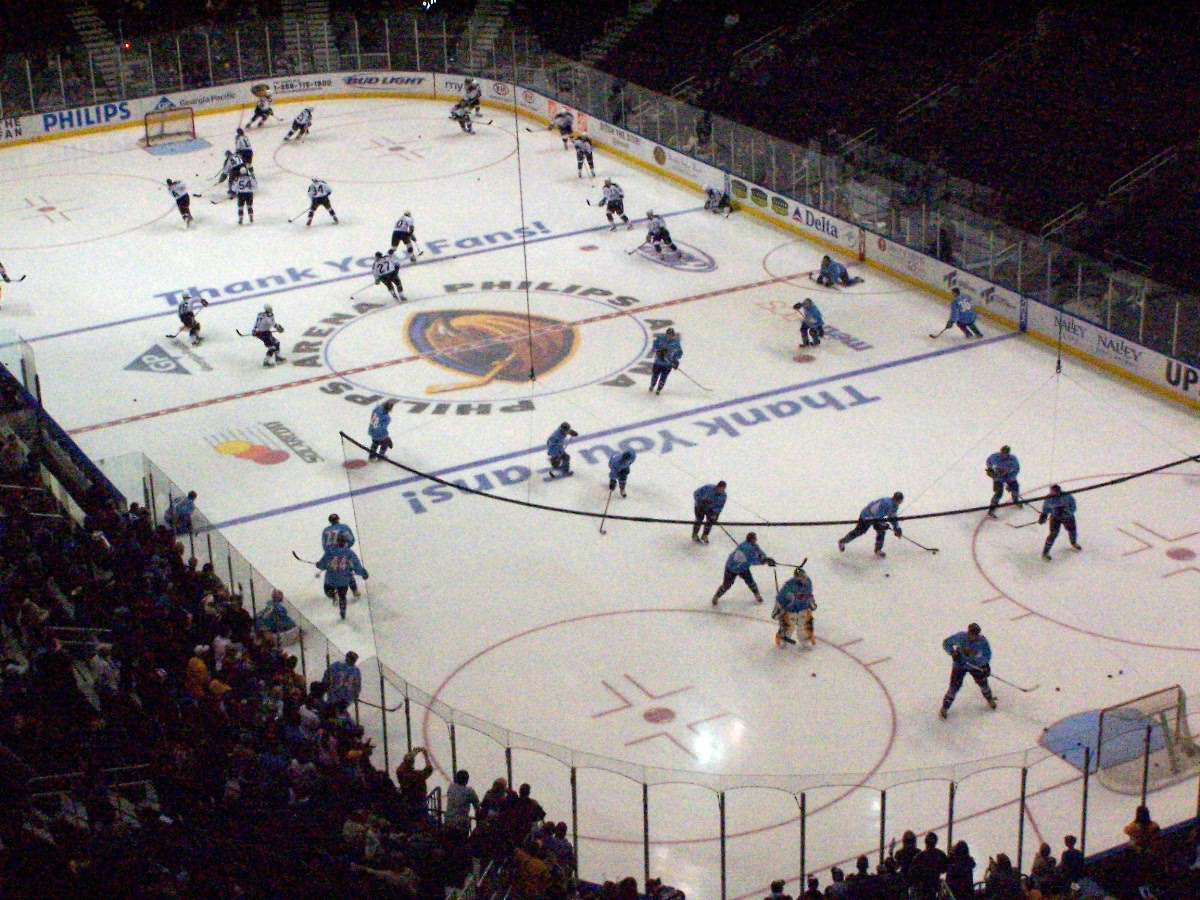 In my opinion, the most intriguing bit of this whole expansion is that Atlanta is a more convoluted story. Many fans, both casual and die-hard, are scratching their heads as to why Atlanta deserves a 3rd swing at a hockey team. The Thrashers’ 2nd go at fielding a team did not go as poorly as people would lead you to believe. The Thrashers had to endure a lockout in the 2004-05 season and were only given 11 seasons of runway before their team was ripped from them again. Attendance in their final season was not great, but they filled over 75% of their (admittedly small) stadium on average. The city loved the Thrashers, and the market was there for a team, so what happened?
A Star-Crossed Love Affair
To summarize, the ownership group at the time had no interest in owning a hockey team. Atlanta Spirit Group, after running the franchise into the ground for a decade, stopped allowing the Thrashers to play in their home arena. After finding themselves homeless with no other NHL arenas to play in, the NHL forced them to sell. Gary Bettman famously proclaimed days before the move to Winnipeg that the team would not be moved. The purchase by True North Sports led to the team moving into a relatively new NHL-ready arena that was then home to the Manitoba Moose. Winnipeg is a small but hockey-obsessed market, and the 11th-richest man on Earth now owned the team.
The Atlanta Thrashers were doomed from the start. With a fresh start and a growing game, Atlanta is very likely to get yet another crack at it. Atlanta is one of the largest metropolitan areas in North America, with the greater Atlanta area containing 6.4 million people, ranking 6th in the US. That is a lot of potential fans.
It is fun thinking about the possibility of up to 36 teams (yes, I said that right; many analysts predict a future with 36 NHL teams). Is there even enough NHL-quality talent to fill 36, let alone 34 rosters?
The Talent Issue
The immediate issue is that there isn’t enough talent at the moment to field 36 NHL-caliber rosters. There are hardly even enough starting NHL goaltenders in the league. Last season, only 19 goaltenders started 50 games or more. Most of the bottom-dwelling teams are a revolving door of sub-par goalie-tandems and AHL journeyman defense pairings. The prevailing opinion that you will find on the internet (not real people) is that there aren’t enough good players to go around. You’re creating a million Seattle Krakens by expanding the league. I’m here to say that’s not true.
There is plenty of talent in the league; if anything, I feel as if we are drifting towards a trend of superteams that could stand to be spread a little thinner. We have seen repeated dominance from teams like Las Vegas, Florida, Carolina, Dallas, Tampa Bay, and Colorado. I am sure the Seattles, Vancouvers, and Calgarys of the world could stand to gain. Whereas the titans of the league could stand to lose, rather than remain towering over the league.
Let’s go back to the Milan-Cortina Olympics. Most of the NHL representation came from 4 countries: Canada, the USA, Finland (minus one player), and Sweden, which fielded rosters entirely composed of NHL talent. The remaining countries managed to play well enough; Slovakia actually finished with the same record as Finland and Sweden in group play. I’m not saying we’d plug and play and have the same level of talent across the league from the jump, but in the not-so-distant future, the talent level will stabilize, and the NHL will be just fine.
The Forecast
 The growth of the game will always be paramount, but is a 34- or even 36-team NHL the answer? 34 teams would be more than any other Big 4 league. We have started to witness the atrophy of MLB rosters as a result. When the growth of the sport slows down, who is left that can hit a fastball? The quality of baseball’s roster has declined significantly in the last decade. Is this what is in store for the NHL once the wagon creaks to a halt?
Unbridled Growth
The simple fact is that growth cannot continue ad infinitum. Eventually, the market will be capped, and interest will start to wane. What, then, will the league do when the bottom-10 teams of the league fail to make the playoffs for a decade, and attendance slows to a trickle? That is far from Gary Bettman’s problem, as I’m sure he will be soaking up rays on the Amalfi Coast at that time, his worries of revenue and ad deals melting away like the ice in his mojito.
This is an issue that the league is not concerned with. All of the points I have brought forth assume that the market continues to grow at this pace. That the money never slows, and that the talent always grows. I love the NHL and think the sport of hockey has never been in a better spot. However, I also remember what the Panthers’ stadium looked like before they became the villains they are today. Should we start uprooting fanbases and move them back north to save face, and in the process, a couple of bucks? I know that the Panthers, Stars, and Golden Knights most likely would not be able to sustain 30-40 year cycles of mediocrity that are prevalent in leagues like the sacred NFL.
How Many Pieces Of The Pie Can There Be?
The NHL does not and will not have the staying power of the NFL any time soon, and probably ever. A miserable NFL franchise can weather the storm of never being good. An NHL franchise absolutely cannot. It’s so obvious, evident, and in our faces that I am amazed nobody is talking about it. North American sports is notoriously anti-relegation. When attendance trickles after a long dry spell, you can bet your ass that things will be moving.
I love the NHL, hockey, and the PWHL. Hell, I love the AHL, OHL, USHL, and ECHL. I don’t think that it is smart business-wise. No matter how big the pie is, there are only so many slices to be handed out before your team’s slice starts to look like an elementary school pizza party slice of stale, cold cheese pizza. Enjoy your stuffed crust while you can. In the distant future, your slice might be reallocated to someone with a higher caloric need than you.