

 NFL
NFL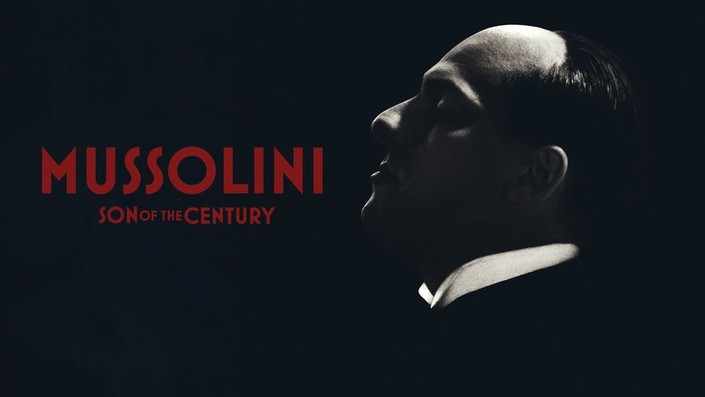
By: Matt Overton
There must be some poor souls out there who spend enough money on a stripper that they become convinced she actually likes them back. Another kind of poor soul can be hoodwinked into thinking a billionaire politician is actually going to enact positive change instead of personally enriching himself and spending hundreds of millions of taxpayers’ dollars without a lick of approval. How is it that the entire nation of Italy was completely enchanted by a grumpy 5’7” newspaperman? After the last decade or so, it’s a little easier to answer that question, but Joe Wright uses Benito Mussolini’s rise to power as a way to understand our own timeline in a very creative and intelligent way.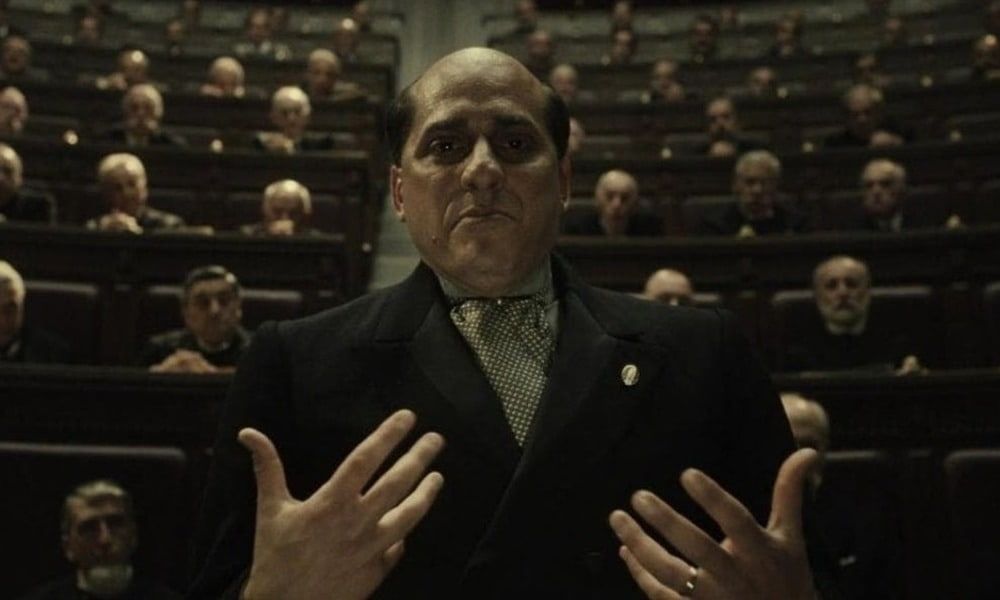
Mussolini: Son of the Century (M. Il figlio del secolo) is Joe Wright’s latest artistic endeavor in collaboration with Paolo Sorrentino and Mubi. It is an eight-part miniseries that charts the rise of Italian fascism from its inception to its institutionalization through Mussolini’s dictatorship. It begins with his 1919 speech, where he announced the creation of Fasci Italiani di Combattimento (Italian Combat Fasci), which would become the National Fascist Party. This speech is delivered in the first episode, in front of a relatively small crowd of avid, violent supporters, and Mussolini espouses his ideas for what his new party will look like. He molds fascism after his own image and continues to hone and develop this ideology throughout the show.
Luca Marinelli is Benito Mussolini; there is no doubt about that. I had never seen him act before, so looking at pictures of the man now, it is unbelievable. The makeup department deserves every award for turning this dashing Italian actor into such a pudgy, balding, vile individual. But it is his performance that is the truest miracle here—he legitimately delivers what is by far the best performance of the year, all media being considered. Marinelli’s Mussolini is a brilliant mixture of fragile masculinity, egotism, cunning, and a slippery way with words only a newspaperman could achieve. He speaks directly to the camera, bringing the audience in on his tormented thoughts and violent thought process. The charisma levels this single actor achieved amount to about 99.5% of the global cinematic output. Every episode, his magnetism had every ounce of my being utterly absorbed into the screen.
There is a lot to say about how this series portrays Mussolini and his rise. Casting Marinelli was certainly a deliberate choice on the filmmaker’s part and speaks to the why behind all of this. This lead performance is so generationally captivating that it almost convinces you this character deserves your sympathy, but then he goes and commits another fascist atrocity, and you’re immediately reminded what show you’re watching. I found myself thinking about the writings of Frank Herbert often—how else do you explain the rise of such a villainous man if not for his endless reserves of charisma? Mussolini checked all the boxes: the personality, the brilliance, and the ego to rise from a small-time journalist to overthrowing the Italian government from the inside. When a populace is desperate enough, they are easily manipulated, and this is something Mussolini was acutely aware of and fully took advantage of.
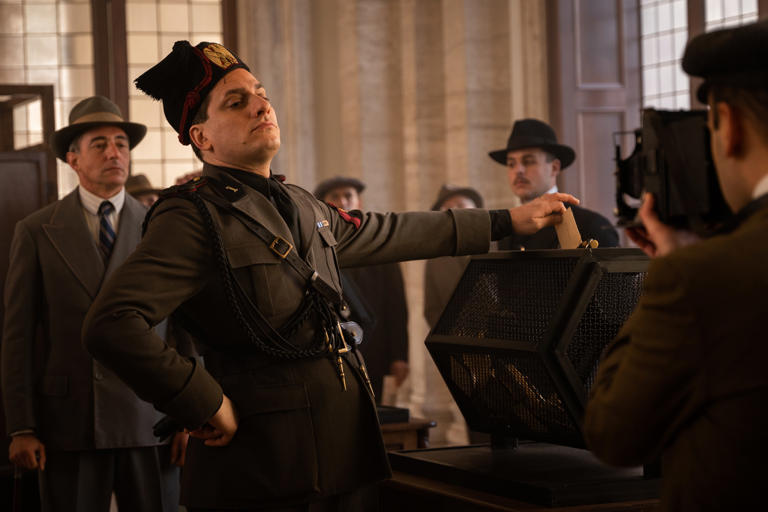
One of the biggest questions we ask ourselves when it comes to historical events like this is How did anyone let this happen? This series is making an attempt in its depiction—more or less objectively—so that we may better understand this history and also current events. Fascism has reentered the culture because we are still living in the worst timeline, but for Americans who love to throw labels like communist, socialist, etc. around, this show offers an enlightening experience. We bear witness to the fragile facade of politics, the weakness of men’s morals, and the lengths individuals are willing to go to gain power.
The pure artistry on display by Wright and crew is the likes of which I haven’t seen on television in years. His direction is inspired by some of the European New Wave movements, which are visible whenever characters are riding in cars, and there are various images projected on the windows. There’s a wholly unique visual aesthetic to Son of the Century that guarantees each episode is a feast for the senses. Tom Rowlands of The Chemical Brothers provides the electrifying, punk rock score that complements the story in its incongruity. Whenever the music kicks in, it intensifies the drama with loud electric guitar riffs, booming drums, and a rowdy, unexpected nature that amplifies the anxiety of the conflict.
M: Son of the Century is one of the absolute best pieces of new media in 2025. Everyone involved in this production should get all the commendation possible, and Luca Marinelli deserves the entire world. His performance, and the miniseries as a whole, will be recorded in the annals of anti-fascist art. As much as this show humanizes Mussolini, it never stutters in its characterization of him as a disgusting and dangerous man. A violent, emotionally sensitive, power-hungry, egotistical revolutionary, who recognized his moment—however twisted it was—and single-handedly altered the course of human history. This show is incredible, history is amazing, and I’m so glad I never remembered to cancel my Mubi.