

 NFL
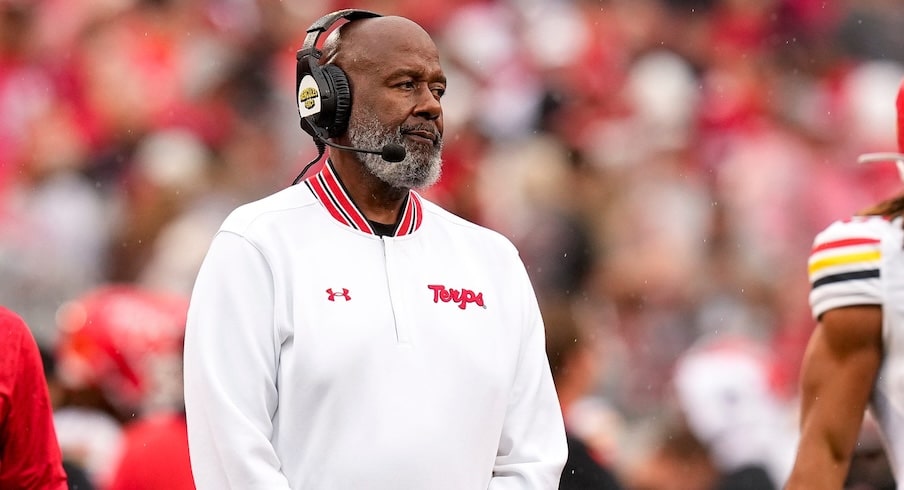
Mike Locksley is no longer the head football coach at the University of Maryland. Aazaar Abdul-Rahim will serve as the interim head coach for the remainder of the season. Locksley led the team for eight seasons and won three consecutive bowl games. However, a disappointing decline ultimately cost him his job. Locksley’s time in College Park has ended. Maryland fired Locksley on Wednesday after the Terrapins fell to 2-5, extending their losing streak to five games.
For some Maryland fans, this decision was overdue. For others, it marks the disappointing end of a tenure that once offered real hope for the program’s future. Locksley’s departure is about more than wins and losses. It is about what he accomplished, what Maryland failed to build around that success, and how quickly the conversation about a coach can change when a program struggles.
A tenure that deserved a better ending
When Locksley returned to Maryland as head coach in December 2018, he inherited a program facing significant challenges. His connection to the university, his recruiting experience, and his work at Alabama under Nick Saban gave Maryland a coach who understood the region. He also knows the demands of major college football. His teams eventually gave Maryland fans something they had been waiting for: sustained postseason appearances.
From 2021 through 2023, the Terrapins won three consecutive bowl games, finishing 8-5 in both 2022 and 2023. That stretch was a genuine accomplishment. It showed Maryland could compete at a higher level than in some previous seasons. Those seasons mattered. They gave the program momentum, helped set expectations, and built the belief that Maryland could become a consistent bowl team in the Big Ten.
But college football is unforgiving. The 2024 and 2025 seasons both ended 4-8, and the 2026 campaign unraveled after a 2-0 start. Five straight defeats eventually ended Locksley’s tenure. Locksley deserves credit for the progress his teams made. He also has to be held accountable for the results that followed. Both things can be true.
Maryland’s expectations were bigger than bowl games
The difficult question is whether Maryland did enough to turn those successful seasons into a sustainable program. Winning three consecutive bowl games mattered, but the next step was to compete with Big Ten opponents. Build a roster that could sustain that success. That did not happen.
Maryland struggled through consecutive losing seasons and entered the 2026 season needing to demonstrate tangible progress. Instead, the Terrapins suffered a 54-3 home loss to UCLA and later surrendered a 10-point halftime lead in a 37-30 defeat against Rutgers. Those results made the university’s decision increasingly understandable.
Still, firing a head coach does not automatically solve the problems that contributed to the team’s decline. Maryland must examine its recruiting strategy, player development, coaching staff, financial investment, and long-term vision. The next coach will inherit those same institutional responsibilities. If the university expects different results, it must align its expectations, resources, and football operations. Changing the person in charge is one decision. Building a consistently successful program is a much larger undertaking.
The questions surrounding Locksley’s job security
Another part of this story deserves attention: the way the media covered Locksley’s job security before his firing. On September 30, athletic director Jim Smith publicly said he was aligned with Locksley on the work ahead and expressed confidence in Maryland’s coaches and players. That statement was not a guarantee of employment, but it was a public indication of support.
Then, on October 18, the Associated Press reported that Maryland’s decision to fire defensive coordinator Ted Monachino suggested Locksley might be safe for the time being. Three days later, Locksley was gone.
That sequence raises a fair question: How responsibly was the conversation about Locksley’s future handled?
Reporters had every right to question his job security. Maryland’s record warranted scrutiny, and fans deserved answers about the program’s direction. But there is a difference between reporting that a coach is under pressure and suggesting his future is decided. The media should distinguish between confirmed information, informed analysis, and speculation. When those distinctions blur, readers can be left with an impression of certainty the available evidence does not support.
At the same time, Locksley’s eventual firing does not prove that earlier reports were dishonest. Athletic directors can change their minds, circumstances can deteriorate, and public support does not necessarily reveal private deliberations. The criticism, therefore, should focus on the quality and consistency of the reporting rather than assume that journalists acted in bad faith.
Locksley’s firing also puts Maryland’s leadership under scrutiny. If the university believed he could turn the program around, what changed? Was the decision driven by the losing streak, the longer-term record, or a combination of factors? Those are questions worth asking of the people who made the decision, not just the coach who lost his job.
What Locksley leaves behind
It would be easy to remember Locksley only for the losing streak that preceded his dismissal. That would leave out an important part of his Maryland story. He helped deliver three straight bowl victories, maintained recruiting connections in a talent-rich region, and led the program through a period that included meaningful progress on the field.
But his overall record also reflects the limits of that progress. Locksley finished 39-54 at Maryland when you include his interim stint in 2015. His legacy is complicated. He helped Maryland reach a level of consistency the program had long lacked, but he could not sustain it.
That does not make the earlier accomplishments meaningless. It does mean the university ultimately wanted more than the program was delivering. That is the difficult reality of college football: appreciation for past achievements does not eliminate expectations for future results.
Maryland is now at a crossroads
Now comes the most important part of this transition. Maryland must find a coach who can recruit, develop talent, build a strong staff, and compete more consistently in the Big Ten. The university needs a plan that extends beyond the excitement of a new hire or the first few victories of a season.
The next coach will also need patience and support from the administration, but that support must come with clear expectations and accountability. Fans have invested their time, money, and loyalty in this program. They have every right to expect a team that can compete consistently and gives them reasons to believe the future is brighter than the recent past. The university, as much as the next head coach, is responsible for delivering that future.
A complicated goodbye
Mike Locksley’s departure is not a story of complete failure, nor is it a story of a successful tenure cut short without reason. It is the story of a coach who helped Maryland reach meaningful milestones but ultimately couldn’t sustain the progress needed to keep his job. I believe his accomplishments deserve recognition, even as the decision to move on can be understood in light of the results. Maryland can appreciate what Locksley achieved while acknowledging that the program needed a different direction.
The media’s role in shaping the discussion also deserves examination, particularly when speculation about a coach’s future becomes a major part of the story. Fair scrutiny is necessary. So is a commitment to distinguishing what is known from what is merely anticipated. Locksley’s time in College Park is over. The bowl victories will remain part of his legacy, just as the losing seasons will remain part of the record.
The real test for Maryland now is whether this firing marks the start of meaningful progress or simply another coaching change, followed by the same questions a few years down the road. The next chapter belongs to Maryland. What the university does with it will determine whether the end of the Locksley era leads to something better.