
 NFL
NFL
By Bill Carroll
The British “Tankettes”: Mighty Mites That Couldn’t
In the late 1930s, the British envisioned a glorious future where nimble, lightly-armored “tankettes” and independent “jock columns” would dart around enemy forces like caffeinated squirrels. It was a fine idea until it was tested. Unfortunately, in practice, these pint-sized tanks crumpled under the sheer weight (and firepower) of heavily armored German Panzer divisions. Turns out, modern warfare isn’t a playground for glorified go-karts.
Football is not tank warfare, however, some of the same principles do apply.
Jim Schwartz took over as Eagles defensive coordinator in 2016, and he inherited a defense held together with duct tape and bad ideas. Fletcher Cox was miscast as a defensive end, Brandon Graham was pretending to be an outside linebacker, and the corners, Byron Maxwell and Nolan Carroll were, well, there. It was a mess.
Schwartz wasted no time scrapping the old 3-4 disaster for his aggressive, four-down, gap-shooting scheme. The franchise hyped it up as revolutionary, and fans bought in. To his credit, it worked. The Eagles finished 2016 ranked fourth in defensive DVOA, second against the pass, and got big performances from newcomers Rodney McLeod, Jalen Mills, and Nigel Bradham. Not bad for year one.
In 2017, the Eagles’ defense surged to fourth in DVOA and eighth against the pass. By 2018, they tumbled to 15th in both. The drop-off was obvious but not exactly electrifying, defenses rise, defenses fall. It’s the NFL circle of life.
I have mentioned “Defense-adjusted Value Over Average.” AKA DVOA, which tries to adjust for context, but like nearly all statistics, it has shortcomings. No one can definitively measure how great (or mediocre) some of Jim Schwartz’s Eagles defenses truly were, let alone why, even attempting to reach a consensus is futile. Forget it; it’s like arguing over the best pizza topping: heated, subjective, and ultimately a waste of time.
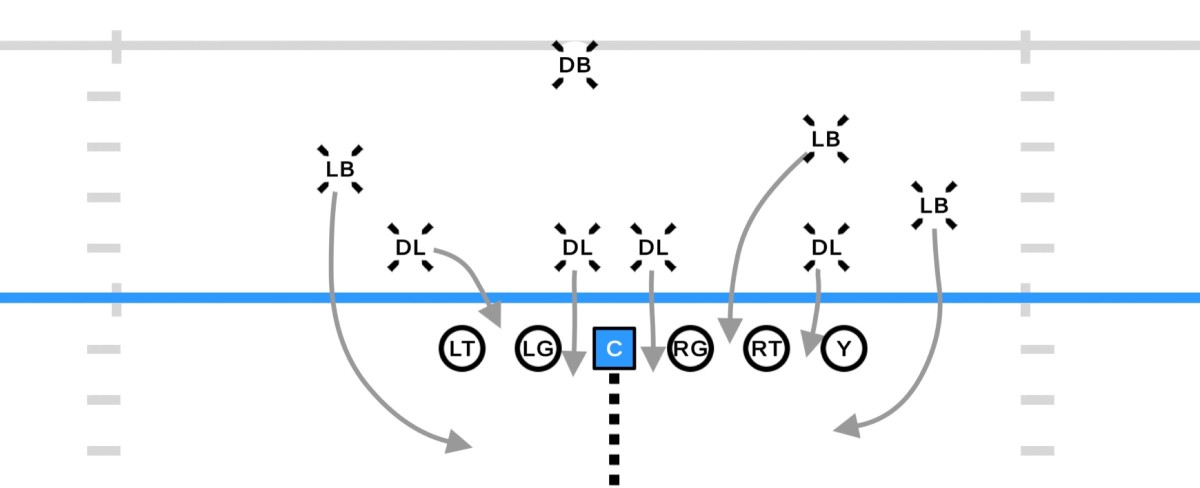
What is worth analyzing is how Schwartz’s defense attempts to thrive. Is it a lofty goal? Smothering opponents, surrendering nothing, and marching through the season undefeated on the way to Super Bowl glory. The foundation of Schwartz’s grand design? Step one: crush the run game.
In 2018, the Eagles’ defense allowed 21.8 points per game, a 41% conversion rate on third down, and a 60.9% fourth down conversion rate. They had pressure on 26.3% of drop-backs and blitzed on 16% of snaps. These are not embarrassing numbers, but they are far from dominant. In the most recent Super Bowl, the Eagles’ defense had pressure on 38% of drop-backs and blitzed on 0% of snaps. That is domination!
After a 4-11-1 record in 2020, the head coach, Doug Pederson came in and both of his coordinators Jonathan Gannon on defense and Shane Steichen have become head coaches. In 2021 Gannon quickly found ways to put players in positions to win. They allowed 22.6 points per game, 5.2 yards per play, 4 yards per rush, and 6.1 per pass play. That was a precursor to a year, 2022, that saw the Eagles’ defense improve to a unit that allowed just 20.2 points per game, and 4.8 yards per play while allowing 22 passing touchdowns, but snagging 17 interceptions. They were a top 8 total defense.
But with Gannon moving onto the Cardinals, the 2023 Eagles’ defense allowed 25.2 points per game, 5.5 yards per play, and 356.1 yards per game, the 428 points allowed was 30th out of 32nd in the NFL. The Eagles’ defensive collapse was a large factor in the team going 11-6 and being bounced from the playoffs by Tampa Bay 32-9 in the Wild Card round. For obvious reasons, the talented, but callow coordinator, Sean Desai, was not retained.
The French: Masters of Methodical Misfires
The French, the progenitors of the Maginot Line, had prepared for a slow, plodding, chess-like war, envisioning a battlefield where every move was deliberate and controlled. The Germans did not receive the memo, they detonated the chessboard, bringing the blitzkrieg an uber-mobile, aggressive strategy that turned the early war into a track meet the French weren’t ready to run. Spoiler alert: it didn’t end well for France. The Chiefs can likely relate.
The Return of The Old Master
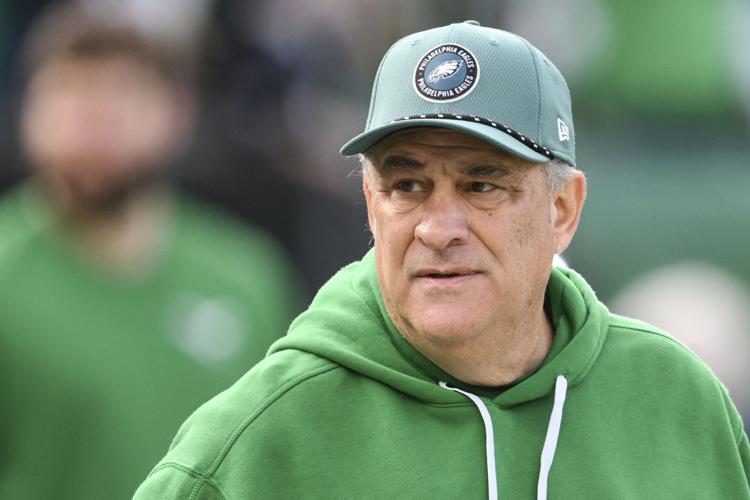
Victor John Fangio’s defense is a chess master’s approach to football: it’s all about deception, flexibility, and forcing offenses to adapt on the fly. Known for its two-high structures and light boxes, his scheme keeps quarterbacks guessing and offenses uncomfortable.
Key Elements of Fangio’s Defense
Two-High Structure
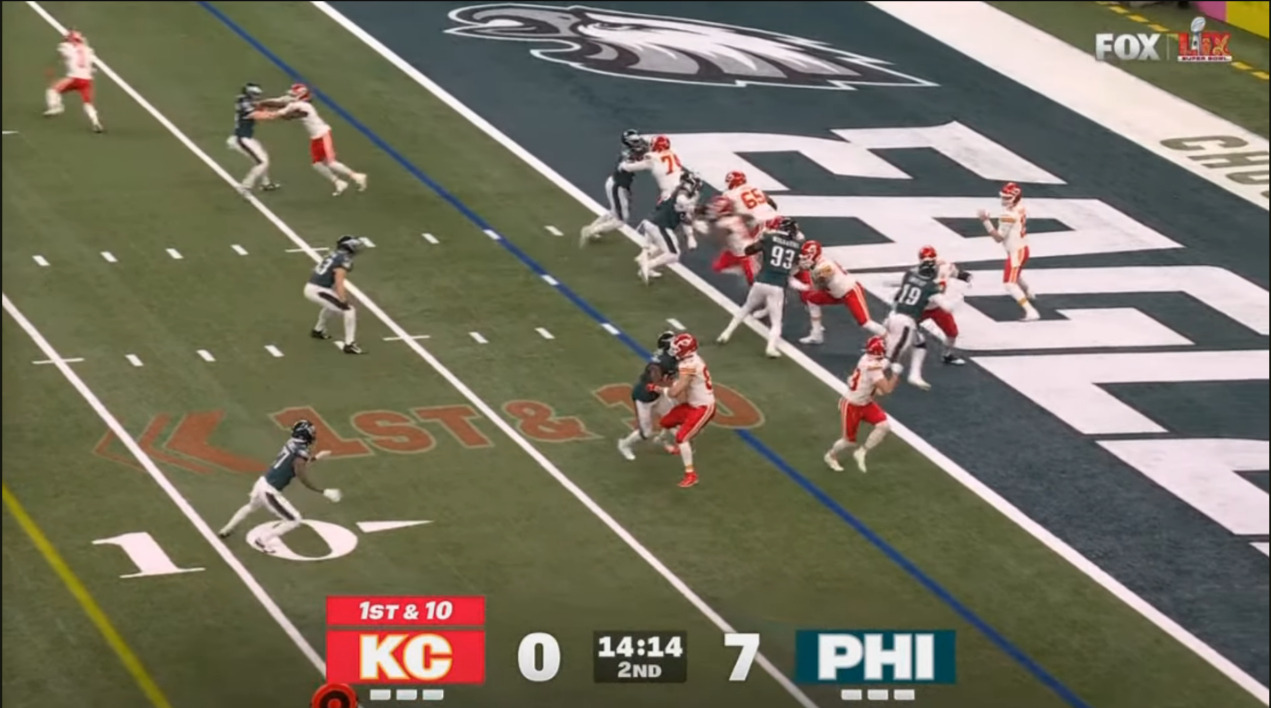
Fangio loves two safeties deep, patrolling the backfield like security guards at a high-end club. This setup denies big plays downfield, funneling the action underneath and forcing offenses to take the scenic route to the end zone.
Light Boxes
Fangio’s teasingly sparse boxes, and fewer defenders near the line of scrimmage, can dare opposing offenses to run the ball. But it’s a trap. These smaller fronts provide flexibility, allowing the defense to pivot seamlessly into pass coverage while still rallying to stop the run when needed.
Disguised Coverages
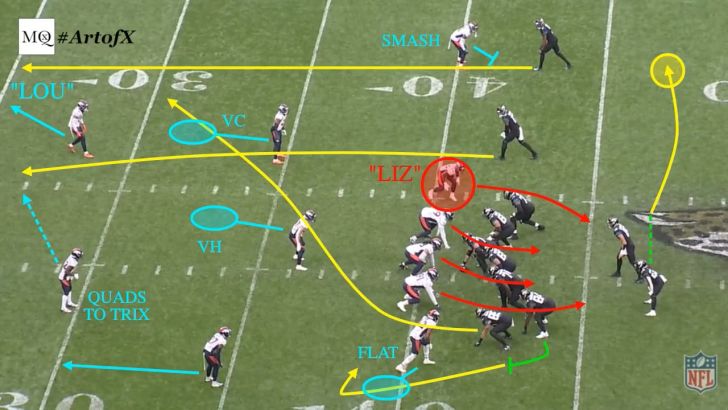
Pre-snap, Fangio’s defense is a master illusionist. Quarterbacks see one thing, but post-snap, the defense morphs into something entirely different. The smoke-and-mirrors approach makes it nearly impossible to predict where coverage will end up until it’s too late.
Post-Snap Reads
The real genius lies in forcing quarterbacks to process everything on the fly. Fangio’s defense shows a consistent pre-snap look, but once the ball is snapped, it demands rapid decision-making based on how the play unfolds, this is no easy task under pressure.
Fangio’s scheme is equal parts science and art, designed to outthink opponents, frustrate quarterbacks, and keep offenses one step behind.
The Japanese Bet It All on “Bushido“
The Japanese doubled down on the idea that sheer grit and warrior spirit could bridge the yawning gap in material, manpower, and technology between them and their adversaries. They caught opponents off guard for a while with daring attacks, but as the war dragged on, their reliance on outdated tactics led to staggering defeats. You can’t win a modern war on spirit alone, beans boots, bullets, planes, ships, and supplies tend to help.
Kansas City similarly has depended upon brilliant schemes and the improvisational gifts of Kelce and Mahomes. It is now clear that they will need reinforcements and more supplies.
What Have We Learned?
If history has taught us anything, it is that fighting the last war is a surefire way to lose the next one. Strategies must evolve with the times, or they’ll crumble in the face of reality like tankettes, tank-destroyer doctrines, or unbridled “warrior spirit” against a world bristling with modern firepower.
Equally dangerous, is planning to outmaneuver and out-plan a football team that is just bigger, faster, and stronger than yours. So next time you are planning for the future, remember: don’t bring yesterday’s playbook to today’s game.