

 NFL
NFL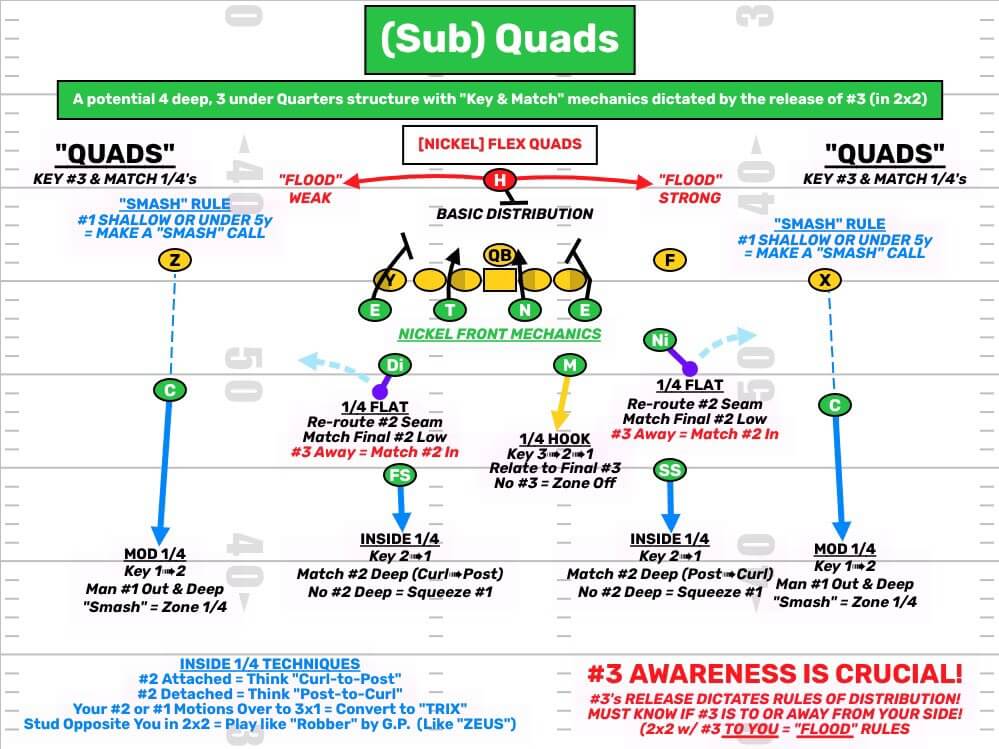
By Bill Carroll
Attacking Vic Fangio’s defensive system requires a strategic approach that exploits its structural weaknesses. While his scheme is designed to limit explosive plays and confuse quarterbacks, offenses can find success by targeting specific vulnerabilities.
I recently had the great pleasure of discussing this with Ted Nguyen, a NFL staff writer for The Athletic.

He breaks down film to uncover the story that the X’s and O’s tell. He can be found on the The Athletic’s Vic Tafur, offering insider access to Las Vegas Raiders fans via their commentary, interviews, news coverage and more, also at: @FB_FilmAnalysis on X, @TedNguyenNFL on YouTube. We analyzed how to, not only, Survive The Eagles, but how to attack the weaknesses of Vic Fangio’s scheme. Here is what he had to say:
Question-against seven and even six defender boxes, why were the Chiefs unable to run the ball effectively?
The Eagles defense did a great job of forcing plays outside. Even in light boxes they have big guys in their front and corners who can tackle. To be able to run a team out of that type of defense you have to be able to get four or five yard runs consistently. When the Chiefs moved Joe Thuney to left tackle, slid Mike Caliendo into left guard benched DJ Humphries they nominally improved their pass protection, but they hurt their run game.
Question-What could the Chiefs had done to alleviate all the pressure that disrupted Pat Mahomes?
Chip, double-team, move the pocket, use much more called QB run, survive long enough to take some deep shots. Running the quarterback can pick up chunks of yards and can force one of the deep safeties to move closer to the line of scrimmage.
Question-How did the Vic Fangio avoid giving up more plays in the passing game?
The corners are so aggressive, jumping everything, which they can because the pressure gets there. The rarely blitz so they can commit seven or even eight players to coverage. In Cover-4, quarters coverage they double Kelce or at least shaded a safety to his area. One of the strengths of this defense is that it limits deep shots. If you can run the ball, you can’t protect the QB and you can’t get deep shots, it’s hard to win.
Question-You said that it takes balls to play a Vic Fangio style defense. What did that mean?
{I}Just meant. Playing aggressive match quarters is risky because of the potential one-on-ones on the outside/
Question-Why didn’t the Chiefs use more six offensive line and/or their big sets with 12 and 13 personnel with two or three tight ends sets for the purpose of protection or running the ball?
I am not sure how effective it would be to have been effective. Imagine asking the extra lineman, DJ Humphries or Wanya Morris to face Zach Baun, Jalyx Hunt, Nolan Smith Jr. or Josh Sweat. I think for what ever reason, Any Reid thought his best bet was getting for or five into the pattern instead of max protecting.
Question-What else could the Chiefs have done to force Vic Fangio to call his defenses differently or attack more effectively?
I get that Mahomes isn’t a big runner, but QB run was working, 25 yards on four carries, if you double that or triple that amount, you might be able to force Vic Fangio to make an adjustment. They were not able to take advantage of one one ones, for the most part. Quinyon Mitchell was exceptional against Xavier Worthy, Hollywood Brown didn’t really make his presence felt and when the weren’t actually bracketing Kelce their coverage was very aware of where he was. The Chiefs didn’t have much else as a threat.
Vic Fangio’s defense is a chess match, except he’s the one hiding pieces, and you’re playing with a blindfold. It’s a scheme designed to limit big plays, confuse quarterbacks, and make offenses grind their way down the field. But even the best defenses have weak spots. The challenge is knowing where to find the cracks and knowing how pry them open. Here’s how to dismantle Fangio’s system with precision.
Below are the top five ways to attack Fangio’s defense:
1. Smash the Light Box with the Run Game
Fangio loves his two-high safety shell, which means fewer bodies in the box. If you’ve got a competent offensive line, pound the rock with inside zone and power runs. Force his safeties to commit, and suddenly, his beautifully layered coverage structure starts crumbling under the weight of simple math—more blockers than tacklers.
2. Abuse the Soft Spots with Tight Ends and Slot Receivers
His match-zone scheme isn’t pure man-to-man, so there are exploitable gaps. A polished tight end running seam routes or a shifty slot receiver working underneath can wreck his defense. If his linebackers are dropping deep, hit them underneath. If his safeties bite, hit them over the top. Either way, you’re dictating the terms.
3. Death by a Thousand Cuts—Quick Passing Game
Deep shots are tough against Fangio, but he dares you to be patient. So be patient. Hit those check-downs, quick slants, and outs. Play pitch-and-catch and let his defenders watch helplessly as you move the chains five yards at a time. The goal? Get him to abandon his conservative principles and force his defenders into one-on-one matchups.
4. Manipulate with Play-Action and Motion
Fangio’s defense thrives on disguise, but deception works both ways. Use play-action to pull his safeties out of position. Send a receiver in motion to make him tip his coverage pre-snap. When his defenders hesitate for even a fraction of a second, you’ve won. It’s not about overpowering his scheme—it’s about outthinking it.
5. Overload the Deep Zones with Vertical Routes
His two-high structure is built to eliminate deep shots, but it’s not invincible. Send three or more vertical threats downfield, and suddenly, his safeties have too much ground to cover. A well-timed deep post or a slot fade can force a safety into an impossible decision—commit and leave a sideline route open or stay deep and concede the middle.
Conclusion
Attacking Fangio’s defense should not be just about brute force, precision matters. While you exploit the light box with the run; find the soft spots with your tight ends. Be patient with quick passes. Manipulate with motion. Overload the deep zones. If you do it right, you’ll turn one of the NFL’s most disciplined defenses into an confused scramble.
Since Fangio’s scheme relies on match-zone principles rather than pure man coverage, elite tight ends and slot receivers can find soft spots in the intermediate areas. Quick seam routes, crossing patterns, and option routes can stress linebackers and safeties, creating mismatches in the middle of the field.
- Attack the Soft Zones with Quick Passing
Fangio’s defense prioritizes preventing deep plays but can be vulnerable to short, efficient passes. Quarterbacks who are willing to take check-downs, quick outs, and slants can move the chains methodically. Running backs in the passing game can also be effective, as linebackers may be occupied with zone responsibilities. - Use Play-Action and Motion to Create Confusion
Given Fangio’s emphasis on pre-snap disguise and post-snap adjustments, using motion and play-action can manipulate defenders out of position. Play-action forces safeties and linebackers to hesitate, opening up intermediate and deep passing lanes. Motion can also reveal coverage tendencies and create leverage advantages for receivers. - Flood the Deep Zones with Multiple Vertical Routes
While Fangio’s two-high safety look is designed to limit big plays, sending three or more deep threats can stretch the safeties thin. If outside receivers run go routes and a slot receiver attacks the deep middle with a post, the safeties will be forced to commit, creating opportunities for deep completions. This strategy can be particularly effective against Cover 2 and Tampa 2 variations of his scheme.
By focusing on these attack points, offenses can break down Fangio’s disciplined but structured defense, forcing adjustments and creating scoring opportunities.
Again I wish to thank Ted Nguyen for his time and insights.