

 NFL
NFL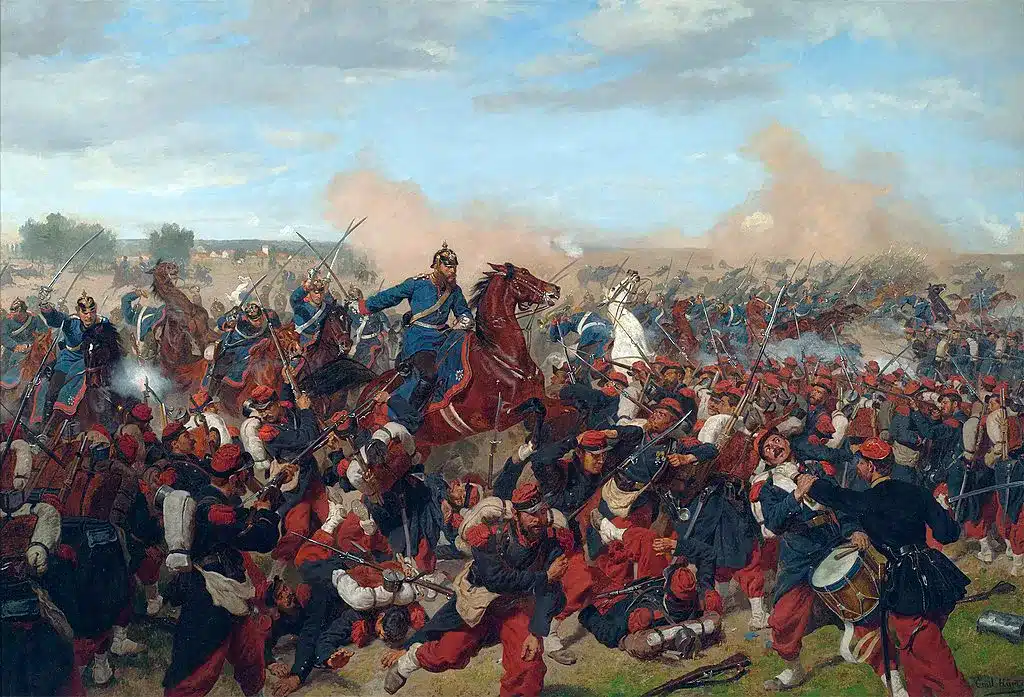
By Bill Carroll
The morning of August 16th, 1870, as dawn stretched itself across a cloud-dappled sky, French Cuirassiers busied themselves with feeding and grooming themselves and their mounts. As they went about their ablutions and routines, the world was rent to blood, mud, madness, and screams around them. Four Prussian six-pounder batteries rolled forward and unlimbered on the heights south of Vionville as the morning burned off.
Three miles east of Mars-la-Tour, the guns settled into the chalky soil, barrels dropping, crews moving with drilled calm. Then the ridge erupted. Shells screamed down into the French cavalry camps, bursting among horses and men with a violence that shattered breakfast tables, shattered ranks, shattered nerves. What had been a quiet morning became chaos in seconds, steel, smoke, and screaming animals, announcing to the French horsemen that the war had found them before they were ready.
Prussia (1866–1871):
Prussia was not fighting battles in isolation. Every engagement served two clear strategic goals:
-
consolidate German unification under Prussian leadership
-
supplant France as the dominant continental power
Colts vs. 49ers:
This game functioned the same way for Indianapolis. It was not about style points or experimentation—it was about asserting legitimacy in a crowded AFC playoff race and proving they could survive contact with an elite, physically imposing opponent.
-
The 49ers entered like France: established power, deeper pedigree, assumed superiority.
-
The Colts entered like Prussia: organizationally coherent, tactically disciplined, underestimated.
This wasn’t an exhibition. It was a campaign checkpoint.
Preparation Versus Reputation
Prussian Advantage:
Prussia did not outclass France in glamour or tradition, but it lapped them in:
-
staff planning
-
mobilization
-
rail logistics
-
command clarity
France relied on prestige, heroic memory, and superior individual weapons (the exemplary Chassepot rifle and the volley weapon, the Mitrailleuse), assuming those advantages would compensate for poor coordination. The term Mitrailleuse was derived from the word “mitraille,” which translates to grapeshot in French. The concept of the Mitrailleuse gun originated from an invention by Belgian Captain Toussaint Henry Joseph Fafchamps. According to ‘Machine Guns: Their History and Tactical Employment’ by Graham Seton Hutchison, Captain Fafchamps displayed a rough prototype and design schematics of his 50-barrelled volley gun concept to engineer Joseph Montigny in 1851.
Colts Parallel:
-
The 49ers possess the “Chassepot advantages”: elite skill talent, schematic reputation, playoff scars.
-
The Colts possess the Prussian edge: clarity of plan, role definition, sequencing.
Shane Steichen’s Colts should not try to match San Francisco’s aesthetic dominance. They must simplify! Slow and control the pace, and avoid self-inflicted chaos, which is how Moltke fought France.
Command Structure: Moltke vs. Divided Authority
French Failure:
Napoleon III’s indecision, Bazaine’s inexperience at combat command, and overlapping authority produced paralysis. Orders conflicted. Reconnaissance failed, and the potential for taking initiative died.
Colts vs. 49ers:
Indianapolis may benefit from:
-
a single offensive voice (Steichen)
-
a QB executing instructions, not freelancing for legacy
-
Defensive calls that stayed married to the game flow
San Francisco, like France, leaned into reactive football once punched early—expecting talent to correct structure instead of the reverse.
Reconnaissance and Information Control
Mars-la-Tour / Gravelotte:
French cavalry failed to scout properly south of the Verdun road. Bazaine never understood the scale of the Prussian threat until escape routes were already closing.
Colts vs. 49ers:
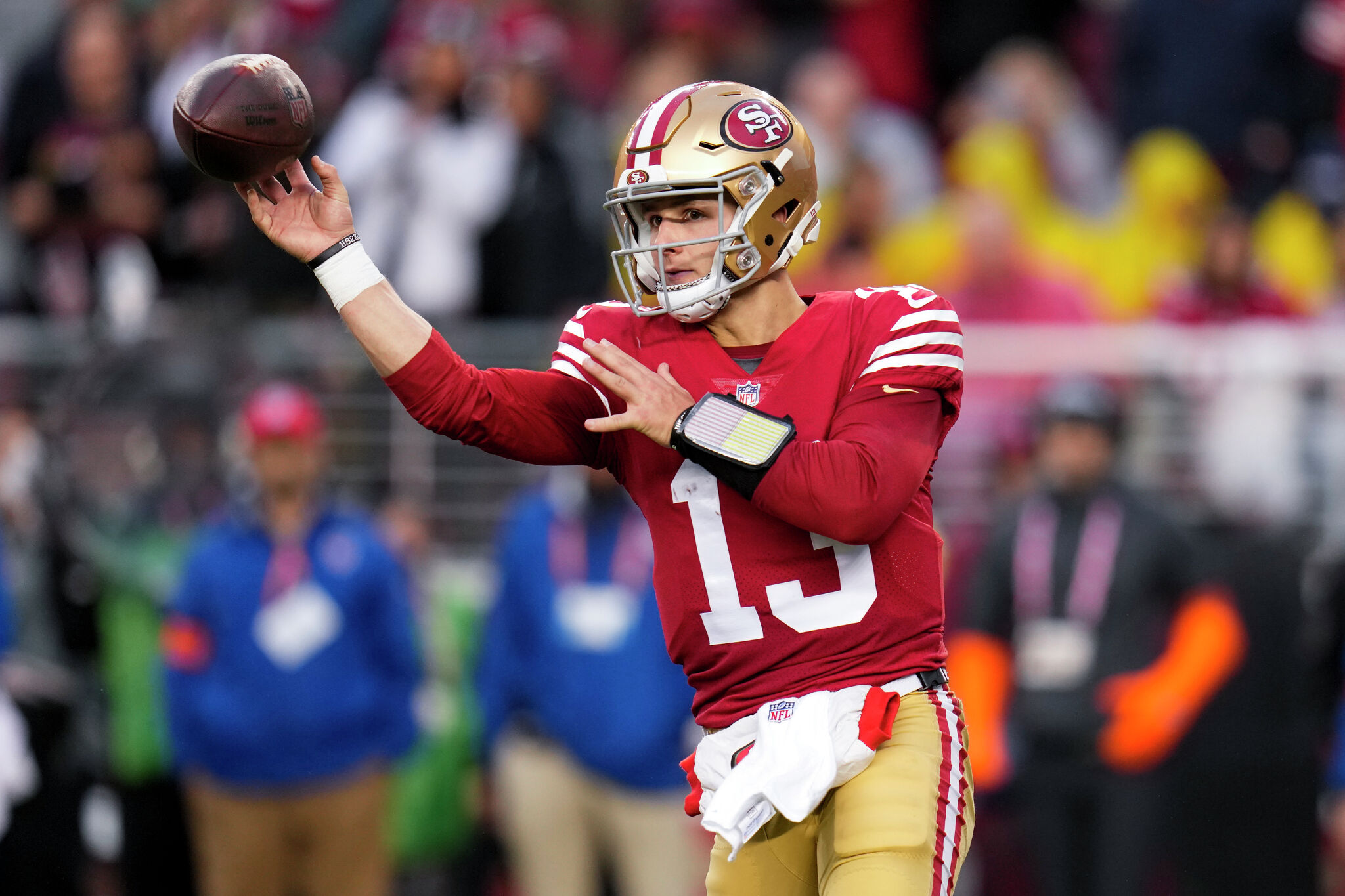
The Colts must consistently make Brock Purdy declare his reads early, collapsing the informational advantage upon which San Francisco relies.
-
Pre-snap disguises
-
Late-rotating zones
-
Interior pressure as denial, not pursuit
The 49ers offense, much like Bazaine, may find itself reacting to contact rather than shaping it. The side that forces the shape of the clash will wield a sizable advantage.
Artillery Supremacy: Where the Real Advantage Lives
Historical Reality:
France had the better rifle. Prussia had better artillery, and artillery decided the war.
Football Translation:
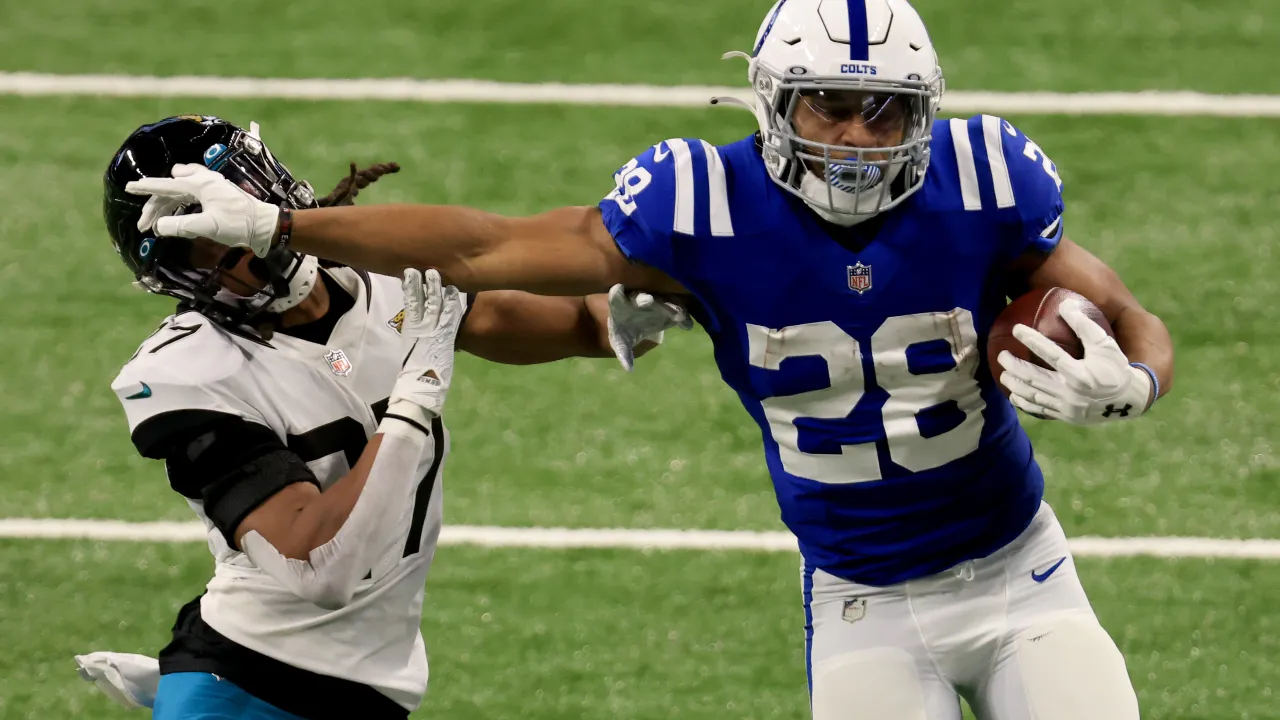
The Colts’ “artillery” is more than explosive skill players; it is:
-
interior defensive line control
-
Run fits that force long-yardage 3rd downs
-
situational execution (3rd down, red zone)
San Francisco has prettier weapons. Indianapolis must control the terms of engagement.
Tempo and Moral Momentum
Prussia:
Once Prussia seized operational tempo, French morale collapsed quickly, even before total force disparity was obvious.
Colts:
Early success shifted emotional gravity. The Colts have to play like a team expecting resistance, but not collapse. The 49ers can, at times, be like a team expecting a correction that never arrives. Momentum, once lost, mostly stays lost.
 The Sedan Effect: Psychological Breaking Point

Battle of Sedan:
France did not lose simply because of casualties—it lost because the command symbol was captured. The empire collapsed psychologically before it collapsed militarily.
Colts vs. 49ers:
The football equivalent will not be a single turnover; it will be repeated denial of rhythm. If Purdy loses control, that means that the offensive rhythm is not dictated. If that happens, the outcome felt inevitable even before the clock confirmed it.
Outcome Meaning vs. Outcome Margin
Franco-Prussian War:
The significance of Sedan far exceeded the tactical scorecard. It reordered Europe.
Colts vs. 49ers:
This game matters beyond the box score:
-
It may re-frame Indianapolis as structurally sound, not merely scrappy.
-
It exposed San Francisco’s reliance on system harmony rather than adaptability.
Like Prussia, the Colts cannot win with mystique or spectacle. They must win the struggles with alignment and assignment.
Bottom Line
Prussia and the Colts share three decisive traits:
-
Clear strategic objectives
-
Unified command and preparation
-
Willingness to let discipline beat reputation
France and the 49ers shared the inverse:
-
superior tools
-
fragmented response under pressure
-
belief that talent alone would restore order
History and this game suggest otherwise.