

 NFL
By Bill Carroll
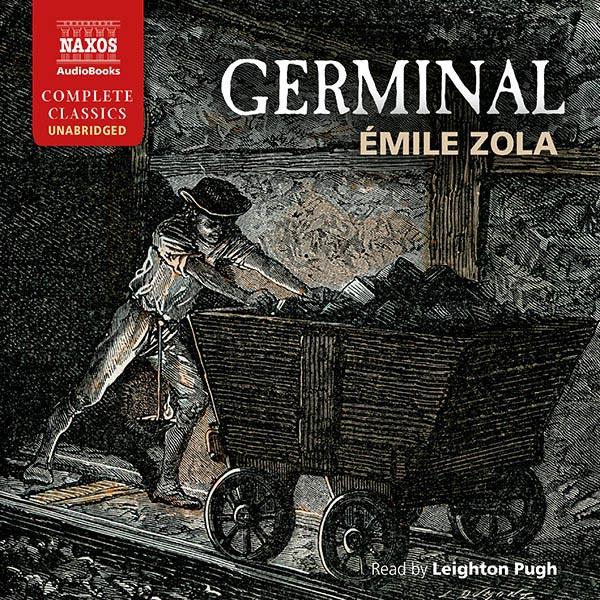
Last week, I used Andrei Platonov’s The Foundation Pit to examine the Colts’ season. This week, Émile Zola’s Germinal provides the more appropriate lens. Zola depicts a society sustained by laborers who take physical risks while management and ownership determine how resources are distributed. Workers, foremen, executives and machinery form an interdependent system, but do not share equally in its rewards or failures.
Thursday night’s game between Indianapolis and Houston has these elements. Beyond the standings, this is a comparison of two organizational structures: how each franchise acquires talent, allocates resources, develops players and responds when the machinery begins to fail. Like Germinal, this game will be decided beneath the surface. The outcome depends on the trenches, the quarterback protections, the defensive fronts and the people responsible for keeping the operation functional.
The Matchup
Week 11: Indianapolis Colts (3–7) at Houston Texans (3–6)
Thursday, November 19, 2026
NRG Stadium, Houston, Texas
8:15 p.m. ET, Prime Video
Indianapolis defeated Houston 19–17 in Week 3. The Colts enter the rematch after beating Miami 24–22, while the Texans are coming off a 27–24 loss to Cleveland. Both teams are trying to recover seasons that are stuck in a ditch. The difference is how they fell in.
Indianapolis has a solid running game attached to an inefficient passing offense and a defense that rarely creates takeaways. Houston has the superior quarterback and passing attack, but its defense no longer consistently controls games.
Early line: Houston is favored by one point.
The Numbers: Two Teams, Two Different Problems
| Metric | Indianapolis | Houston | Advantage |
|---|---|---|---|
| Record | 3–7 | 3–6 | Houston |
| Offensive EPA/play | -0.14 | +0.05 | Houston |
| Defensive EPA/play allowed | +0.03 | +0.00 | Houston |
| Points per game | 20.8 | 25.9 | Houston |
| Total yards per game | 287.6 | 349.1 | Houston |
| Passing yards per game | 173.7 | 269.4 | Houston |
| Rushing yards per game | 115.2 | 87.1 | Indianapolis |
| Sacks | 22 | 33 | Houston |
| Turnover differential | -12 | +4 | Houston |
The EPA figures cover Weeks 1–10. Defensive EPA represents expected points allowed per play, so lower is better.
- Offensive DVOA: -10.9% (25th)
-
- Passing DVOA: -17.0% (30th)
- Rushing DVOA: 6.2% (7th)
-
- Defensive DVOA: 11.3% (27th) (or 17.0% / 23rd depending on recent defensive splits update)
- Defensive Passing DVOA: 4.9% (30th).
- The Texans rank 13th overall in Total DVOA at 11.6% despite a slow start to the 2026 season.
-
- Offense DVOA. Houston ranks 9th overall at 9.1%, driven by an elite passing attack that sits 6th (39.0%) while the rushing game lags at 27th (-17.0%).
- Defense DVOA. The defense ranks 16th overall at 1.1% (negative percentages indicate better defensive performance). They rank 16th against the pass (9.7%) and 15th against the run (-9.9%).
The statistical profile is clear. Houston is more efficient on offense, has a stronger passing game, the better pass rush and a 16-turnover differential advantage. Indianapolis’ clear edge is its rushing production.
When Indianapolis Has the Ball
A Stable Ground Game Supporting an Shaky Passing Attack
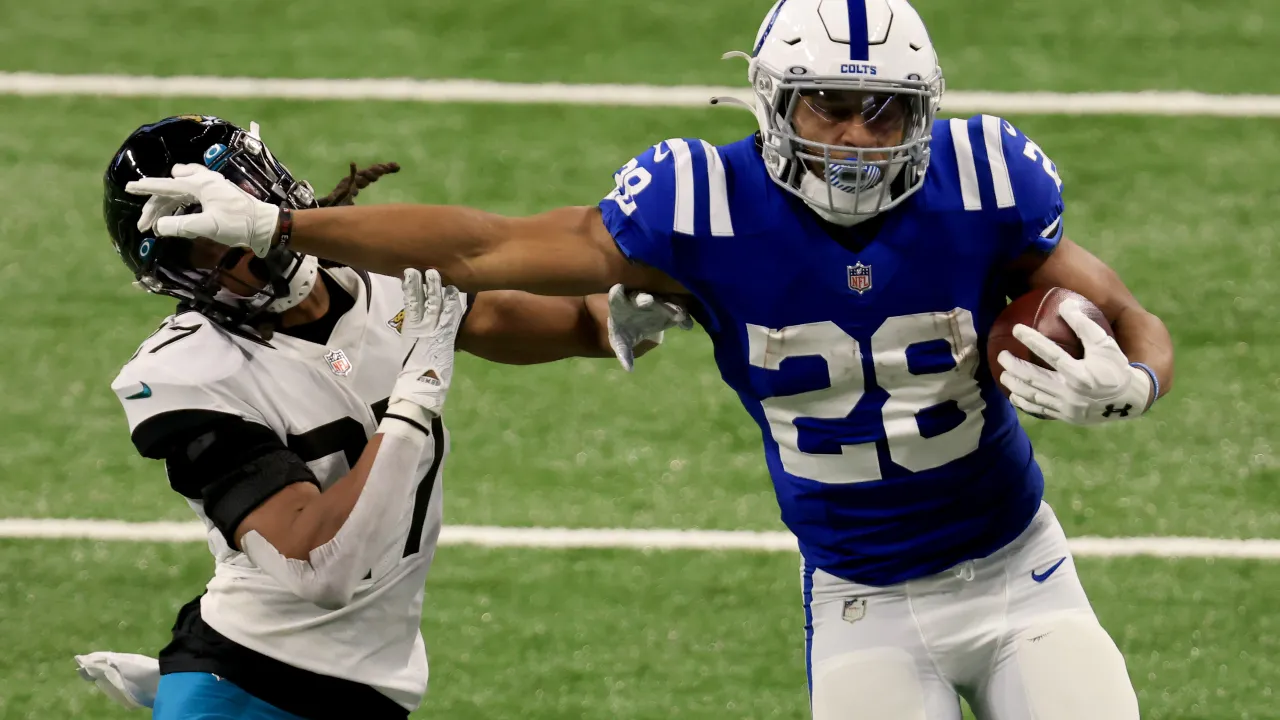
The Colts average 20.8 points and 287.6 yards per game. Their offense runs through Jonathan Taylor, who has 739 rushing yards and eight touchdowns. Daniel Jones has thrown seven touchdowns and 12 interceptions. Therein is Indianapolis’ offensive limitation. The Colts cannot approach this matchup as a drop-back passing team and have Daniel Jones match trade scoring drives with C.J. Stroud.
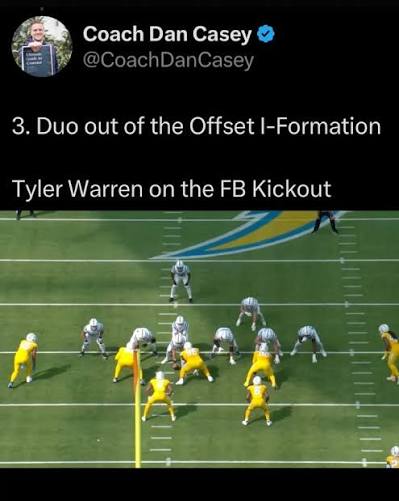
Shane Steichen must use Taylor to control down and distance. Under-center formations, split-flow action, motion and run-pass conflict can slow Houston’s front and create defined throws for Jones. The Colts should emphasize play-action crossers, tight-end releases and half-field reads rather than long-developing progression concepts.
Indianapolis must win with early-down runs that open the call sheet. Second-and-5 permits play-action and movement throws. Second-and-10 exposes Jones to Houston’s pressure package. Avoiding 3rd and 3+ is vital. Houston has recorded 33 sacks, 11 more than Indianapolis. If the Texans create negative plays on first down, they can attack known passing situations with four-man pressure and late coverage rotation. The Colts therefore are asking Taylor to do more than generate yards. He must help them avoid collapsing.
When Houston Has the Ball
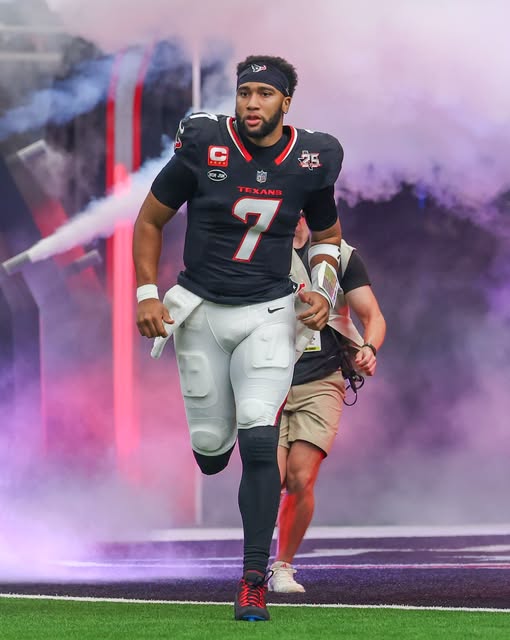
Stroud Gives the Texans More Answers
C.J. Stroud has thrown for 2,462 yards, 19 touchdowns and only three interceptions. Nico Collins has 478 receiving yards and five scores. Houston’s running game has produced 87.1 yards per game, Stroud allows the Texans to operate without a reliable rushing attack. They spread formations, identify leverage pre-snap and attack intermediate zones with Collins and their complementary receivers.
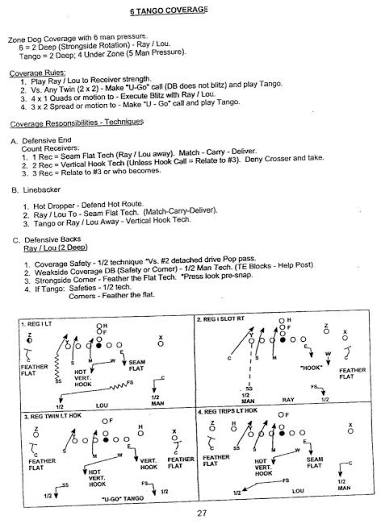
Indianapolis cannot do the same. The Colts need Taylor to establish the terms of the game. Houston establishes control through Stroud. Facing him is Lou Anarumo’s defense, wanting to disguise coverage, alter pressures and make him hold the ball. Stroud’s processing and ball security reduce the value of those tactics if the rush does not arrive in time.
The Colts intercepted only two passes. They create hesitation, but they have not converted disruption into takeaways. Anarumo must vary the picture without surrendering the middle of the field. Simulated pressures, replacement blitzes and late safety rotation can challenge Stroud’s protection calls, but excessive pressure would expose Indianapolis’ secondary to Collins in isolated coverage. The Colts need safe pressure and confusion helps only if the coverage remains sound.
Defensive Comparison
| Category | Indianapolis | Houston |
|---|---|---|
| Defensive EPA/play allowed | +0.03 | +0.00 |
| Points allowed per game | 27.7 | 24.0 |
| Total yards allowed per game | 375.3 | 360.0 |
| Passing yards allowed per game | 224.8 | 235.6 |
| Rushing yards allowed per game | 137.0 | 103.0 |
| Sacks | 22 | 33 |
| Interceptions | 2 | 5 |
| Third-down rate allowed | 32.4% | 38.7% |
Indianapolis: The Problem Starts on the Ground
The Colts allow 137 rushing yards per game. That deficiency compromises the entire defense because it forces safeties into run support and reduces the disguise available on passing downs. Indianapolis’ 32.4% third-down conversion rate allowed helps. The problem is reaching third down without conceding favorable distance or explosive plays.
The defense has produced two interceptions, the Colts have a minus-12 turnover differential. Indianapolis can survive individual drives through third-down execution, but it rarely changes games with sudden possessions or short fields.
Houston: Pressure Without Full Control
Houston allows 24 points and 360 yards per game. Its 33 sacks mean the front disrupts quarterbacks, but the defense has not consistently connected pressure, coverage and run fits. Opponents have found opportunities through the air, while schematic tendencies have become easier to identify. The Texans remain dangerous, but they are not the suffocating unit their reputation suggests.
The challenge for Houston’s defense is to force Jones into obvious passing situations before Taylor establishes the run. If it can, the matchup tilts sharply toward the Texans.
Tale of the Tape: The Architects of the Mine
In Germinal, the mine does not fail because the workers lack commitment. It fails because the conditions governing their work are structurally unsound. NFL organizations have similar divisions of responsibility. General managers select the personnel. Coaches build the systems. Players inherit both sets of decisions.
Indianapolis and Houston have taken different approaches to that arrangement.
| Category | Indianapolis | Houston |
|---|---|---|
| Head coach | Shane Steichen | DeMeco Ryans |
| Offensive coordinator | Jim Bob Cooter | Nick Caley |
| Defensive coordinator | Lou Anarumo | Matt Burke |
| Coaching identity | Offensive construction | Defensive construction |
| Offensive emphasis | Formation multiplicity and balance | West Coast concepts and passing efficiency |
| Defensive emphasis | Multiple fronts and disguise | Zone structure and four-man pressure |
| Immediate challenge | Repair offensive efficiency | Restore defensive consistency |
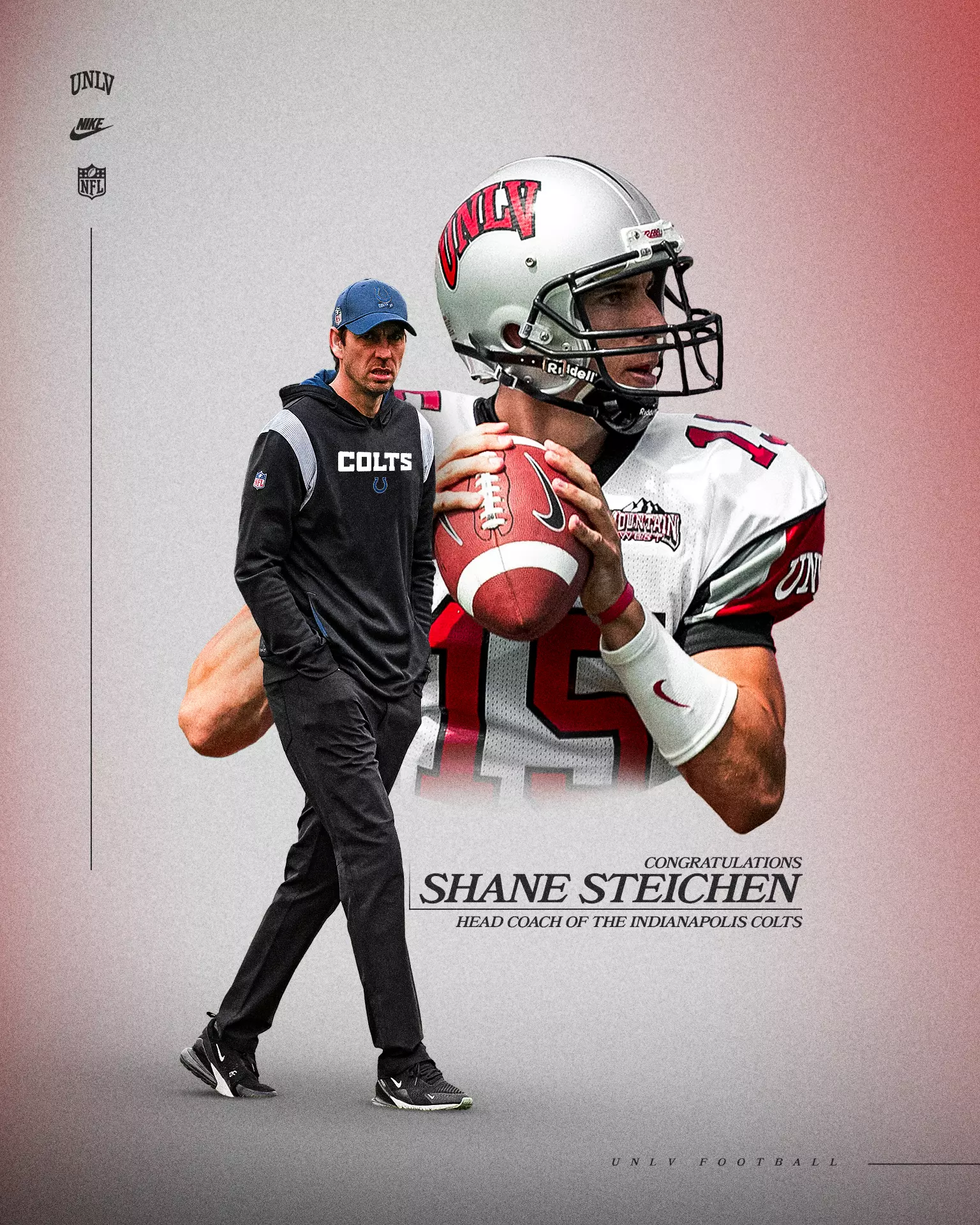
Shane Steichen: The Offensive Engineer
Steichen built his reputation through quarterback development and offensive design. At best, his system creates conflict through formations, option elements and a productive running game. That vein has been tapped out in 2026.
An offense generating -0.14 EPA per play shows more than an isolated quarterback problem. Indianapolis is failing to create sustainable value through its protection, passing concepts and execution. Steichen’s task is reducing the number of plays where Jones solves the defense post-snap. Taylor, play-action and pre-snap movement generates defined reads and favorable matchups. This must walk the line between designing around a quarterback’s limitations and asking that quarterback to rescue a malfunctioning offense.
DeMeco Ryans: The Defensive Foreman
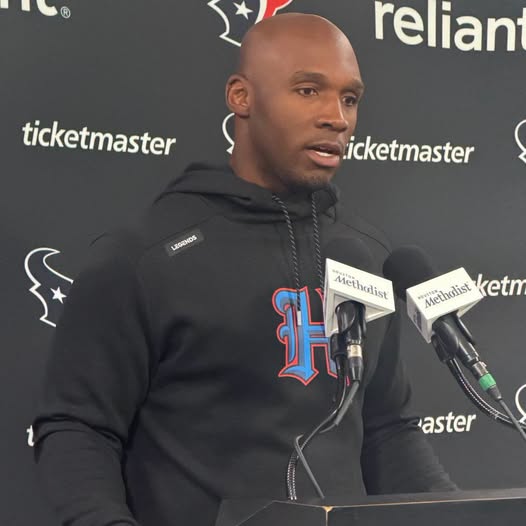
Ryans’ defensive identity is built on communication, pursuit and assignment discipline. His preferred structure uses zone coverage, particularly Cover 3 and Cover 4 principles, with pressure generated by the front. Houston’s defensive regression forced Ryans to assume play-calling duties from Matt Burke after an 0–4 start.
The move was logical, but it also acknowledged that the original plan was lacking. Thirty-three sacks demonstrate that Houston can win individual rushes. They do not prove that the defense is operating cohesively. Pressure without coordinated coverage is vulnerable. So is zone structure without reliable run fits. The question if Ryans has corrected the underlying communication problems or simply assumed direct responsibility for managing them.
The Coordinators
Jim Bob Cooter’s task is to prevent Indianapolis from becoming entirely Taylor-dependent. The Colts need more efficient early-down throws, stronger protection answers and selective explosive plays.
Nick Caley has the easier quarterback environment. Houston spreads the field, attacks intermediate windows and uses Collins to dictate coverage. The Texans do not need a dominant running game. They just need enough rushing to prevent Indianapolis from treating every formation as a passing indicator.
Defensively, Anarumo must translate multiplicity into tangible disruption. Indianapolis disguises intentions but does not produce enough sacks or takeaways. Matt Burke remains Houston’s defensive coordinator, but Ryans’ control of the calls changes the command structure. Indianapolis is trying to improve execution within its system. Houston is attempting to make its system less predictable and more coherent.
The Front Offices: Patience Versus Aggression
The Legacy of Chris Ballard: Draft, Develop and Retain
Ballard had generally favored acquiring talent through the draft, developing it internally and retaining foundational players. The philosophy is designed to produce continuity and avoid dependence on expensive short-term fixes. Indianapolis went 72-82-1 under Ballard, made the playoffs twice, winning a postseason game. The acting/interim general manager of the Indianapolis Colts is Ed Dodds.
Indianapolis’ 2026 performance raises questions about positional priorities, quarterback planning and the speed with which the organization corrects evaluation failures. The Colts added recognizable talent and are showing greater aggression, including free-agent moves and the Sauce Gardner trade.
Ballard had acquired many good and a few great individual players. What was never accomplished was assembling a complete roster. A contender cannot remain near the bottom of the league in passing efficiency, produce only two defensive interceptions and operate with a minus-12 turnover differential.
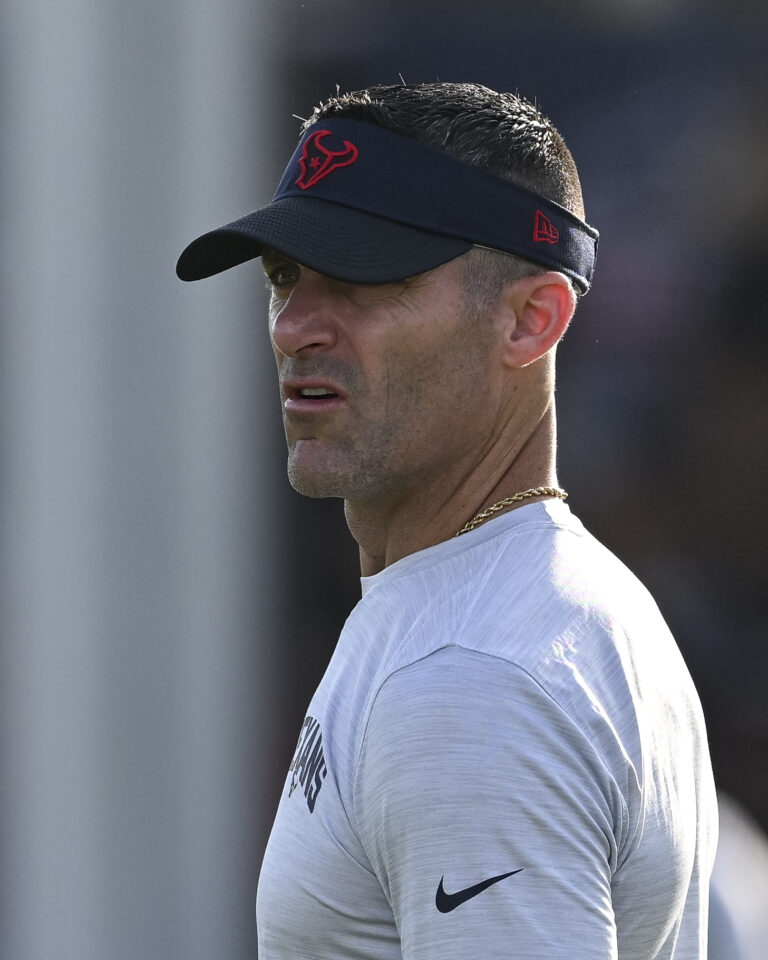
Nick Caserio: Accumulate and Deploy
Nick Caserio has been more transactional. Houston has used draft capital, trades and free agency to build around Stroud, Nico Collins, Derek Stingley Jr. and Will Anderson Jr. That approach has produced the stronger foundation, particularly at quarterback. It has also created higher expectations.
This approach has not halted Houston’s defensive decline, offensive-line questions and inconsistent rushing attack show that talented components do not automatically form a cohesive team. Caserio has built a dangerous roster. However, there is still a need for more reinforcement of the roster.
Organizational advantage: Houston.
The Texans have the superior quarterback situation and the more functional offensive foundation. Indianapolis has not translated its development model into comparable results.
What Decides Thursday Night?
1. Taylor Against Houston’s Front
Taylor must keep Indianapolis ahead of the chains. Four to five-yard gains preserve play-action, constrain Houston’s pressure schemes and keeps Jones out of drop-back situations. Houston’s priority is penetration. Even if Taylor breaks runs, early tackles for loss could force the Colts of their preferred script.
2. Stroud Against Indianapolis’ Disguises
Stroud’s 19-to-3 touchdown-to-interception ratio is likely the game’s most impactful advantage. Indianapolis must create pressure without repeatedly isolating its corners. If the Colts rush conservatively, Stroud can dissect zone coverage. If they pressure recklessly, Collins can punish single coverage. Anarumo must change Stroud’s post-snap picture while keeping a safety connected to Houston’s primary receiving threats.
3. Turnover Differential
Houston is plus-four. Indianapolis is minus-12. That 16-turnover gap is significant. It reflects quarterback decision-making, defensive production and situational discipline. The Colts cannot give Houston additional possessions and expect Taylor to control the game. Their upset path requires a clean offensive performance and at least one takeaway.
Prediction: The Mine Belongs to Houston
Indianapolis won the first meeting 19–17, Taylor is the path to another close game. Houston’s defensive instability leaves room for Indianapolis to control possessions and shorten the contest. The larger matchup, however, favors the Texans. Houston has the better quarterback, the more efficient passing game, the stronger pass rush and the superior turnover profile.
Indianapolis needs Jones to be efficient and not overly aggressive, while its defense needs to pressure Stroud without exposing the secondary. That is a narrow path. The Colts can remain competitive if Taylor controls first down, Anarumo creates post-snap hesitation and the offense protects the football. Houston simply has more reliable ways to score.
Houston Texans 27, Indianapolis Colts 20
Projected winner: Houston
Keys to the Prediction
- Houston’s passing efficiency
- Stroud’s decision-making and ball security
- Indianapolis’ inability to generate takeaways
- Houston’s pass-rush advantage
- Home-field advantage at NRG Stadium
Zola knew an industrial system can withstand enormous pressure. Survival, however, is not the same as prosperity. The Colts have spent another season digging. The Texans have spent theirs repairing machinery whilst in operation.
Thursday night gives Indianapolis an opportunity to show its foundation is sturdier than their record or efficiency metrics suggest. Houston has the better quarterback, the more productive offense and the greater margin for error. The digging will continue, but which team is closer to finding sunlight?