

 NFL
NFL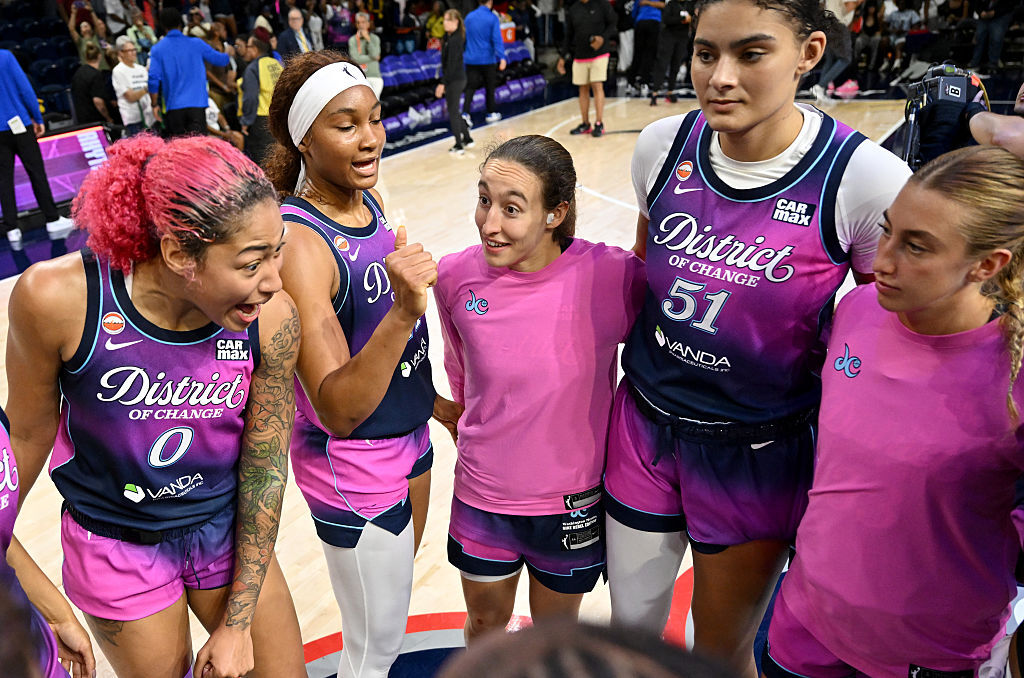
They even had a name for themselves: the “Young Hos.” The nickname reflected the confidence of a group that had spent the previous two seasons growing together — and was beginning to believe it belonged among the WNBA’s best. — The Washington Mystics did not suddenly become a playoff team. They spent two seasons becoming one.
The transformation can be traced to a disastrous start in 2024, a consequential offseason and a front office that decided patience was more valuable than a quick fix.
Now, after Sunday’s 105-100 victory over the Portland Fire clinched Washington’s first playoff berth since 2023, the rebuild has produced its first major payoff.
Here is how it happened.
2024: The season that changed everything
Washington entered 2024 believing it could still compete.
Instead, almost everything went wrong.
Natasha Cloud had departed for Phoenix in free agency. Elena Delle Donne, the centerpiece of the Mystics’ 2019 championship, declined to play after Washington used its core designation to retain her rights. Then Brittney Sykes suffered an ankle injury in the second game of the season.
The result was a 0-12 start.
Washington eventually recovered, going 14-14 over its final 28 games, but the hole was too deep. The Mystics finished 14-26 and missed the playoffs by one game.
There were still reasons for optimism. Rookie Aaliyah Edwards, selected sixth overall, showed flashes of being a versatile defender and frontcourt piece. Stefanie Dolson had one of the best shooting seasons of her career. The Mystics also began getting younger during the season, acquiring Sika Koné and Jade Melbourne while moving veteran Myisha Hines-Allen to Minnesota.
But the bigger lesson was unmistakable: the championship-era roster was gone.
And Washington had a decision to make.
October 2024: The reset becomes official
On Oct. 23, Monumental Basketball president Michael Winger made the most consequential organizational decision of the rebuild.
The Mystics parted ways with both general manager Mike Thibault and Coach Eric Thibault.
It was not simply a reaction to a 14-26 record. Winger said he wanted a new organizational identity. Mike Thibault had been the architect of Washington’s championship, guiding the franchise to its 2019 title and becoming the winningest coach in WNBA history. His departure marked the end of an era.
The timing was significant. The WNBA was preparing for an enormous period of expansion and financial change, with new teams, a new collective bargaining agreement, and a dramatically different talent market on the horizon.
Washington decided it needed to build for that future rather than chase the past.
December 2024: A new front office and a new philosophy
The Mystics took their time.
In December, they hired Jamila Wideman as general manager and Sydney Johnson as head coach, choosing two outsiders with backgrounds that fit Winger’s vision for a modern WNBA organization. The candidates had been narrowed from dozens of possibilities, and Winger emphasized that the league’s expected growth over the next decade played a major role in the selections.
The message was clear: this was not a one-year makeover.
It was a rebuild.
And Washington had something particularly valuable to build with: draft capital.
2025: The foundation
The Mystics entered the 2025 draft with three first-round picks and turned them into the core of the next era: Sonia Citron at No. 3, Kiki Iriafen at No. 4, and Georgia Amoore at No. 6.
Suddenly, Washington had young talent at nearly every position.
The front office then doubled down on its long-term approach during the season, making moves that prioritized future draft assets and development over squeezing a few extra wins out of the roster.
The result was another losing season — 16-28 — but it was a very different kind of losing.
Citron and Iriafen became All-Stars. The young players were receiving major minutes. And Washington was accumulating the assets necessary for another major draft.
2026: The draft becomes the payoff
Washington entered the 2026 draft with three first-round picks: No. 4, No. 9, and No. 11.
The Mystics used them on Lauren Betts, Angela Dugalić, and Cotie McMahon.
Then they kept going, selecting Cassandre Prosper at No. 19, Darianna Littlepage-Buggs at No. 30, and Rori Harmon at No. 34.
Six picks. Three in the first round.
Another wave of young talent joining Citron, Iriafen, and Amoore. The Mystics were no longer simply rebuilding. They were building organizational depth around a common timeline.
Now: Ahead of schedule
That is what makes this playoff berth so significant.
Washington was supposed to be patient. Instead, the young roster has developed faster than expected.
Shakira Austin has emerged as a dominant interior presence. Citron and Iriafen have made another leap. Amoore has grown into a larger offensive role. And the newcomers have given Washington the size, athleticism, and depth to compete every night.
The Mystics are 23-15 and going back to the playoffs.
Two years ago, they were 0-12.
The rebuild did not follow a straight line. It required admitting that the old window had closed, changing the front office, accumulating draft capital, and resisting the temptation to rush the process.
Now Washington gets to find out what comes next. The rebuild is over.
The next chapter is competition.