

 NFL
NFL
“Fighting the Last War”: A Classic Blunder in Strategy
“Generals always prepare to fight the last war, especially if they won it”.
One of the greatest errors in strategic planning is falling into the trap of “fighting the last war.” It’s the strategic equivalent of bringing a sword to a light-saber fight. The error is in clinging to tactics that worked in the past but are ineffective (or worse, counterproductive) in the present. Let’s take a jaunty stroll through history and see how this played out in the most recent Super Bowl LIX World War II, where both the Kansas City Chiefs and several nations learned this lesson the hard way.
The U.S. Army’s Misfire: Tanks That Weren’t Meant to Fight Tanks and The Neither Were The Chiefs
Before WWII, the U.S. Army cooked up a bold doctrine: tanks should avoid other tanks like an awkward ex at speed-dating events. Tank-to-tank battles? No, thank you! That was the job of tank destroyers. Meanwhile, tanks would focus on infantry. Bold? Sure. Brilliant? Not so much. The idea fell apart faster than a house of cards in a hurricane when faced with real combat. Unsurprisingly, no one else tried to copy this concept because, frankly, why would they?
Kansas City had previously stretched opposing defenses with deep passing concepts like Jet Chip Wasp. In
addition, the Chiefs’ offense leaned heavily on classic, dynamic West Coast Offense-derived concepts like Dagger,
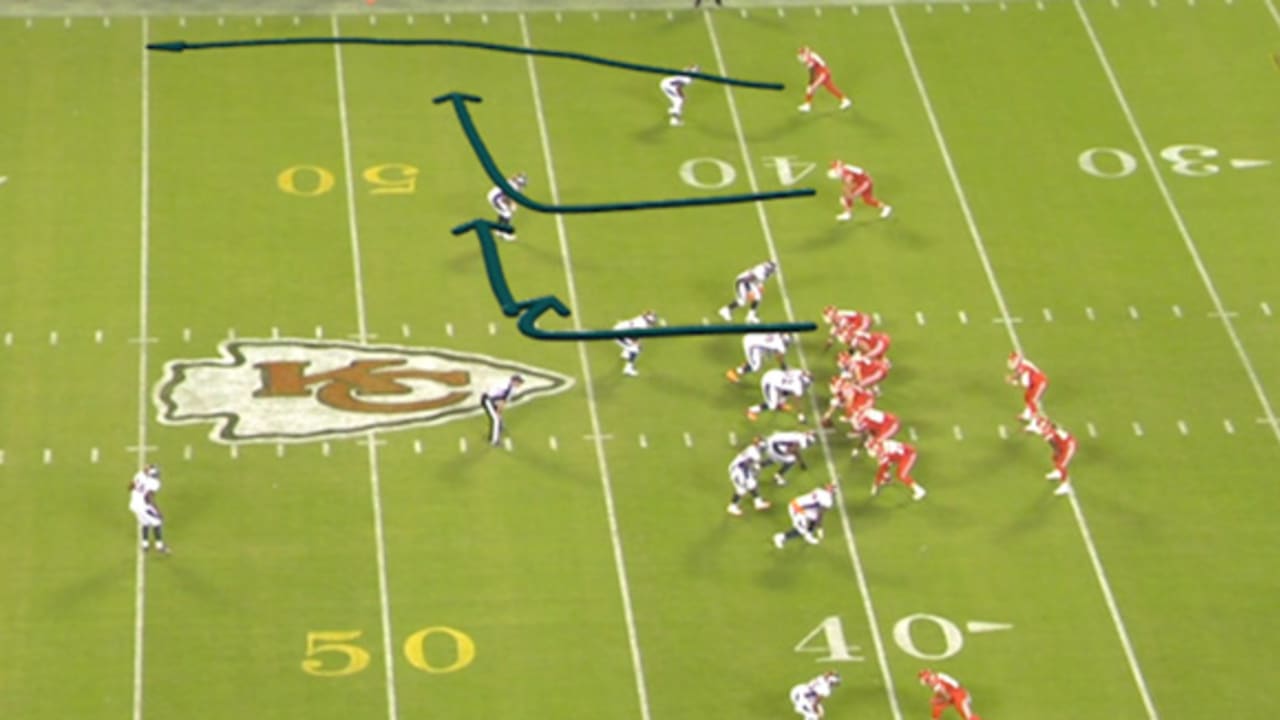
Drive, Y-Over, and Y-Sail. They also showcased a clever passing route combination where the tight end or slot executed a crisp “dig” route, a sharp, in-breaking cut at intermediate depth, while the other ran a precise “pivot” route.
The pivot began with a quick vertical burst, followed by a sudden cut back toward the sideline. This pairing created a high-low read for the quarterback, exploiting defensive gaps and forcing coverage to choose between the two routes. The result? Open space is ripe for the quarterback to attack, depending on the defense’s reaction.
How It Works
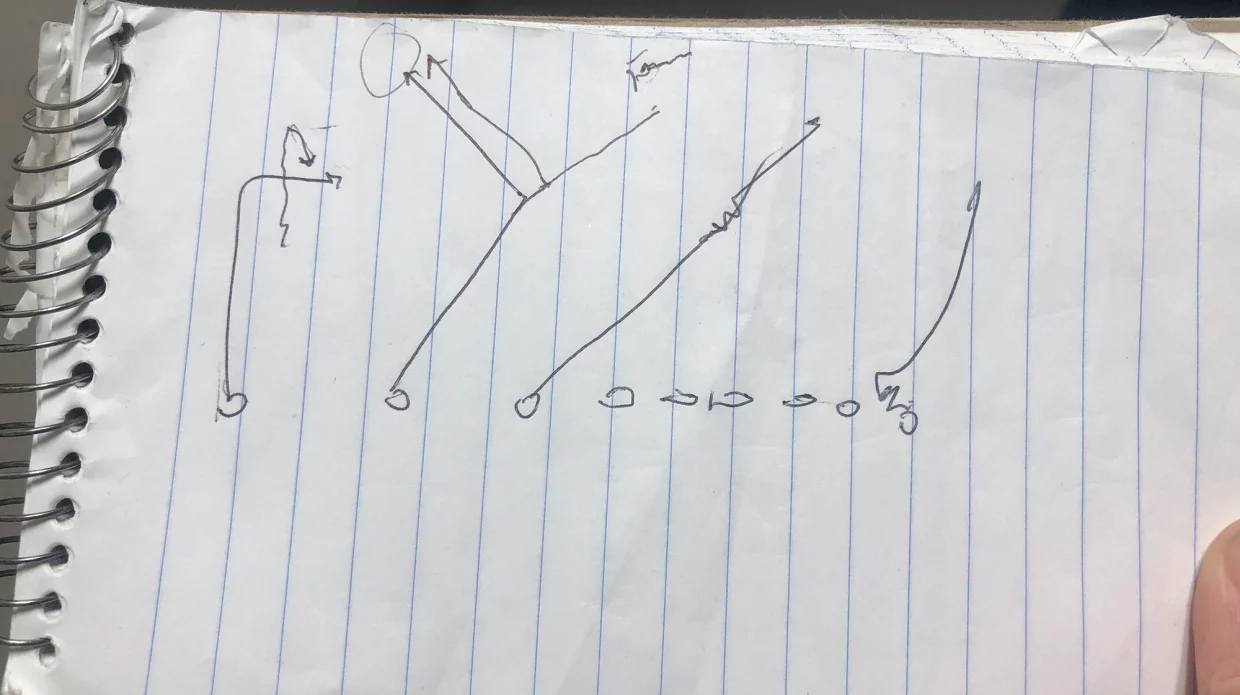
Alright, let’s break this down. First, the X receiver kicks things off with a pivot route, starting with a sharp cut aimed at 5 yards, then faking a drag route like they’re trying to cross the field, before snapping back flat toward the sideline. It’s a little misdirection magic to confuse the defense.
Meanwhile, the inside receivers are doing the dirty work, running Stick and Option routes to lure those nosy linebackers into the middle of the field, clearing out space like they’re hosting a yard sale.
Once the linebackers bite, the X receiver makes their move, slicing back across the field with a dig route toward the call side, trailing right behind the pivot route they just sold. It’s all about layering the routes—defenders get sandwiched between the two.
While confusion reigns in the defense, the slot receiver takes it up a notch, running a skinny post away from the call side. Their job? Stretch the defense vertically and keep the safeties honest. When properly executed It’s a beautiful orchestration of space and deception.
Why It’s Used
The pivot-dig combo isn’t just a crowd favorite, it’s a foundational piece of modern passing schemes. Why? Because it’s a Swiss Army knife of route concepts. Whether you’re facing man or zone coverage, it gives the quarterback a high-percentage read with plenty of options.
The beauty of this play lies in its timing. Everyone’s got to be synchronized, like a Jabbawockeez‘s dance routine. One false step, and it’s curtains. But when it clicks, it’s a nightmare for defenders and a dream for your highlight reel.
Other Names
Football plays are like brands, they go by different names depending on who owns them. Some teams label this one “Follow-Pivot,” while others might go with “X-Follow,” “Y-Follow,” or “Z-Follow,” depending on which receiver gets the spotlight. Whatever you call it, it’s a surefire way to keep the defense guessing.
The quarterback has assigned tasks that he needs to do on this play:
- Identify the coverage for an alert to the deeper route on the backside.
- Read the safety on the high-low for the pivot/dig
- Read the linebackers on the high-low for the pivot/dig
When linebackers get depth and carry the dig upfield to help deny that window, that vacates the underneath area for the drag coming across the field. If there’s green grass in front of him, the receiver will continue to run across the field. If it’s a zone, he’ll settle in the soft spot on the opposite side of the formation.
The Streams That Fill This Ocean
Andrew Walter “Andy” Reid was an all-conference second-team, offensive lineman in 1977, at Glendale Junior College. He coached the offensive line at San Francisco State, Northern Arizona, UTEP, and Missouri. He knows that every passing play must be wed to a protection that allows it to germinate. The Eagles’ defensive game plan was simultaneously deceptively simple and maddeningly complex.
After Reid left the Eagles, the new staff led by Chip Kelly featured a defense coordinated by Billy Davis.
Under Billy Davis in 2014, the Eagles’ defense was a paradoxical mix of dominance and chaos. They tied for 2nd in the NFL with 49 sacks, ranked 5th in rush yards allowed per attempt, and forced an NFL-best 23 fumbles (part of 28 takeaways, tied for 6th). Connor Barwin even earned his first Pro Bowl nod that year.
But by 2015, the wheels were wobbling. Despite Fletcher Cox and Malcolm Jenkins making the Pro Bowl, the defense was a sieve, ranking 31st in passing touchdowns allowed and dead last in rushing yards allowed. Somehow, Cox, Jenkins, and Mychal Kendricks parlayed the defensive meltdown into career-high contracts, proving that individual talent can still cash in, even when the unit implodes.
The collapse hit a breaking point on January 19, 2016, when new head coach Doug Pederson showed Davis the door, replacing him with Jim Schwartz.
As is my wont, I have more to say in part two of this article.