

 NFL
NFL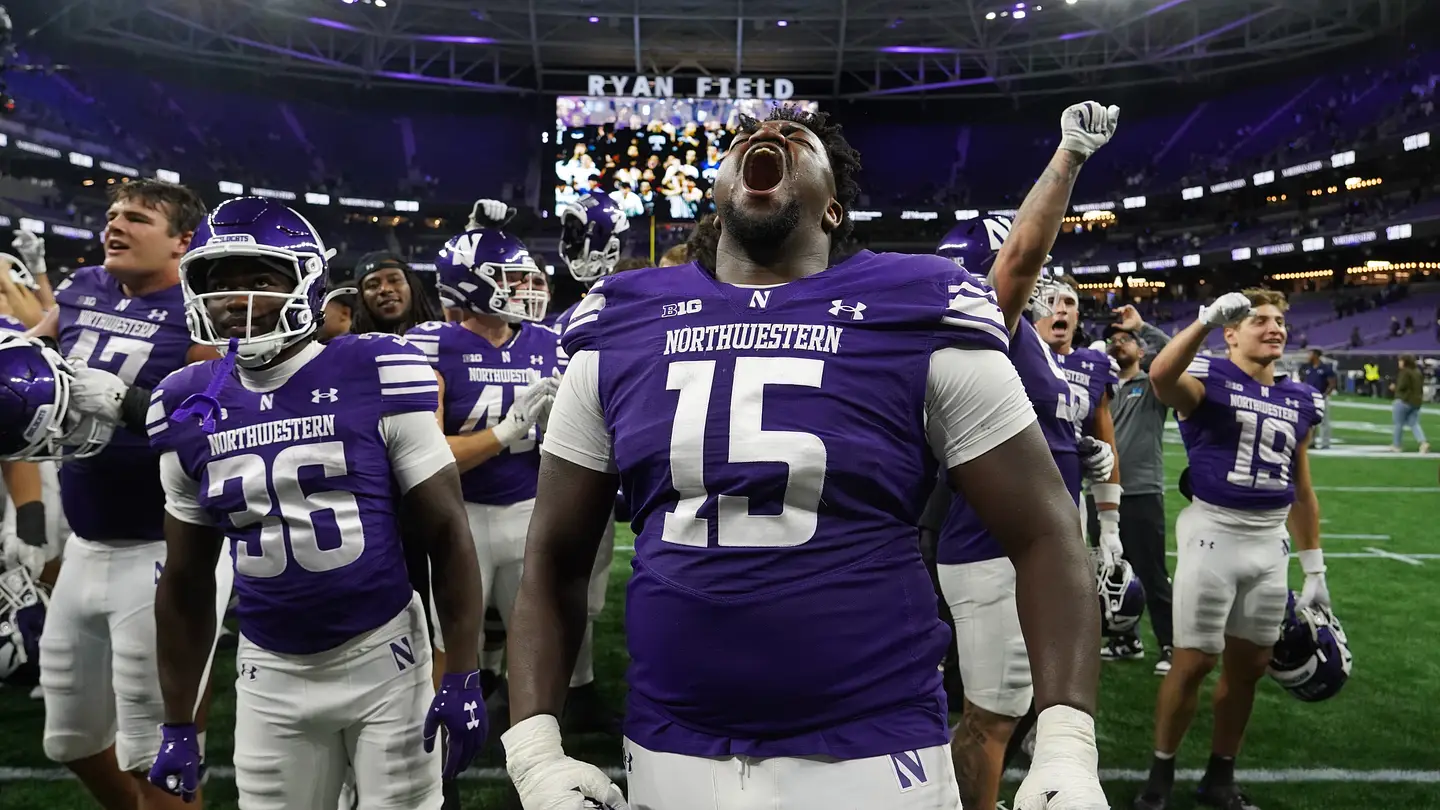
By Bill Carroll
This is where team maturity matters. Northwestern has opened its refurbished stadium, flattened Penn State 34-13, and produced a performance that changes expectations. The Wildcats are 3-1, playing efficient offensive football and beginning to resemble a team capable of becoming genuinely important in the Big Ten.
Next is Ball State. The Cardinals arrive at 1-4, winless in four games against FBS opponents and carrying one of the country’s most vulnerable defenses. Northwestern is favored by more than five touchdowns. The Wildcats have more talent, better depth, home-field advantage, and a rushing offense built to attack Ball State’s largest weakness.
Everything says Northwestern should win comfortably. That is why this game requires attention. The Wildcats visit Michigan State next week, where former Northwestern head coach Pat Fitzgerald will add concentrated emotion to an important conference game. Rutgers follows. Then comes the trip to Oregon. Those games will wait.
Northwestern spent too many years turning apparently manageable non-conference games into four-quarter exercises in collective anxiety. Miami University remained within one score throughout a 13-6 Northwestern victory in 2024. The Wildcats lost to Akron in 2018, Illinois State in 2016, and Northern Illinois in 2014. Ball State is not good enough to beat Northwestern’s best football. They might be good enough to make a distracted Northwestern look bad.
Northwestern vs. Ball State: Game Information
Date: Saturday, October 10, 2026
Kickoff: 11:30 a.m. CDT
Television: Big Ten Network
Location: Ryan Field, Evanston, Illinois
Records: Ball State 1-4, Northwestern 3-1
Series: Northwestern leads 1-0
The schools have met once. Northwestern defeated Ball State 24-19 in 2015. The Wildcats enter averaging 437.8 yards and 33 points per game, while the Cardinals surrender 473.6 yards and 37.8 points. Northwestern is also 4-0 against the spread and has a plus-five turnover margin. Ball State is minus-two.
What Ball State Wants to Do
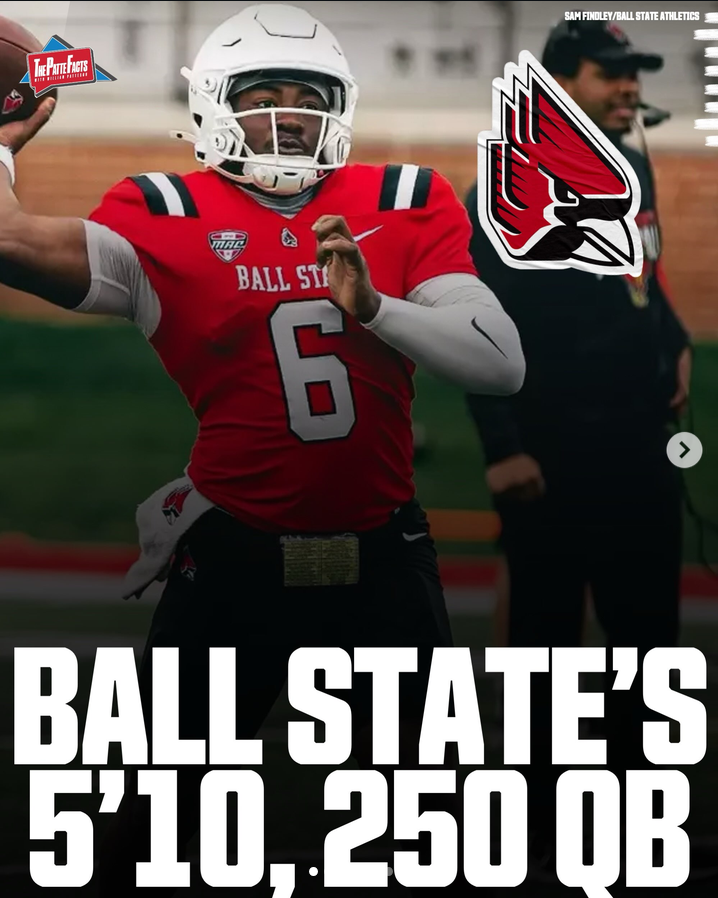
Ball State’s offense does not have enough downfield firepower to win a conventional shootout. Its path runs through the ground game, manageable down-and-distance situations, and quarterback Keldric Luster’s ability to distribute the ball without exposing himself to Northwestern’s pressure packages.
Running back T.J. Horton is the Cardinals’ most dangerous offensive piece. He rushed for 302 yards and four touchdowns on only 37 carries, an average of 8.2 yards per attempt. He gained 90 yards on nine carries in last week’s 39-24 loss to Toledo. This deserves Northwestern’s attention.
Ball State will likely use inside zone, split-zone action and quick throws to slow the Wildcats’ defensive front. If Horton can produce four or five yards early on, the Cardinals can reduce the number of obvious passing situations. Luster has completed 63.9 percent of his passes for 662 yards, five touchdowns and three interceptions. Donovan Hamilton is his most reliable target, with 20 receptions for 220 yards. The passing game is functional underneath, but is vertically proficient.
Ball State needs him to protect possession, convert third-and-manageable, and punish Northwestern if the safeties become overeager against the run. The Cardinals’ winning script is slim but recognizable: shorten the game, steal a possession, frustrate Northwestern early and turn confidence into impatience.
Why Ball State Can Make Northwestern Work
Northwestern’s defensive scoring numbers are strong. The Wildcats allow 16.8 points per game and have created a favorable turnover margin. The underlying yardage, however, leaves room for scrutiny. Northwestern allows 385.8 yards per game, including 161.5 on the ground. Those are not disastrous figures, but they suggest the defense can be moved between the 20s.
Ball State’s opportunity lies in forcing Northwestern to fit the run correctly snap after snap. Horton has enough burst to punish poor leverage, an overaggressive edge, or a linebacker caught behind a climbing blocker. The Cardinals also have nothing to lose. So 4th-down aggression, special-teams gambles and plays involving a formation that looks as though it was created at 2:00 a.m. on a whiteboard are all in play.
Northwestern must expect disruption without allowing it to create disorder. The greater danger is ennui. After physically dominating Penn State, the Wildcats could interpret Ball State’s record as permission to arrive gradually. That is how an apparently comfortable noon game becomes 10-7 midway through the second quarter, with the crowd checking the weather and wondering why happiness never lasts.
Why Northwestern Should Control the Game
There is no need for Northwestern to turn this into a schematic science fair. Ball State cannot stop the run. The Cardinals surrender 229.8 rushing yards per game, ranking near the bottom of the FBS. Their defense also allows 473.6 total yards and permitted opponents to score 95% of the time they pierced the red zone.
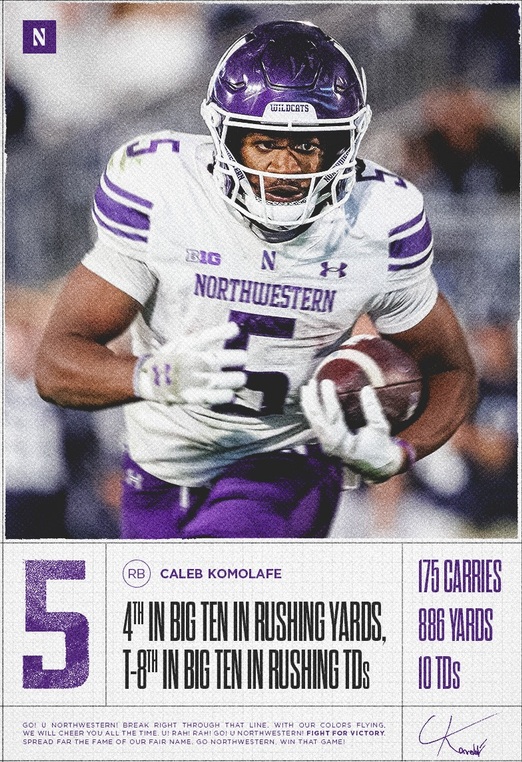
Northwestern averages 212.8 rushing yards per game and tallied 413 yards against Penn State. Caleb Komolafe accounted for 188 yards on 25 carries in that victory, consistently pressing the point of attack before accelerating through the second level. The Wildcats should make Ball State prove it can defend the same concepts repeatedly.
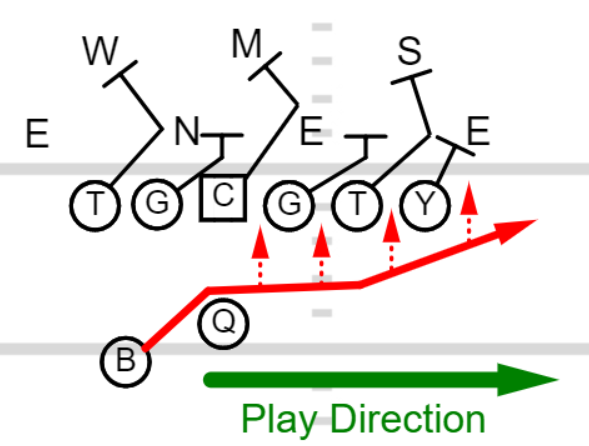
Chip Kelly can begin with inside zone, outside zone, and counter while using formation variation to change the defensive picture. Ball State’s front has struggled to maintain gap integrity and prevent blockers from reaching the second level. Northwestern does not need a host of gadget plays. Dive plays, double teams, and displacement will prove delightful.
That does not mean quarterback Aidan Chiles should spend the afternoon handing off and admiring the architecture. Chiles enters with 900 passing yards, six touchdown passes, no interceptions, and a 70.8% completion rate. His efficiency has allowed Northwestern to play through the running game without becoming predictable.
Ball State will eventually have to bring an extra defender into the box. When that happens, Chiles should have access to glance routes, play-action crossers and isolated matchups outside, particularly with Griffin Wilde. Wilde leads Northwestern with 281 receiving yards and two touchdowns on 16 catches.
Chiles must know that this is not a passing showcase. His goal is to make every defensive choice expensive. If Ball State stays light, Northwestern runs. If a safety enters the fit, Chiles throws behind him. If the Cardinals pressure, Northwestern uses screens and quick-game to flank the defense. Ball State’s defense should never feel sanguine.
The Matchups That Matter
Northwestern’s Offensive Line vs. Ball State’s Front
This is the game. Northwestern should control the line of scrimmage, but merely hoarding rushing yards is not enough. The Wildcats need to eliminate penetration and avoid the holding penalties or negative plays that create obvious passing downs. If Northwestern wins first down, drives should become methodical and unpleasant for the Cardinals.
Caleb Komolafe vs. the Second Level
Komolafe’s patience was essential against Penn State. Ball State’s linebackers must survive contact, fit the correct gap and tackle before he reaches open grass. That is three separate assignments. The Cardinals have not consistently completed all three.
Aidan Chiles vs. Aidan Chiles
Chiles does not need 350 passing yards. He needs clean operation. Northwestern should use this game to reinforce habits: correct protection calls, decisive reads, proper ball placement, and no unnecessary exposure to contact. A zero-interception effort matters more than the box score.
T.J. Horton vs. Northwestern’s Run Fits
Horton is Ball State’s most credible path to offensive stability. Northwestern must set the edge, close the cutback lane and prevent one missed tackle from becoming 40 yards. Make Luster sustain long drives. Do not allow Horton to shorten them.
What Northwestern Cannot Do
The Wildcats cannot turn this game into a test of patience by committing penalties, losing early downs and giving Ball State short fields. Ball State allows opponents to convert 46.5 percent of their third downs, while Northwestern converts 41.3 percent offensively. The Cardinals also own one of the country’s poorest red-zone defenses.
That means Northwestern’s biggest opponent may be self-inflicted inefficiency. A holding penalty can erase a successful run. A missed protection can turn second-and-medium into third-and-long. A turnover can provide Ball State with points it is unlikely to generate through a 75-yard drive.
Northwestern has been good enough to stop asking opponents for permission to win. This is not the week to resume the habit.
How I see this happening
Ball State should play aggressively early. Expect the Cardinals to test Northwestern’s perimeter discipline, feed Horton and use quick throws to prevent the pass rush from controlling the game.
Northwestern may need a possession or two to settle in. Once the offensive line establishes movement, however, the Wildcats should begin controlling the clock and forcing the Cardinals’ defense to tackle through extended drives.
By the second half, accumulated rushing attempts should widen the cracks. Ball State’s linebackers will begin stepping downhill more aggressively, opening play-action windows for Chiles. Northwestern’s defense can then attack a more predictable passing game as the margin grows.
The Wildcats need not play as though they are trying to impress a committee. They need crisp, clean, and physical football so that the outcome stops being interesting. For Northwestern, success means winning the line of scrimmage, protecting the football, avoiding injuries and removing doubt before the fourth quarter. Success for Ball State, means survival.
Northwestern vs. Ball State Prediction
Northwestern has the offensive structure to make this easy. If the Wildcats will run the ball at least 40 times, use play-action and Chiles’ legs selectively, and control possession against a defense allowing nearly 230 rushing yards per game. Ball State’s occasional success with Horton, may continue, but its lack of a consistent vertical passing game makes a comeback nearly impossible.
The 36-point spread is severe, especially for a Northwestern program that has historically treated comfortable victories like an elective course. Current lines range from Northwestern minus-35.5 to minus-36.5, with the total set at 52.5. Northwestern wins comfortably. Covering is a different question.
Prediction: Northwestern 41, Ball State 10
ATS pick: Ball State +36.5
Total: Under 52.5
Confidence: Northwestern to win, very high. Northwestern to cover, considerably lower. The Wildcats need concentration and brutal simplicity. Beat Ball State, preserve the roster, and move on to Michigan State without giving the Cardinals the chance to make it weird. Northwestern football has supplied enough strangeness already.