 NFL
NFL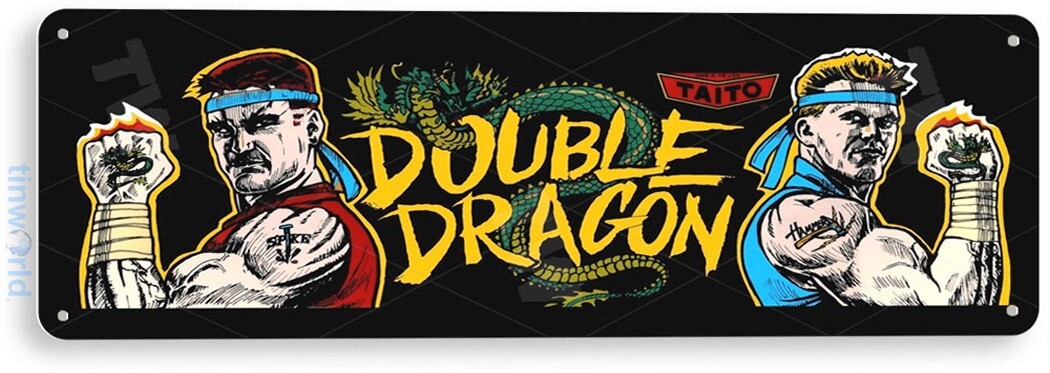
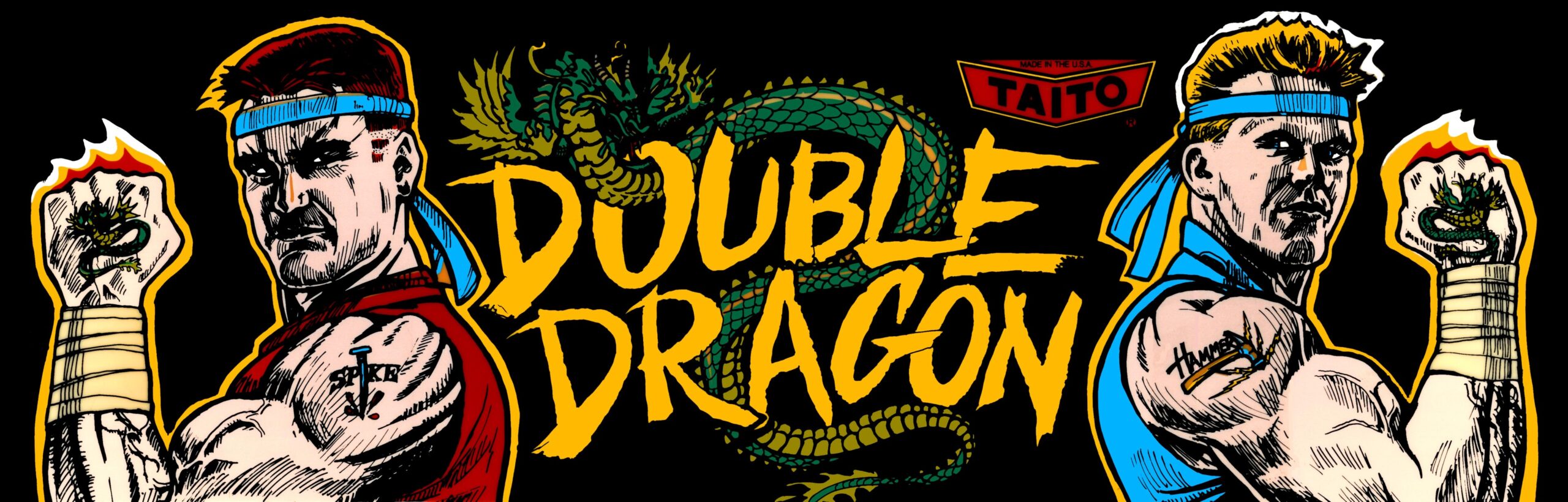 Hello again, friends and fellow game heads, and welcome to the first half of part 2 of From Bits to Flicks. In part 1, I talked about the hit video game series Super Mario Bros. and its movie counterpart, which turned out to be a big-screen dud. Even though Super Mario Bros., the movie (1993), was indeed a failure, it didn’t discourage others from taking on other movie projects based on video games; in fact, a few followed, and many continue to be made and released to this very day. Although that’s the case, I will again be talking about just one in particular. Like Super Mario Bros. and its series, this game/game series was also a huge hit, both in arcades and on home consoles. The game I’m talking about is none other than the ever-popular beat ’em up Double Dragon.
Released in 1987, Double Dragon was developed by Technōs Japan and published by Taito for arcades. Double Dragon was a side-scrolling beat ’em up that featured 2-player co-op action. The side-scrolling feature gave the game a sense of progression. It also featured cut scenes between levels to give the game a cinematic look and feel. The game’s title is a reference to the two-player gameplay and Bruce Lee‘s martial arts film Enter the Dragon (1973), which was a major inspiration for the game itself. Other inspirations included the Mad Max films and Fist of the North Star manga and anime series, which influenced the game’s art style and setting. Double Dragon was one of the first successful beat ’em up games, becoming Japan’s third highest-grossing table arcade game of 1987 before becoming America’s highest-grossing dedicated arcade game for two consecutive years in 1988 and 1989. The game received critical acclaim, with Electronic Gaming Monthly awarding it Game of the Year in 1988. This success resulted in the creation of the Double Dragon franchise, including two arcade sequels and several spin-offs, and it ushered in a “Golden Age” for the beat ’em up genre, establishing the conventions for a wave of beat ’em ups from other companies during the late 1980s to the 1990s.
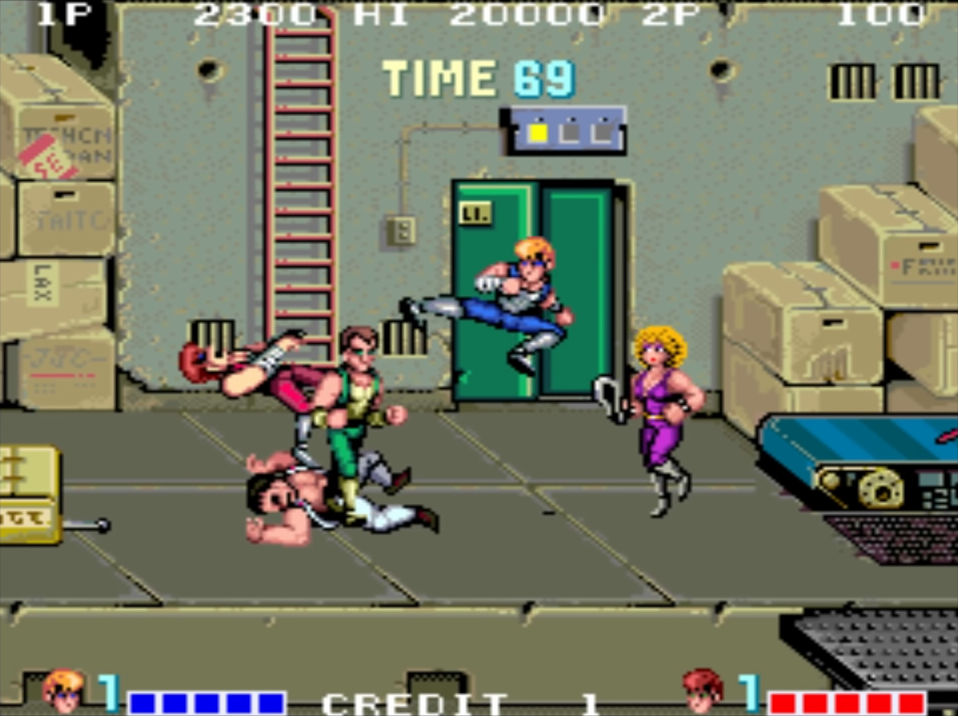
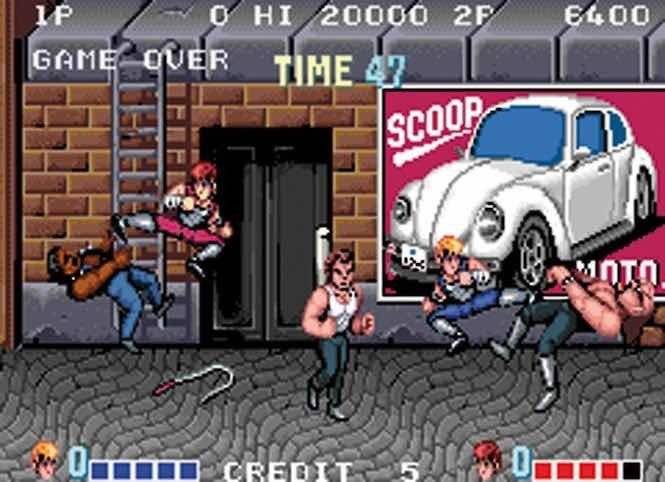
Now that we discussed a bit of history of the game and its legacy, let us now talk briefly about some of the game’s aspects, characters, and storyline. Twin brothers Billy and Jimmy Lee fight their way into the turf of the Black Warriors gang to rescue Billy’s girlfriend, Marian. Both characters have a repertoire of martial arts techniques that are the basis of their offense and defense. The pair battle a variety of foes and bosses along the way using various weapons and objects that can be acquired by either knocking down a foe/disarming them, or grabbing them from the environment. Weapons include bats, dynamite, barrels, boxes, pipes, knives, and whips. Some of the enemies the duo encounter include Jack, Rowper, Linda, Jeff, Abobo, and the final boss and leader of the Black Warriors, Willy. 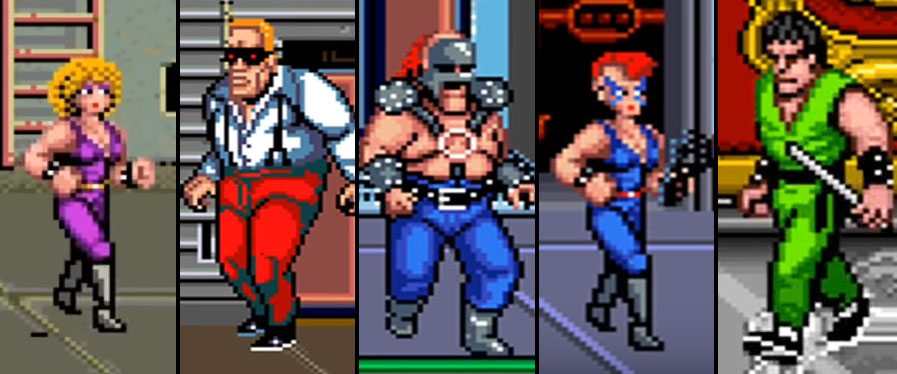
Each character, including the boss, had their own strengths, look, and fighting style. For instance, Linda wore a leotard and carried a whip as a weapon, Abobo was a brute strongman towering over his enemies, and the final boss, Willy, packed a devastating machine gun that turned many a player into Swiss cheese. As you can see, the plot was straight to the point where the good guy must defeat the bad guy and his slew of baddies, all while rescuing someone in the process, as most games were at the time. The video game Double Dragon was one hell of a butt kicking head cracking ride and a true pioneer of the beat ’em up genre, and in my opinion, is a must-play. All in all, the game that spawned a truly successful series continues to be revered to this day, and its replay value remains high without question. On that note, the first half of Bits & Flicks, Part 2 has come to an end; stay tuned for the second half, where we’ll dive deep into the flick, the hit video game/series inspired. Game on!