
 NFL
[By Caitlyn Hodgson & Damon Horton]
—————————————-
The 2026-2027 PWHL season has already heated up, with four new expansion teams announced back in May. The hype is building even more with a draft that featured the largest class of prospective players since the League’s inaugural season.
To shake things up more, the rulebook has been updated with changes that will be effective for the upcoming season:
- Neck protection (Rule 9.10): All players and goaltenders must wear cut-resistant protection with minimum ANSI/ISEA cut-level score of A4 (A5 preferred). It must be worn in all games and pre-game warmups.
-
-
- This addition is meant to increase player safety, protecting the neck from stray blades and pucks. Neck guards have become more popular recently, especially in lower and youth leagues. Goalies have also always had the option to wear danglers, but players have never been required to. The NHL, as well as the Olympic Committee, has begun requiring neck guards for players moving forward. The NHL requires only players new to the league to wear them.
- These changes are in lieu of the tragic passing of American hockey player Adam Johnson. He died from a skate cut to the neck in a game in England in 2023.
-
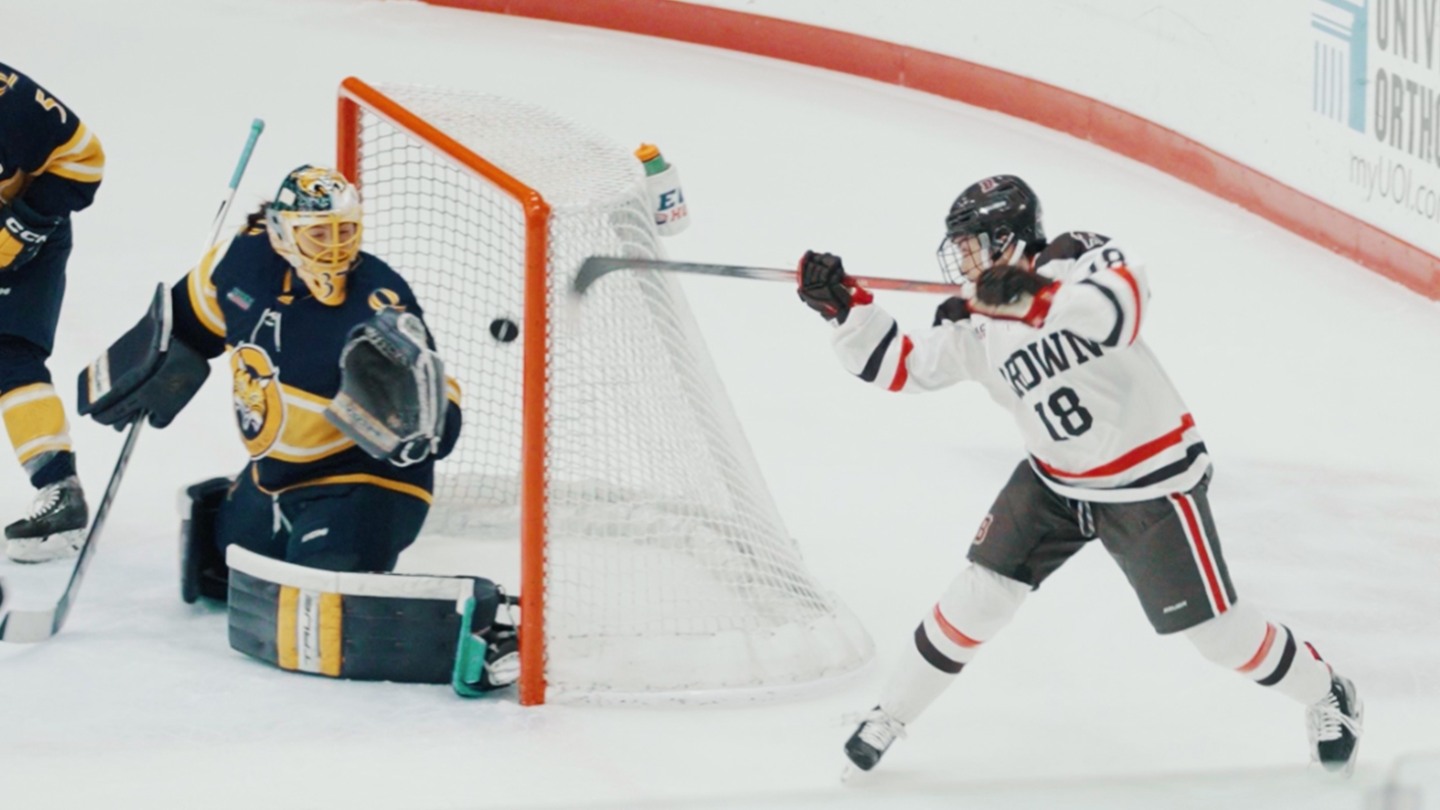
- High-sticking the puck (Rule 82): Batting the puck with a stick above shoulder height is now permitted. A puck that is hit with a high stick that comes into possession of either team is permitted. Cradling the puck on the stick blade (lacrosse) above shoulder height is permitted, except on penalty shots and shootout attempts. Doing so in those scenarios will stop the attempt immediately and be considered a complete attempt.
-
-
- In the NHL, high-sticking results in a penalty. When a stick is used above the crossbar to bat a puck down, the goal is recalled. Many impressive goals over the years have been called back. I hope the PWHL’s rule change inspires a similar change in the boys’ league. Players today have high levels of hand-eye coordination, and I am excited to see the skill displayed by today’s athletes.
-
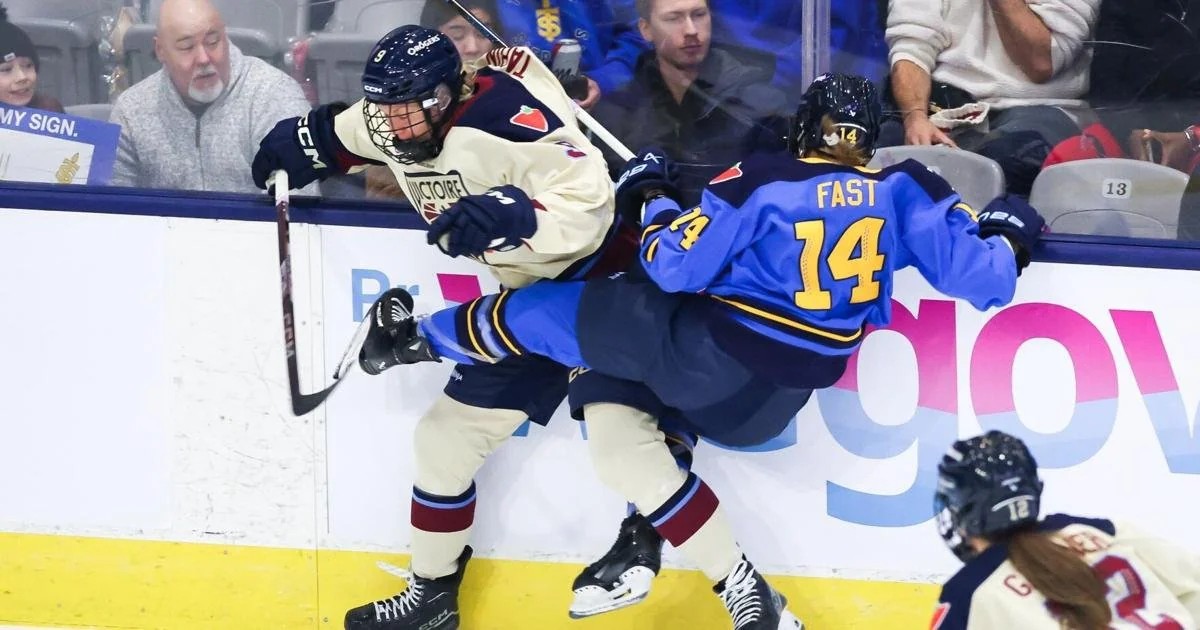
- Body checking (Rule 52.1): Permitted: Checking with clear intent on playing the puck or attempting to gain possession of it; angling and using legal body contact when both players are going in the same direction; remaining stationary in position with puck carrier approaching; pushing/leaning into one another while in pursuit of puck. Illegal: Blindside check to defenseless opponent; launching upwards, extending or driving arm, or leaving feet to make contact; skating or stepping into opponent with excessive force.
-
-
- Body checking, in particular, has been a topic of conflict in hockey. Female players have never been allowed extensive contact at any level of the sport. This change significantly closes the gap between PWHL and NHL rules. On checking and contact, the PWHL and NHL will allow the same level of physicality for the first time. Despite this new permission, many PWHL players have played a very physical game, and fans have called for this rule change since the league began.
- The major takeaway is that the language still seems to ban major open-ice hits. There needs to be clear intent to play the puck, whereas in the NHL a “hospital pass” will leave a player breaking through open for a hit with clear intent to play the player rather than the puck. Ultimately, we will have to wait and see how the refs call the games, as there is an argument that an open-ice hit could very well be playing the puck. Either way, keep your heads up just to be safe!
-
- Overtime (Preseason pilot): When a minor penalty is assessed, the non-offending team can choose to take a penalty shot instead of a power play, which can be taken by any player in the lineup; a power play in overtime will still result in a 4-on-3 advantage; all preseason scrimmages will have a 3-on-3 overtime and shootout regardless of the score.
-
- The choice between a penalty shot and a power play is a wholly interesting concept. In the NHL, a penalty shot is only awarded when a player is impeded on a clear scoring opportunity, usually when they are tripped up on a breakaway. With this addition, PWHL teams can designate a specialized penalty shooter, unlocking a whole new layer to the game. Teams will need to weigh the odds of success between this shooter and their power-play lines, and that will differ with every matchup.
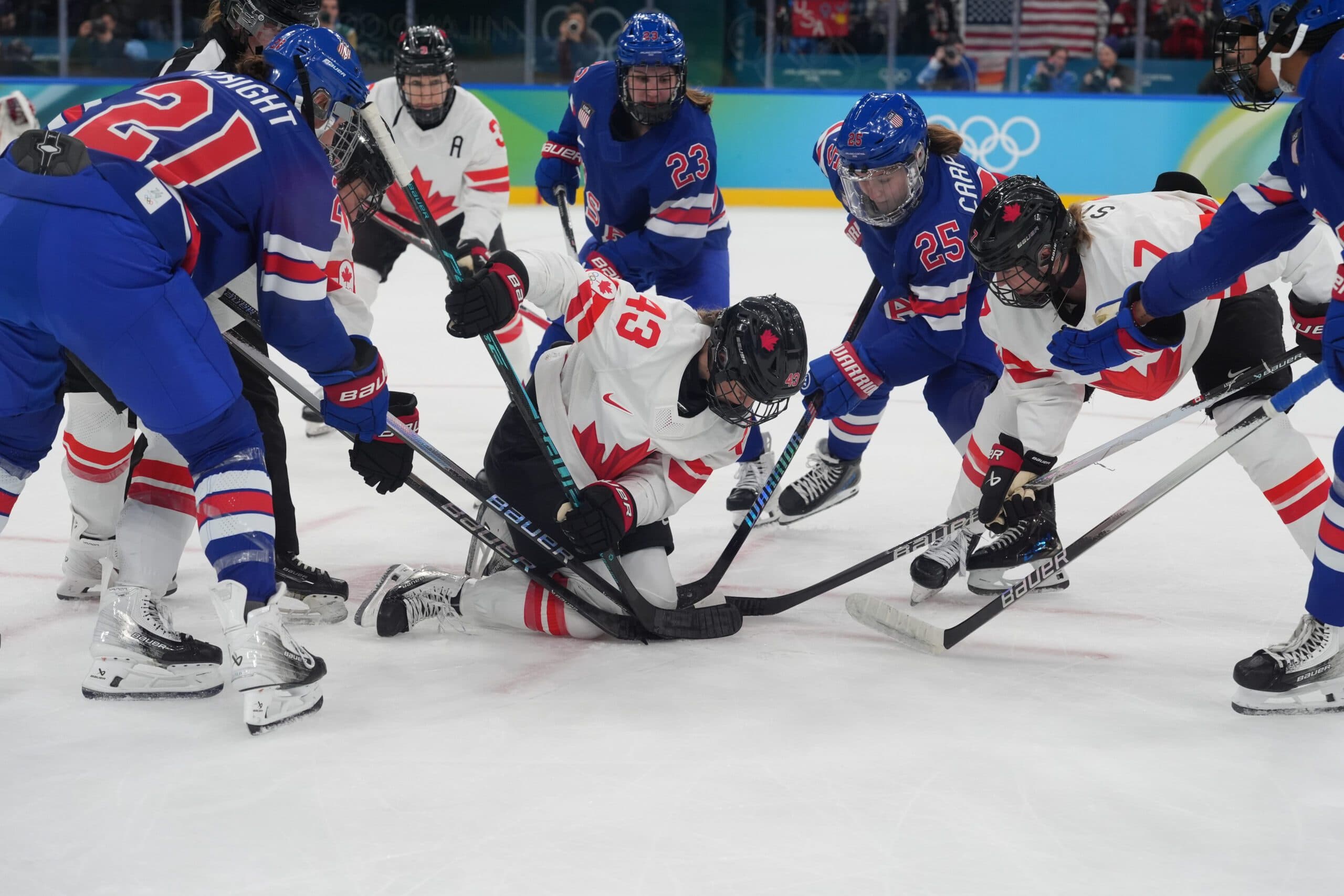
These new rule changes open the discussion of male versus female versions of professional sports. Although many consider the PWHL a sister league to the NHL, many gameplay differences seem more pronounced than in other sports. The WNBA has no 3-second violation. They use a different ball, and the 3-point arc is shorter. The games and quarters are even shorter. In tennis, Men and Women use different balls; in Grand Slam matches, women play fewer matches.
Outside of a few minor standings and draft differences, the core of the game remains increasingly consistent between the PWHL and NHL. Same sticks and pucks. Three 20-minute periods, 5-on-5, and one goalie. Two nets. Score more goals than the other team. The absence of a trapezoid, jailbreak rule, and no escape rule are things the NHL should adopt from the PWHL, not the other way around.
Will these new rules close that gap?
- Create a whole new arena for those just entering?
- Introduce unknown challenges and difficulties with the increased physicality and skills?
Either way, this new season is shaping up to be quite the topic of intrigue.