
 NFL
By Bill Carroll
Saturday, October 24, 2026, | Ryan Field | 11:00 a.m. CT | Peacock
Northwestern returns to Ryan Field at 5-1 and #24 in the AP poll, which means the flattering part of the schedule is over. Greg Schiano‘s 2-4 Scarlet Knights aren’t especially efficient, but they are stubborn, opportunistic, and perfectly willing to turn an afternoon into a collection of punts, hidden yards, and regrettable decisions. The Wildcats’ assignment is straightforward: handle the underdog without financing the upset.
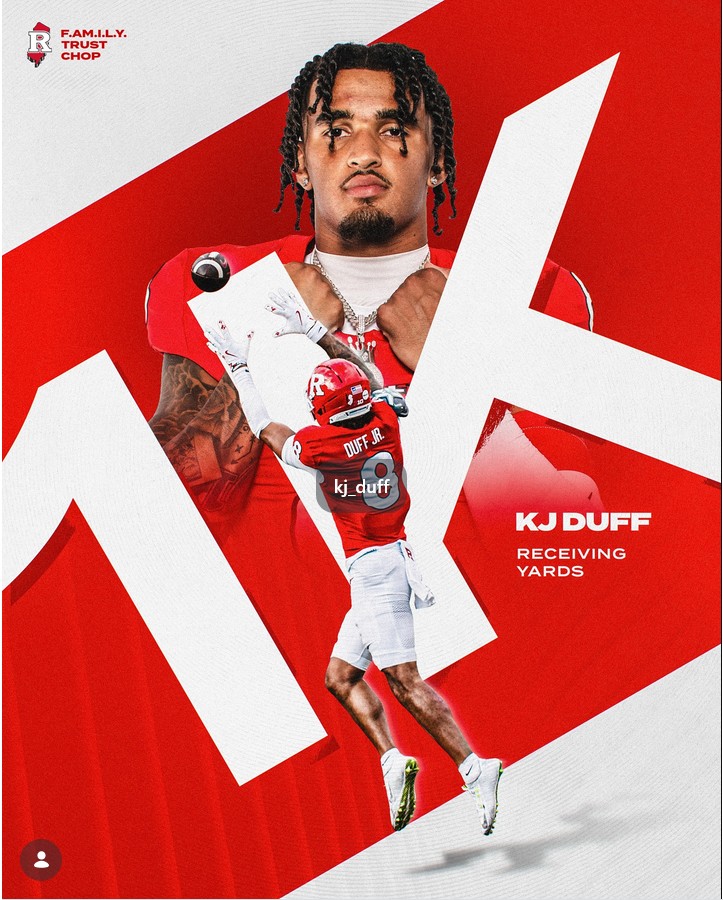
The matchup problem is KJ Duff. At 6’6″, 225, he has 42 catches for 741 yards and nine touchdowns, including four 100-yard games. In my article, “The Receivers Who Can Tilt the Field,” I compared him to both Plaxico Burress and Drake London.
He is not merely Rutgers’ best receiver; too often, he is the emergency plan, the explosive-play plan, and the red-zone plan, all in the same jersey. Northwestern can cover him correctly and still lose the rep. That is what a huge, explosive play machine does.
The Assignment: No Gifts, No Alibis
| Date | Saturday, October 24, 2026 |
| Kickoff | 11:00 a.m. CT |
| Site | Ryan Field, Evanston, Illinois |
| Coverage | Peacock |
| Records | Rutgers 2-4 (1-2); Northwestern 5-1 (2-1) |
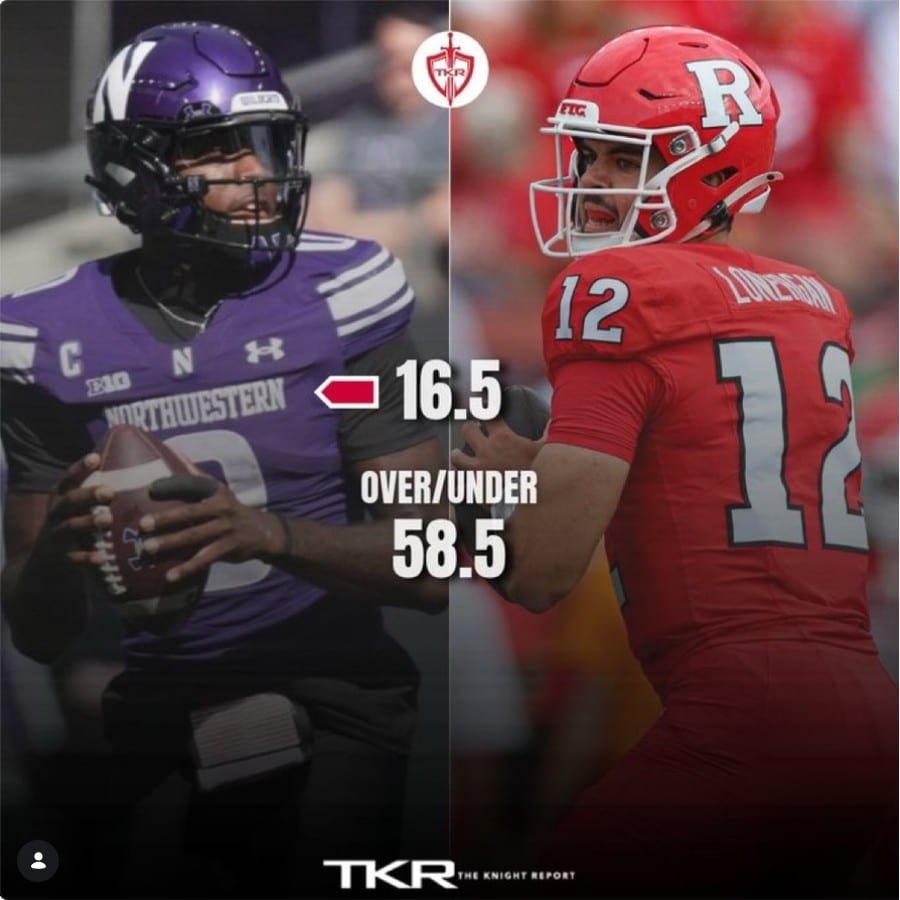
| Line | Northwestern -16.5; total 58.5 |
Ciarrocca’s Offense: Simple Rules, Expensive Mistakes
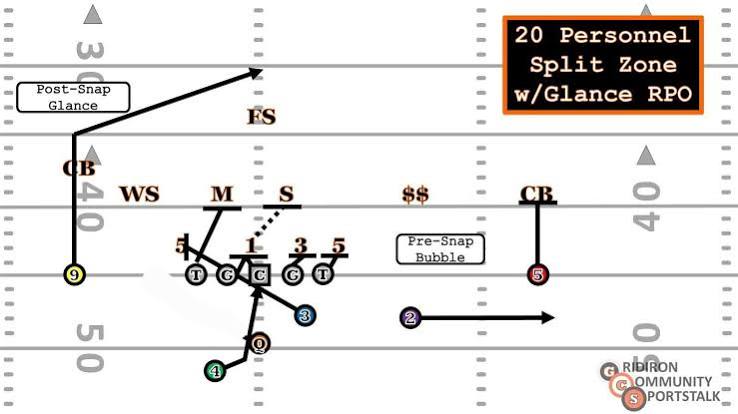
Kirk Ciarrocca wants three traits to define his offense: value the football, execute at a high level, and play with violence. Rutgers is spread-based but run-centered, focusing on tight zone, outside zone, and gap concepts. The menu is compact by design. The Scarlet Knights would rather master three answers than collect 30 plays that look impressive on a clinic slide and disappear on third-and-4.
The run game supplies the explosives. Run action freezes linebackers and safeties before routes enter the vacated space. Glances, bubbles, and other RPOs punish overhang defenders who fit too eagerly. If a corner squats inside to steal the glance, Ciarrocca can answer with the Casino constraint. The rules are simple; the decisions they force are not. Defenders who guess correctly deserve congratulations. Defenders who guess early may need a pursuit angle.
Dylan Lonergan’s job is less glamorous: stay on schedule and stop feeding a minus-five turnover margin. Antwan Raymond does not have to dominate. He only has to run well enough to make the safeties step forward. That half-step is the entire business model, because it leaves Duff isolated outside.
The Duff Problem: Coverage Is Only the Beginning
Against man coverage, Rutgers can isolate Duff as the boundary X, reduce his split, or hide him in a stack or bunch to deny a clean press. Fades, back shoulders, slants, and deep overs exploit his reach. Motion identifies the coverage; condensed formations manufacture traffic. A corner asked to handle all of that alone has not received a matchup. He has received an assignment memo from human resources.
Versus single-high zone, run action moves the post safety before Duff attacks with a glance, crosser, or outside vertical. Against Cover 2, he threatens the hole between corner and safety. Against quarters, vertical releases and deep overs test match rules and communication. In the red zone, Rutgers compresses the formation, muddies the releases and eventually asks the obvious question: which defender can play above the rim with him? Usually, the answer is theoretical.
Tim McGarigle should answer with multiplicity and muscle: press with safety help, cloud Duff’s side, bracket him on money downs, and rotate late from two-high shells. The first defender must control the release; the second must attack the hands. When Duff wins, tackle immediately. A contested 14-yard catch is survivable. A missed tackle that turns it into 54 means some salty words in film study.
Where the Chalkboard Gets Mean
Northwestern’s 4-2-5 is built to defend spread formations without surrendering the run. Four down linemen fit the box while the nickel handles motion, RPOs and condensed sets. The design is sound. Designs usually are. The issue is whether the front stays square and the linebackers keep disciplined eyes when the mesh starts selling fiction.
Ross Kolodziej‘s detail work becomes central. Michael Kilbane and Brendan Flakes must attack without opening cutback lanes. On scouting tape, the useful question is not simply whether they make the tackle. It is whether their first two steps preserve the fit and force the ball where help exists. One negative run shrinks Rutgers’ call sheet. One false step creates a shot to Duff and a very long film meeting.
Ciarrocca and Chip Kelly share a belief that the run game is the offense’s grammar and play-action supplies the punctuation. Rutgers is methodical and possession-minded. Kelly varies tempo, width, quarterback involvement, and formation. Northwestern’s edge is diagnostic stress: forcing the same Rutgers defenders to solve different problems from nearly identical looks, and then, unless their answers improve, the scoreboard becomes unpleasant.
Northwestern’s Offense: Make Rutgers Prove It
Rutgers allows 402.5 yards and 6.58 yards per play. Against Big Ten opponents, the damage rises to 477.3 yards and 7.34 per snap. That is not bend-but-don’t-break. It is bend, break, and ask the offense to make the afternoon less embarrassing. The recurring failure begins with efficient runs that pull extra bodies into the box and expose play-action windows.
Northwestern should attack cumulatively. Aidan Chiles and the backs can stress the interior with zone, counter, and quarterback keepers. Once Rutgers tightens the box, Kelly can release crossers, access throws, and isolated routes to Griffin Wilde. Chiles’ 1,398 yards, nine touchdowns and zero interceptions matter to scouts because the physical tools were never the issue. The evaluation is whether his processing and ball placement remain orderly when Schiano changes the picture after the snap.
NFL Scouting Lens: Traits, Translation and Trouble Spots
Rutgers Prospects: Duff, Then Daylight
Duff is the premier prospect and a legitimate early-round candidate for 2027. The frame, body control,l and catch-point dominance translate to a boundary role. The harder scouting question comes before the ball arrives: can he defeat press with repeatable releases, separate at the break, and create routine NFL windows rather than converting every target into performance art? Lonergan merits developmental attention, but Duff is Rutgers’ clear Sunday player.
Northwestern Prospects: More Projection Than Polish
Griffin Wilde owns the strongest current consensus, with route production and play-making suggesting a Day 3 path. Scouts are tracking if he separates against physical coverage, not merely whether the target finds him. Chiles has NFL size, arm elasticity, and off-platform creation; his grade will move with processing, pressure response, and location consistency. Kilbane’s motor and edge discipline offer a developmental front-seven case, while Robert Fitzgerald’s range and tackling keep him on the list. None is a finished evaluation, despite what October mock drafts may proclaim.
The Verdict: Rutgers Can Annoy Them, Not Outlast Them
Rutgers can create discomfort by feeding Duff, winning field position, and stealing a special-teams possession. Northwestern cannot give up a short field through a giveaway, blocked kick, or coverage bust. Nor can it treat two spectacular Duff catches as evidence that the plan has failed. Sometimes the other team’s best player is allowed to be good. The object is not making him look like a superstar.
Over four quarters, Northwestern has the more balanced offense, cleaner quarterback play, and a deeper roster. The Wildcats should hammer Rutgers’ run fits, force Lonergan into obvious passing downs, and make every Scarlet Knights drive survive without a shortcut. Duff will produce. Rutgers needs him to be extraordinary on demand, which is less an offensive plan than an appeal for repeated miracles.
Prediction: Northwestern 38, Rutgers 20
ATS: Northwestern -16.5 | Total: Under 58.5