

 NFL
NFL
By Bill Carroll
In part 1, I explained my methodology and the “how” and “why” behind the “who” that make up the top of my defensive tackle tiers. Now here are the rest.
Tier 3: Disruptive Starters and High-Ceiling Role Players
8. Mateen Ibirogba | Texas Tech
Projection: Round 2-3 | Best Fit: 3/4i | Size: 6’4″ 300
Ibirogba’s length, movement, and a late-blooming developmental curve shaped his path from Georgetown to Wake Forest and finally to Texas Tech, proving his growth. At the same time, his pressure production shows he can win with more than size. He plays with the effort and range coaches value in rotational fronts.
NFL role: A 3-technique or 4i who can attack on movement calls and contribute in passing situations.
What I am watching: Pad-level consistency against power. Longer defenders cannot allow compact guards to get underneath them.
9. Jordan Hall | Georgia
Projection: Round 3-5 | Best Fit: 1/3-tech | Size: 6’4″ 320 pounds
Hall looks like an NFL defensive tackle, with a 320-pound frame, strong hands, and the natural density to hold the point. Injuries interrupted his development, so the evaluation is still driven more by traits than production. His best snaps show a blocker-eating interior presence with untapped upside.
NFL role: A 1-technique with the length to play 3-technique in heavier fronts.
What I am watching: Health, snap volume, and pass-rush growth. He needs a full season that turns physical promise into measurable disruption.
10. Francis Brewu | Notre Dame
Projection: Round 4-5 | Best Fit: 3-tech | Size: 6’1″ 285
Brewu is the leverage outlier of the class. At 6’1″, 285, he gets underneath blockers, explodes through gaps, and converts unusual weight-room power into pocket compression. His 2025 production at Pittsburgh confirmed that his compact build can be an advantage when he is allowed to attack.
NFL role: A penetrating 3-technique in a front that protects him from repeated two-gap assignments.
What I am watching: Holding up against NFL-sized double teams. Notre Dame offers the ideal stage to prove that his disruptive skill travels against bigger bodies.
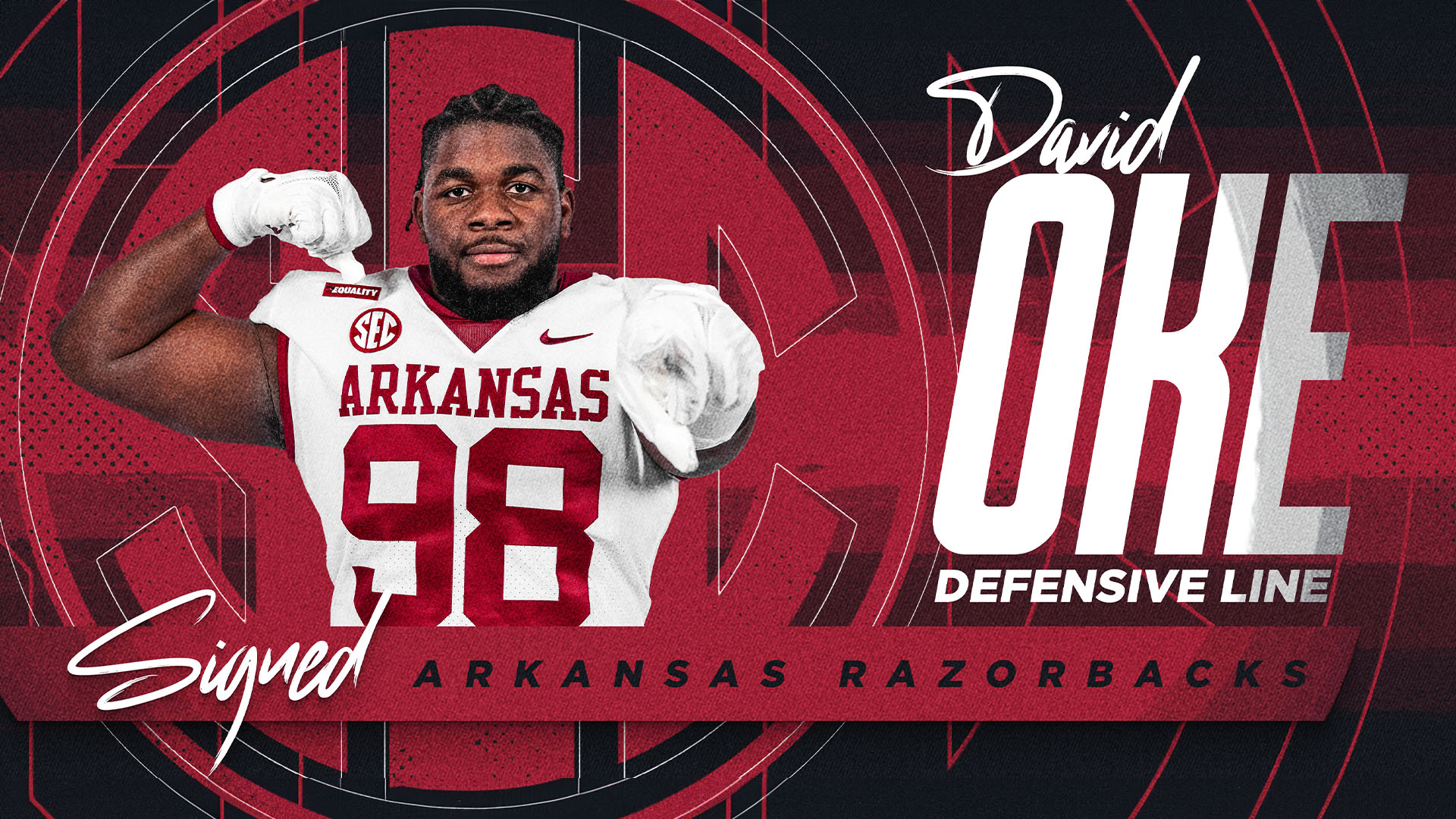
11. David Oke | Arkansas
Projection: Round 4-5 | Best Fit: 0/1-tech | Size: 6’2″ 314* [Listed at 298]
Oke is a true nose-tackle projection with the mass and strength to occupy space. His best college production came at Abilene Christian, where he showed he could make plays rather than merely absorb blocks. The move to Arkansas raised the level of competition, but injury limited the available SEC evidence.
NFL role: A rotational 0/1-technique and early-down run specialist.
What I am watching: Health, lateral quickness, and proof that his power translates consistently against SEC interiors.
12. Kemari Copeland | Virginia Tech
Projection: Round 4-5 | Best Fit: 3-tech | Size: 6′ 2″ 290 pounds
Copeland is an explosive, powerfully built interior defender with a strong 2025 breakout on his resume. His first step and natural leverage create penetration, while his strength profile helps him survive at a lighter listed weight. He also shows enough awareness to affect passing lanes and finish unconventional plays.
NFL role: An attacking 3-technique who can become a disruptive rotational pass rusher early.
What I am watching: A second full season of production, cleaner hand placement, and better lateral control against zone concepts.
13. Devan Thompkins | Alabama
Projection: Round 4-5 | Best Fit: 3/4i | Size: 6’5″ 298 pounds
Thompkins is one of the class’s most intriguing body types. His 6’5″ frame, movement background, and conversion from a lighter edge profile create real inside-out versatility. The transfer from USC to Alabama gives evaluators a clear test of whether his improving production can continue against elite competition.
NFL role: A 4i or long 3-technique who can slide outside in selected sub-packages.
What I am watching: Lower pad level, faster block recognition, and a deeper counter repertoire. Length only helps if he consistently plays beneath blockers.
14. DJ Hicks | Texas A&M
Projection: Round 4-5 | Best Fit: 0-5 tech | Size: 6’2″, 295 pounds
Hicks combines five-star traits, throwing-event explosiveness, and alignment flexibility. His punch carries real force, and he moves well enough to line up from nose tackle through 5-technique in certain packages. His run defense is currently more advanced than his pass-rush production.
NFL role: A versatile 1/3-technique with the power to reduce to nose and the athleticism to widen in changeups.
What I am watching: Turning traits into more pressure and sacks. A defined secondary rush move could unlock his early-round ceiling.
15. Mario Landino | Indiana
Projection: Round 4-5 | Best Fit: 3/4i | Size: 6’4″ 288 pounds
Landino is a high-motor interior defender whose 2025 production jump put him firmly on the watch list. He can create pressure from the 3-technique, pursue through the whistle, and widen to a 4i alignment when the front needs flexibility. His trajectory suggests more development is available.
NFL role: A movement-oriented 3/4i who can contribute in a rotation before earning a larger role.
What I am watching: More lower-body mass and consistency against double teams. He must show that his disruptive style remains effective when offenses attack him directly.
The back half of this board is where the scouting gets particularly interesting because the players are no longer.
Tier 4: Developmental Interior Rotation
Dallas Afalava, Jayden Jackson, Hero Kanu, Keanu Tanuvasa, Daniel Lyons, Sean FitzSimmons, C.J. Fite, Jehiem Oatis, CJ Doggette Jr. and Brian Booker all possess at least one legitimate NFL trait. The question is whether that trait becomes a dependable weapon or remains a package-specific advantage.
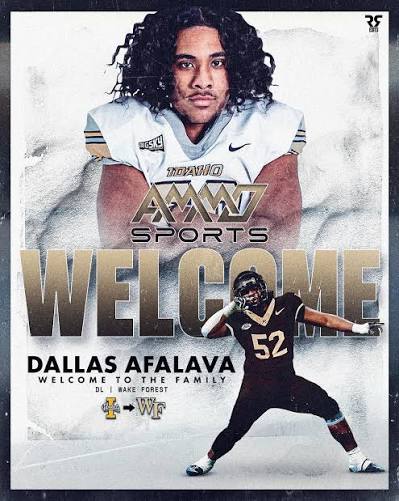
16. Dallas Afalava — Wake Forest
Projection: Round 3–5 | Best Fit: 3-tech | 6’1″ 291
Afalava is a compact, disruptive tackle with the quickness to create interior pressure. His 2025 season established a legitimate rotational profile, and his ability to affect games in multiple ways makes him more than a pass-rush-only prospect.
What I’m watching: Whether his compact frame can hold up against larger interior blockers and whether the pass-rush production sustains against higher-level competition.
17. Jayden Jackson — Oklahoma
Projection: Round 3–5 | Best Fit: 1/3-tech | 6’2″ 306
Jackson is one of the accomplished young tackles on this board. He broke into Oklahoma’s rotation as a true freshman, earned Freshman All-America recognition, and developed into a player capable of creating legitimate interior pressure.
His 2.5-sack performance against Auburn provides a useful glimpse of the ceiling.
What I’m watching: Consistency against double teams and whether the pass-rush flashes become repeatable rather than occasional.
18. Hero Kanu — Texas
Projection: Round 4–6 | Best Fit: 3/4i | 6’5″ 309
Kanu brings an intriguing length-and-mass combination. The frame gives him a natural path to playing multiple interior alignments, while his experience against high-level competition provides an important foundation.
What I’m watching: Pass-rush consistency and the ability to convert length into sustained knock-back instead of simply occupying space.
19. Keanu Tanuvasa — BYU
Projection: Round 4–6 | Best Fit: 3-tech | 6’4″ 300
Tanuvasa enters the season with substantial experience and proven Big 12 exposure. His value comes from a combination of length, experience, and positional flexibility. Next could be turning experience into consistent disruption.
What I’m watching: Whether the additional season at BYU produces a larger pass-rush role and more consistent production.
20. Daniel Lyons — Florida State
Projection: Round 5–7 | Best Fit: 3/4i | 6’4″ 292
Lyons is a mature, assignment-sound interior defender. He gives a front versatility without demanding that every snap be designed around him.
What I’m watching: More disruptive production and a deeper pass-rush plan.
21. Sean Fitzsimmons — Pittsburgh
Projection: Round 5–7 | Best Fit: 1/3-tech | 6’3″ 300 pounds
Fitzsimmons offers size, starting experience, and evidence of resilience. He is the type of veteran interior player who can provide dependable rotational snaps while a defense develops its younger talent.
What I’m watching: Health, consistency, and whether he can turn steady production into more negative plays.
22. C.J. Fite — Arizona State
Projection: Round 4–6 | Best Fit: 1/3-tech | 6’1″ 305
Fite is one of the more reliable run defenders in the developmental portion of the board. His ability to handle double teams gives him a straightforward early-down identity.
What I’m watching: More pass-rush finish. The run-defense profile is established; the next jump is turning disruption into sacks and pocket collapse.
23. Jehiem Oatis — Ole Miss
Projection: Round 4–6 | Best Fit: 0/1-tech | 6’5″ 335
Oatis is the classic massive interior projection. At 335 pounds, he brings the raw mass to absorb blocks and close the interior, while his previous flashes demonstrate that he can affect more than the run fit. His mass creates a role; now his tape has to show improved conditioning.
What I’m watching: Conditioning, leverage, and whether he can turn size into consistent knock-back and pocket disruption.
24. CJ Doggette Jr. — Florida Atlantic
Projection: Round 4–6 | Best Fit: 3-tech | 6’2″ 294
Doggette is one of the American Conference’s more intriguing interior defenders. His 2025 season showed legitimate production; his “freakish” physical testing adds to his evaluation. The question is whether that strength and explosiveness can scale against stronger offensive lines.
What I’m watching: Whether the disruption seen in 2025 travels against better competition and whether he can maintain leverage as a pass rusher.
25. Brian Booker — New Mexico
Projection: Round 6–7 | Best Fit: 0/1-tech | 6’3″ 330
Booker is the developmental nose tackle at the bottom of the board who deserves a real look. The size gives him a straightforward NFL role, and his production shows that he can make plays rather than absorb blockers. He doesn’t need to win a stopwatch competition, but he needs to prove he can make a roster by being a problem in the middle.
What I’m watching: More consistent anchor strength, lateral quickness, and finishing production against higher-level competition.
Names That Could Shake the Board
This class starts with Washington and Stone. Everyone else is chasing them.
Washington is the safest early projection because his size, strength, and run-game discipline translate immediately. Stone carries risk, but no interior defender in the class offers a higher pass-rush ceiling. Moten remains firmly in the first-round conversation because his continued growth and alignment flexibility give defensive coordinators more options.
Echoles is a threat to break into the top three. He has production, a stout frame, and the down-to-down consistency of an NFL starter. Brewu has similar potential, but Notre Dame will provide the necessary test. If his leverage and explosiveness hold against bigger, stronger fronts, he will rise quickly.
The middle of the board is less settled. Alexander, Green, Holmes, Ibirogba, Copeland, Thompkins, Hicks, and Landino each possess a legitimate NFL-caliber trait. The evaluation is straightforward: Can that trait hold up every down, or is it limited to a specific package or situation? That question will shape this class.
Draft Value Summary
Round 1 to Early Round 2:
A’Mauri Washington, David Stone, Ahmad Moten Sr., Will Echoles
Rounds 2–3:
A.J. Holmes Jr., Bear Alexander, Stephiylan Green, Francis Brewu, DJ Hicks
Rounds 3–5:
Mateen Ibirogba, Jordan Hall, Kemari Copeland, Devan Thompkins, Mario Landino, Jayden Jackson
Rounds 4–6:
Dallas Afalava, Hero Kanu, Keanu Tanuvasa, David Oke, C.J. Fite, Jehiem Oatis, CJ Doggette Jr.
Rounds 5–7:
Daniel Lyons, Sean Fitzsimmons
Rounds 6–7:
Brian Booker
What Teams Are Really Drafting
NFL teams do not draft defensive tackles. They draft solutions.
Some teams need a nose tackle who can absorb double teams and keep the linebackers clean. Others need a 3-technique who can penetrate, disrupt protections, and create pressure without help. A defense may need a 4i who can control the tackle, close the B-gap, and create a four-person rush that ruins an offensive play-caller’s day.
The highest-ranked prospect is not automatically the best fit. The right player is the one whose strengths solve the defense’s most pressing problem. That distinction matters in this class. Washington provides immediate run-game stability. Stone offers game-changing interior pressure. Moten and Echoles bring more balanced profiles. The middle rounds feature specialized defenders who can become valuable contributors if their defining traits translate into dependable roles.
Final Refrain
Defensive tackle evaluation begins with leverage. Who wins the first collision, controls the line of scrimmage, or forces the guard to stop climbing toward the linebacker and start fighting for survival?
The most valuable work in this position rarely appears in a highlight package. The two-gap stop that frees the linebacker is quickly forgotten. The rush that forces the quarterback off his spot seldom receives credit for the incompletion. The defender who maintains his pad level and hand placement in the fourth quarter after an afternoon of double teams will not go viral. He will help you win.
Interior defensive linemen change games by changing the geometry of the game.
The 2027 class has the size, movement skills, and positional variety to alter that geometry. Washington supplies the anchor. Stone brings the disruption. Moten and Echoles offer balance. The middle of the board is loaded with specialized weapons, while the later rounds contain developmental players whose value could climb sharply with refinement. Prospects who define their roles, eliminate uncertainty, and turn flashes into repeatable NFL traits in 2026 will be the ones who rise.