

 NFL
NFL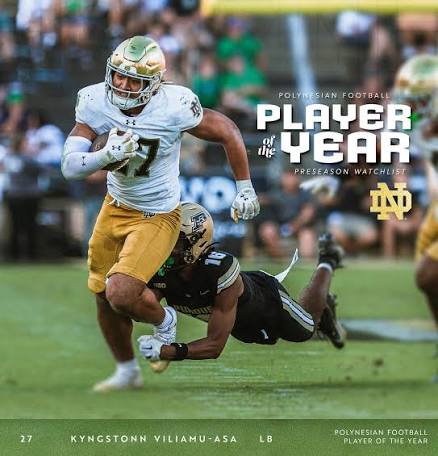
2027 NFL Draft: Top 25 Linebackers
By Bill Carroll
Few positions in football demand a rarer combination of traits than those needed by linebackers. The best linebackers must process information at quarterback speed, move with the spatial range of defensive backs, and strike with the force of an edge defender. Every snap requires a balance of athleticism, instincts, discipline, and controlled violence. One false step creates a running lane.
One slow read opens a throwing window. One missed tackle changes a game. That challenge is what makes evaluating linebackers so fascinating.
The 2027 linebacker class lacks the clear-cut blue-chip hierarchy that defined some recent groups, but it may be deeper and more diverse as a result. This class features traditional run defenders, modern coverage specialists, pressure-oriented chess pieces, and hybrid front-seven athletes whose roles differ dramatically depending on scheme and deployment.
When evaluating linebackers, I begin with five questions:
- How quickly does he diagnose?
- Can he defeat blocks?
- Can he play the width of the field?
- Is he effective in coverage?
- Does he consistently finish?
Production is vital, but processing speed, pursuit range, block deconstruction, coverage instincts, and role versatility are the traits that most NFL evaluators prize.
The early market has already identified several headliners. Sammy Brown, Kyngstonn Viliamu-Asa, Rasheem Biles, Chris Cole, and Ben Roberts have generated significant attention entering the 2026 season. Others, including Tony Rojas, Whit Weeks, Suntarine Perkins, and Raylen Wilson, possess the physical tools and developmental trajectory to force their way into first-round conversation.
This is not a consensus ranking. It is a scouting-tier board built around NFL projection, scheme fit, positional value, and what each player must still prove before the 2027 NFL Draft.
There are three-down linebackers, downhill run defenders, pressure pieces, coverage-oriented athletes, and hybrid front-seven players scattered throughout the class. The challenge for scouts lies in determining which players can remain on the field when offenses force them to defend in space.
My evaluation begins with five questions: How quickly does the linebacker diagnose? Can he defeat blocks? Is he able to play the width of the field? Is he effective in coverage? Does he consistently finish? Production matters, but processing, range, and role versatility determine whether an off-ball linebacker can translate to the NFL.
The early public market has already begun to separate the most complete prospects from the remaining top-of-the-class prospects. Sammy Brown, Kyngstonn Viliamu-Asa, Rasheem Biles, Chris Cole, and Ben Roberts are among the names receiving the most attention. At the same time, players such as Tony Rojas, Whit Weeks, Suntarine Perkins, and Raylen Wilson have legitimate opportunities to move into the first-round conversation with strong 2026 seasons.
My board is not purely a draft board. This is my scouting board, not a consensus ranking. The emphasis is on role projection, scheme fit, and what each player needs to prove when the 2026 season begins.
Tier 1 — Three-Down Difference-Makers
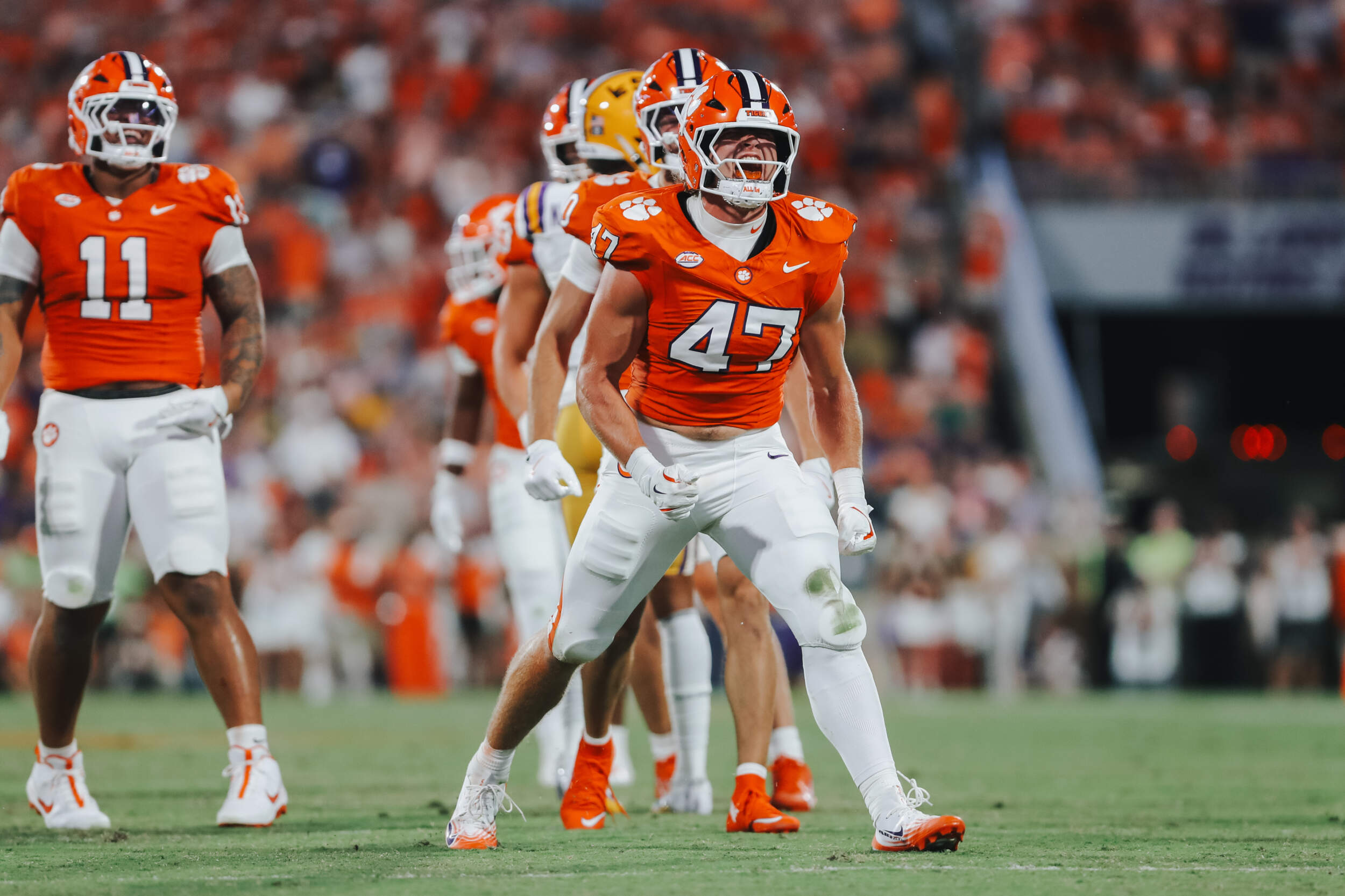
- Sammy Brown — Clemson
Projection: Round one
Best Fit: MIKE/WILL hybrid
Year-One Role: Starting three-down linebacker
Brown is the early standard for this group because he combines athleticism, physicality, and the processing necessary to operate in the middle of a defense. He has the downhill acceleration to attack the run, enough range to function in space, and the versatility to be a pressure player.
The most attractive part of his profile is that he does not have to be protected by the scheme. He can be the linebacker the defense builds around.
Brown’s combination of speed and run-support ability is also reflected in the early public evaluation. PFN has him No. 1 among its 2027 linebackers, while other early boards similarly place him at or near the top of the position.
What I am watching: Coverage consistency and whether he can turn his athletic gifts into three-down dominance.
- Kyngstonn Viliamu-Asa — Notre Dame
Projection: Round 1–2
Best Fit: MIKE
Year-One Role: Starting linebacker
Viliamu-Asa may have the most intriguing physical profile in the class. He plays with size and violence to operate between the tackles while possessing the athletic ability to cover significant ground when the defense opens up. The 2025 tape provides an extremely solid foundation. PFF credited him with a 94.0 run-defense grade, twenty-three pressures and four sacks, while allowing a 55.0 passer rating in coverage.
The question is not whether the tools are NFL-caliber. The question is whether he can maintain that level of impact with a heavier workload and continue to develop as a complete-coverage linebacker.
What I am watching: Every-down consistency and coverage recognition.
- Chris Cole — Georgia
Projection: Round 1–2
Best Fit: WILL/SAM hybrid
Year-One Role: Starting linebacker/pressure piece
Cole is one of the most interesting athletes on this board because he does not have to be locked in a single role. He can attack downhill pressure from the second level and drop into zone coverage. His biggest selling point is movement. Cole has the burst to erase space quickly, and that gives Georgia the ability to move him around the formation. The concern is diagnosis. He can be aggressive enough to outrun the play, particularly when working through traffic occasionally.
What I am watching: Between-the-tackles processing and block deconstruction.
- Rasheem Biles — Texas
Projection: Round 1–2
Best Fit: WILL/MIKE hybrid
Year-One Role: Starting coverage linebacker
Biles is a different type of linebacker from the bigger downhill players at the top of this class. He wins with movement, anticipation, and coverage ability.
That makes him particularly attractive in a league where offenses increasingly try to isolate linebackers with backs, tight ends, and motion. Early public evaluations have also highlighted his coverage value despite questions about his NFL size.
What I am watching: Can he consistently survive blocks against bigger offensive linemen?
- Tony Rojas — Penn State
Projection: Round 1–2
Best Fit: WILL
Year-One Role: Three-down starter
Rojas is one of the most explosive linebackers in the class. His speed changes the geometry of the defense. He can chase plays from the backside, close throwing windows, and create pressure without needing elaborate blitz designs.
His 2026 season is particularly important because he is returning from the ACL injury that sidelined him after four games in 2025. PFF noted that he had shown signs of returning toward the promising trajectory he established earlier in his career.
What I am watching: Health, change of direction, and coverage after the injury.
The Next Tier — Potential Early Starters
- Xavier Atkins — Auburn
Projection: Round 2–3 | Best Fit: WILL | Role: Run-and-chase starter
Atkins belongs on the board because of his ability to play fast. The challenge is converting that speed into consistent diagnosis. If he becomes more efficient with his first steps, he has the tools to become a three-down defender.
- Whit Weeks — LSU

Can he stay healthy and play with more power?
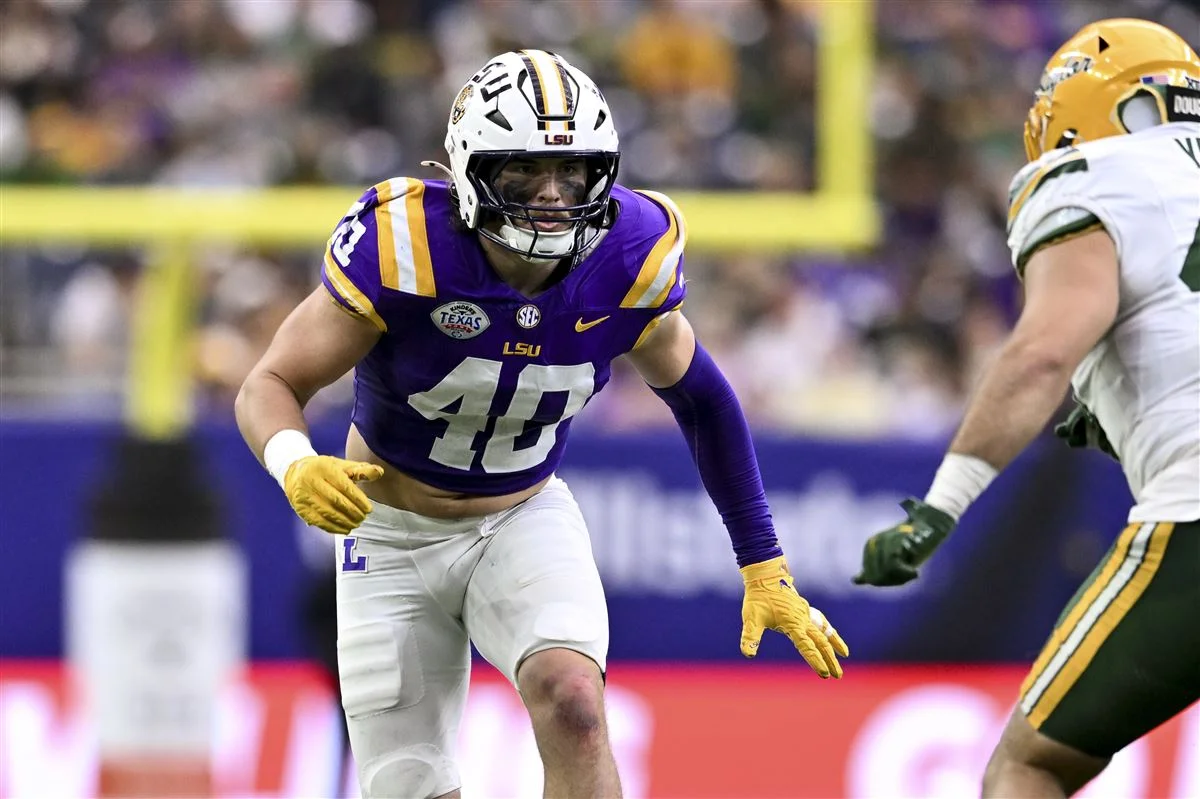
Projection: Round 2–3 | Best Fit: MIKE/WILL | Role: Starting linebacker
Weeks has an intriguing combination of size, experience, and physicality. He recorded 120 tackles, 3.5 sacks, two forced fumbles, an interception, and four pass breakups in 2024 before an injury shortened his 2025 season. He also generated seventeen pressures on only fifty pass-rush snaps in 2025.
His 2026 season is about proving that the injury is behind him and demonstrating consistent three-down coverage value.
- Arion Carter — Tennessee
Projection: Round 3 | Best Fit: MIKE/WILL | Role: Early-down starter
Carter is a physical run defender with the temperament to attack the line of scrimmage. He recorded seventy-six tackles and 1.5 sacks in 2025. The question is whether his coverage ability can catch up with his run-defense instincts.
- Suntarine Perkins — Ole Miss
Projection: Round 2–3 | Best Fit: WILL/Pressure LB | Role: Rotational pressure piece
Perkins is one of the class’s most intriguing movement athletes. His value comes from his ability to play multiple roles rather than occupy the middle of the defense. He should receive extensive scrutiny as a pressure player and space defender.
- Raylen Wilson — Georgia
Projection: Round 2–3 | Best Fit: WILL | Role: Three-down linebacker
Wilson has the agility, quickness, and speed to contribute as both a pursuit linebacker and occasional pass rusher. His closing burst makes him especially appealing for defenses that ask linebackers to attack aggressively from depth. Early scouting reports have also highlighted his potential in that dual role.
- Ben Roberts — Texas Tech
Projection: Round 2–3 | Best Fit: MIKE | Role: Starting linebacker
Roberts is one of the most important players to watch in this class because his 2025 season dramatically changed his projection. PFF credited him with an 86.3 grade after a 56.6 mark the previous year, including an elite coverage grade, four interceptions, and no touchdowns allowed.
The next test is whether he can maintain that production without former Texas Tech linebacker Jacob Rodriguez beside him.
- Luke Ferrelli — Ole Miss
Projection: Round 3–4 | Best Fit: WILL | Role: Developmental starter
Ferrelli is an intriguing athletic projection who warrants a close evaluation in the fall. The 2026 season should determine whether his movement skills translate consistently against SEC competition.
- Payton Pierce — Ohio State
Projection: Round 3–4 | Best Fit: MIKE | Role: Rotational linebacker
Pierce brings the physical dimensions and developmental background of a traditional Ohio State linebacker. The evaluation will center on whether he can become a consistent space defender rather than simply an effective box player.
- Amare Campbell — Tennessee
Projection: Round 3–4 | Best Fit: WILL | Role: Sub-package linebacker
Campbell is an intriguing developmental player whose athletic traits make him particularly interesting for modern defenses. He was also identified as a 2026 watch player during early-summer scouting.
- Rolijah Hardy — Indiana
Projection: Round 4 | Best Fit: MIKE/WILL | Role: Developmental starter
Hardy brings the type of second-level athleticism that deserves another full season of evaluation. The key question is whether his instincts and block-handling ability can catch up with his physical tools.
Tier 3 — Rotational Starters, Specialists and Ceiling Bets
- Austin Romaine — Texas Tech
Projection: Round 3–4 | Best Fit: WILL/MIKE
Romaine is one of the better developmental names on the board. He is currently viewed as having a three-down pathway, although his coverage development remains important.
- Cade Uluave — BYU
Projection: Round 3–4 | Best Fit: MIKE
Uluave brings physicality and competitive toughness despite being undersized. He posted ninety-seven tackles, three sacks, and four pass breakups at Cal in 2025 before transferring to BYU.
- Christian Alliegro — Ohio State
Projection: Round 3–4 | Best Fit: MIKE/WILL
At 6’ 3 ½” and listed at 240, Alliegro has the frame NFL teams want. His current evaluation is driven more by his physical profile and run-support potential than by proven coverage versatility.
- Drayk Bowen — Notre Dame
Projection: Round 3–4 | Best Fit: WILL
Bowen is an athletic second-level defender with the range to contribute against both the run and pass. His ability to cover ground efficiently makes him particularly attractive in space-oriented defensive systems.
- Daniel Wingate — Maryland

Courtesy of Terrapins Football
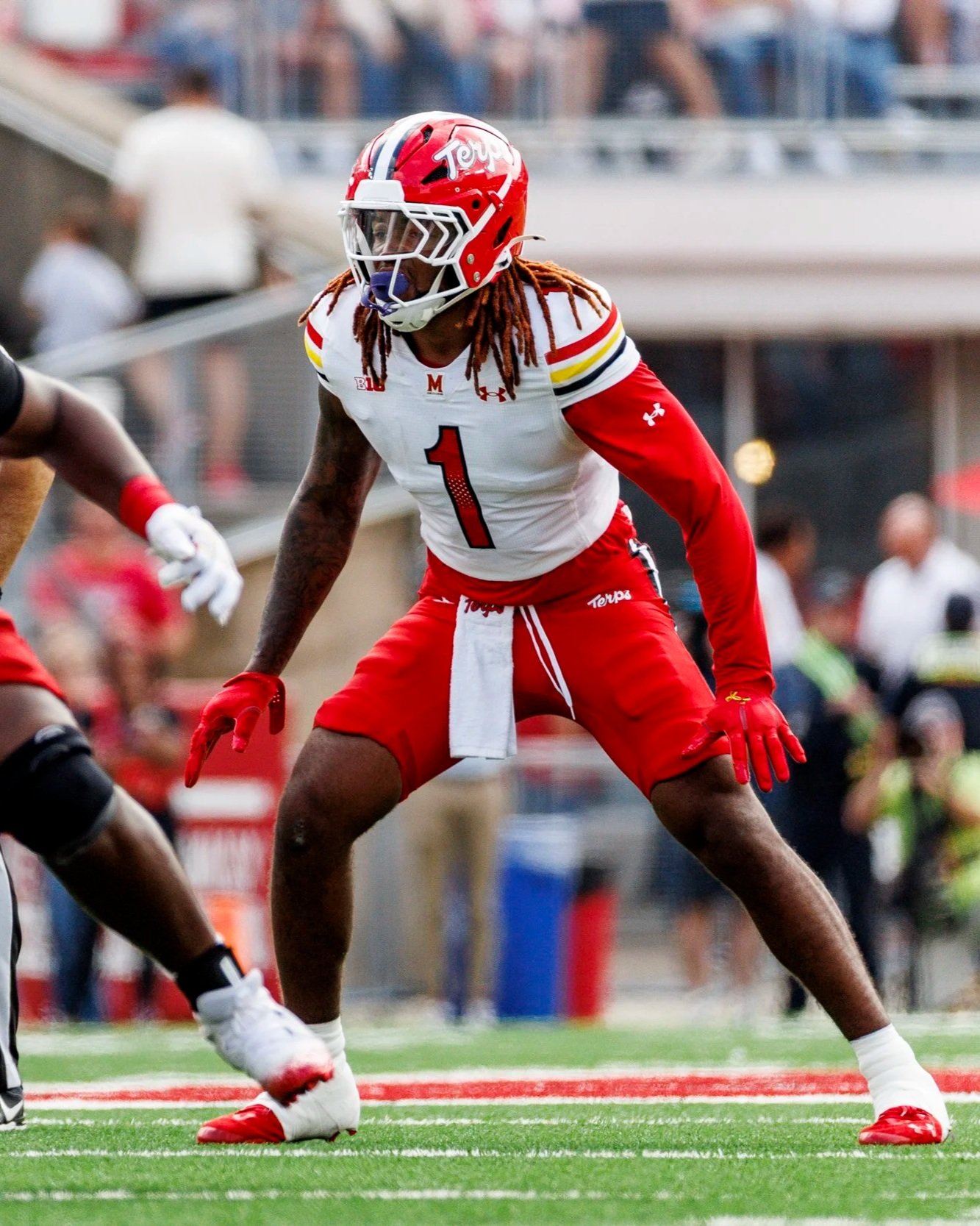
Projection: Round 3–4 | Best Fit: MIKE
Wingate belongs on the summer board and has potential to climb it because his physical profile and opportunity warrant a closer fall evaluation. If asked which player has the greatest chance to rise a round or even two rounds above his current projection, I would point to Wingate.
- Isaiah Jones — Indiana
Projection: Round 4–5 | Best Fit: WILL
Jones could rise significantly with a strong 2026 season. His athletic profile gives him a chance to develop into an effective chase linebacker. Still, his ability to diagnose consistently and hold up in coverage will determine whether he becomes more than a rotational prospect.
- Jaxton Eck — New Mexico
Projection: Round 5–6 | Best Fit: WILL
Eck represents the type of developmental prospect that can become valuable late in the scouting process. His path will require demonstrating that his instincts and tackling translate against better competition.
- Gideon Lampron — Colorado
Projection: Round 5–6 | Best Fit: MIKE/WILL
Lampron is a developmental linebacker who merits continued attention because of his potential as a rotational defender and special-teams contributor.
- Donovan Woolen — North Dakota State
Projection: Round 5–6 | Best Fit: WILL/SAM hybrid
Woolen is one of the small-school names I would circle early. North Dakota State remains one of the best environments in college football for evaluating physicality, processing, and assignment discipline. His 2026 tape will determine whether that production translates against NFL-caliber traits.
- Oumar Diomande — Colorado State
Projection: Round 5–6 | Best Fit: WILL
Diomande finishes this board as a developmental prospect with an opportunity to move up significantly. At this stage, his evaluation is more about whether his 2026 tape establishes that he has a legitimate three-down role and less about where he is ranked.
The Names That Could Break the Board
This is where the 2027 linebacker class becomes particularly interesting.
Sammy Brown and Kyngstonn Viliamu-Asa currently have the strongest cases to separate from the rest of the class. Rasheem Biles, Chris Cole, Tony Rojas, and Daniel Wingate have the athletic profiles to challenge them. At the same time, Ben Roberts and Whit Weeks have already produced enough to make their 2026 seasons especially important.
Then there is the second wave.
Xavier Atkins, Suntarine Perkins, Raylen Wilson, Arion Carter and Cade Uluave represent the type of players who could move 20-50 spots with a strong season. The same applies to Austin Romaine, Christian Alliegro, and Drayk Bowen, who have enough physical or athletic intrigue to make the fall evaluation especially important.
The lower tiers matter. A summer board is not a finished product; it is a target list. The goal is to know where to focus once the games begin.
Draft Value Summary
Round 1–Early 2:
Sammy Brown, Kyngstonn Viliamu-Asa, Chris Cole, Rasheem Biles, Tony Rojas
2–3:
Xavier Atkins, Whit Weeks, Suntarine Perkins, Raylen Wilson, Ben Roberts, Arion Carter
3–4:
Luke Ferrelli, Payton Pierce, Amare Campbell, Rolijah Hardy, Austin Romaine, Cade Uluave, Christian Alliegro, Drayk Bowen
4–6:
Daniel Wingate, Isaiah Jones, Jaxton Eck, Gideon Lampron, Donovan Woolen, Oumar Diomande
The distinction is that this is an early-summer board, not a final draft ranking. The 2026 season will answer the questions the summer cannot about who:
Processes quickly enough?
Defeats blocks against NFL-sized offensive linemen?
Can cover backs, slots, and tight ends?
Can blitz and who stays on the field for all three downs?
That is how I evaluated and separated this class into tiers. NFL teams are not merely drafting for pass defense, run fits, tackles, sacks, or tackles for loss. Franchises draft particular roles and scheme fits. The linebackers who most clearly define those roles in 2026 will be the ones who can climb this board. I always try to remember what one of the greatest defensive minds had to say:
Bill Belichick: “The linebacker has to make multiple, multiple decisions on every play. Not only what his assignment is and what the play is, but all the way along the line, different angles, how to take on blocks, how to tackle… So many different things happen in a split second.”