

 NFL
NFL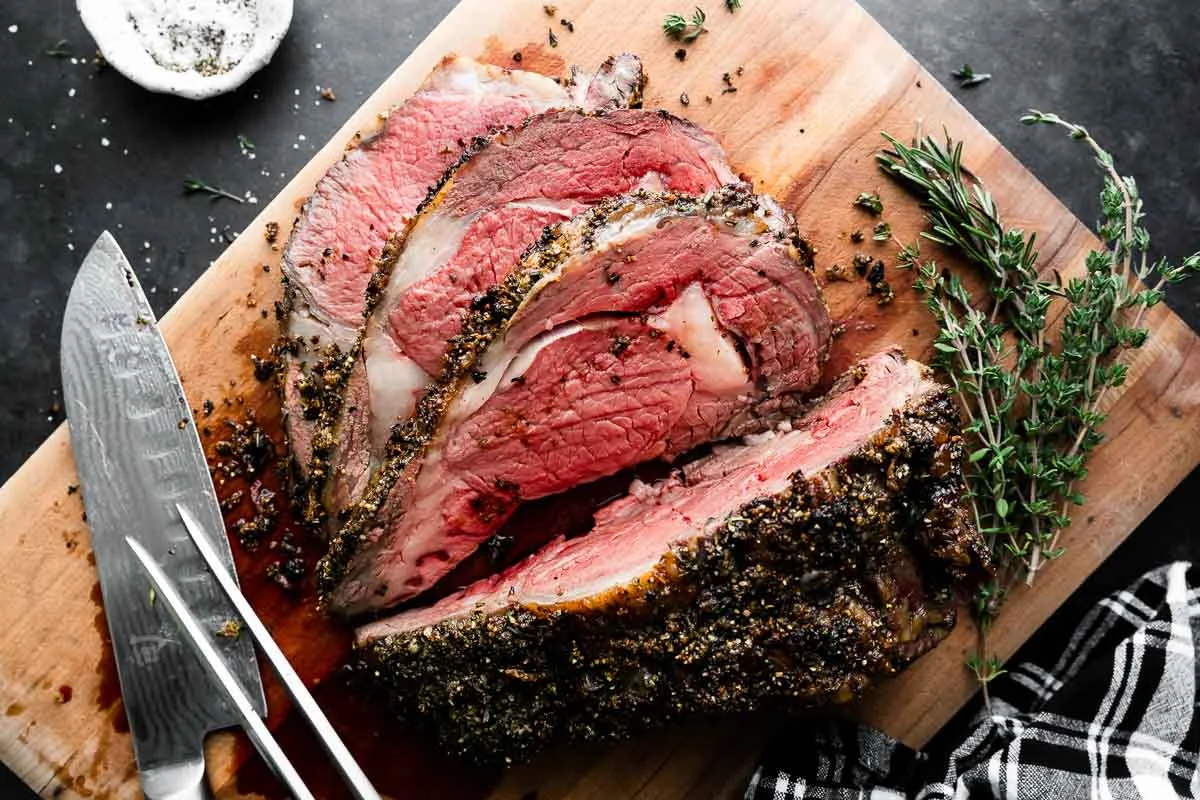
By: Rick O’Donnell
Cooking on the holidays can be a chore, especially during Christmas. Not only do you have to plan the meal, shop for gifts, and wrap the gifts, but you also have to have everything ready to host by the time your guests arrive. So if you’re looking for help around the holidays, we’ve got you, especially when it comes to cooking our favorite Christmas dinner, prime rib.
I’ve seen so many different ways to cook a prime rib roast for the holidays. There are a few common ones that I am not a particular fan of. Before we get into all that, one of the biggest shortcuts is finding the right butcher. Listen, you can go into your local grocery store and get a prime rib roast and walk out, no big deal. However, a good butcher will cut down the work dramatically.
First, how much you need will depend on the size of the group you’re feeding. Typically, I ask for a pound per person +1 lb. The reason for the extra is simple: food shrinks when cooked.
Now, when I go get my cut of meat, I ask the local shop for a boneless roast, trimmed of fat, and seasoned. It cuts the prep time dramatically. Take away my man/amateur chef card if you must, but I’m not trying to have extra steps when there are so many other things to focus on. If you’re a pro at cutting your own meat and seasoning it to perfection, do what you gotta do.
Back to the cook.
One of the most common ways to prepare this dish is to sear the outside in a pan, then cook low and slow in the oven. Another common one is to crank up the oven to 500 degrees, cook for a short period based on the weight of the beef, then cut the temp and let it set until it reaches your desired temperature/wellness. To me, both work, but not for the perfect prime rib.
The problem with both methods is, food is going to cook from the outside in. When the roast gets so hot on the outside, it doesn’t stop cooking just because the temperature has changed. Essentially, what ends up happening is that, despite getting the interior of the cut of meat to the right temperature, you’ll get an “o-ring” of your prime rib that is cooked slightly more than the rest of the roast. It won’t be terrible; you are still getting a very good cut of dinner. However, we also eat from the outside to the inside when cutting our food as well, and I want that first bite to be the best.
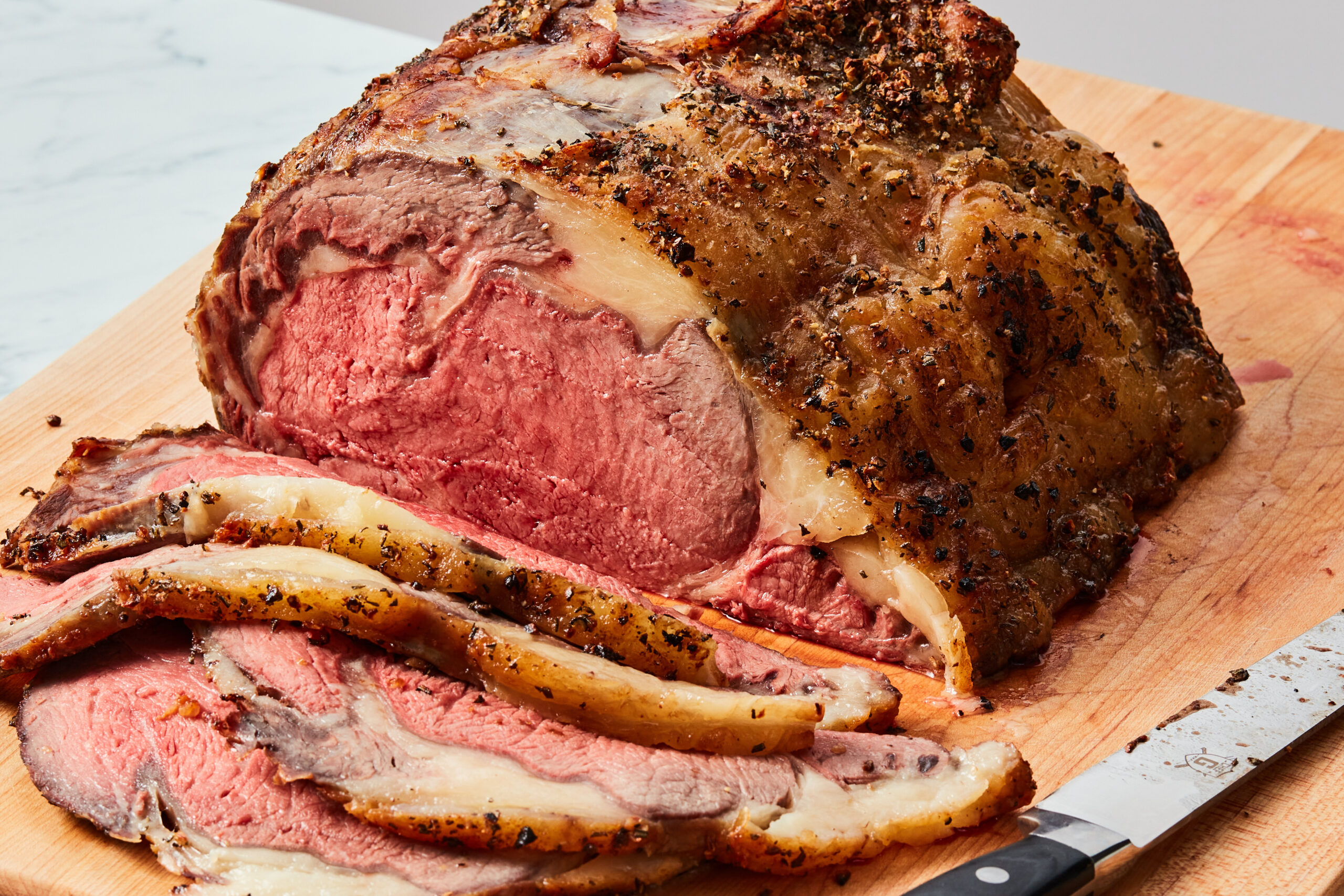
For this roast, I always recommend having two probe thermometers, one to go into the end and one to go into the thickest part of the roast. From there, if your oven goes as low as 200, go for it, but if you have an older oven, 225-250 can also work. To cook your roast, it can take anywhere from 4-6 hours, depending on size; it could even be a little less, but typically 15-20 mins per pound. You can ignore all of that when it comes to actually cooking your roast, so long as you have thermometers, but it’s a guideline for when to get it in the oven.
Now, as far as the perfect cook, this is a medium rare family over here, so I cook the roast to a good 112-115 degrees in the oven. I know that’s well under the 125 that’s suggested for a med-rare, it’s on purpose. After it reaches the desired internal temp, that’s when I sear on the outside by cranking it up to about 450 degrees for about 5-10 mins, depending on your oven. Once I have my sear, that’s when I take it out to let it rest. Yes, again, that is under the desired temp, by design. As the meat rests, the temperature will level out as the juiciness of your roast will help cook the rest of the meat to the temp you’re looking for. Leave your thermometers in, and you’ll see the temperature still rise. Then it’s carve and serve.
Choosing the right au jus is key as well. Again, it’s the holidays, and I’m not trying to spend extra time in the kitchen, so I use the packets of au jus they sell in the store. Your first instinct might be to choose the familiar brand McCormick’s, but personally, I prefer the Johnny’s French Dip au jus. I don’t mind McCormick’s, but I’ve seen it from time to time come out thicker, like a gravy where Johnny’s more of a traditional au jus.
Accidental tip: Then it comes to the internet, sometimes you can be led astray. Last year’s prep led me to finish the roast early. I tried to keep it warm during travel for when I arrived at my destination. To accomplish this, I looked up if a crockpot would keep it warm without cooking it more.
This was a mistake, as the internet says yes, but reality set in. Here’s the thing: in order not to overcook the roast, I put a little moisture in the form of the au jus to keep it from drying out. While it did in fact cook a little bit more, it didn’t ruin the meat. If you’re going for the color on the perfect roast, this probably shouldn’t be an option. However, keeping the tenderness of the beef mixed with the extra flavor of the au jus really had a great taste to it. Pick your battles; sometimes a mistake can lead to new flavors.
As a people, we love our holiday dinners. That’s why prime rib is always on the menu to end our year off right.