

 NFL
NFL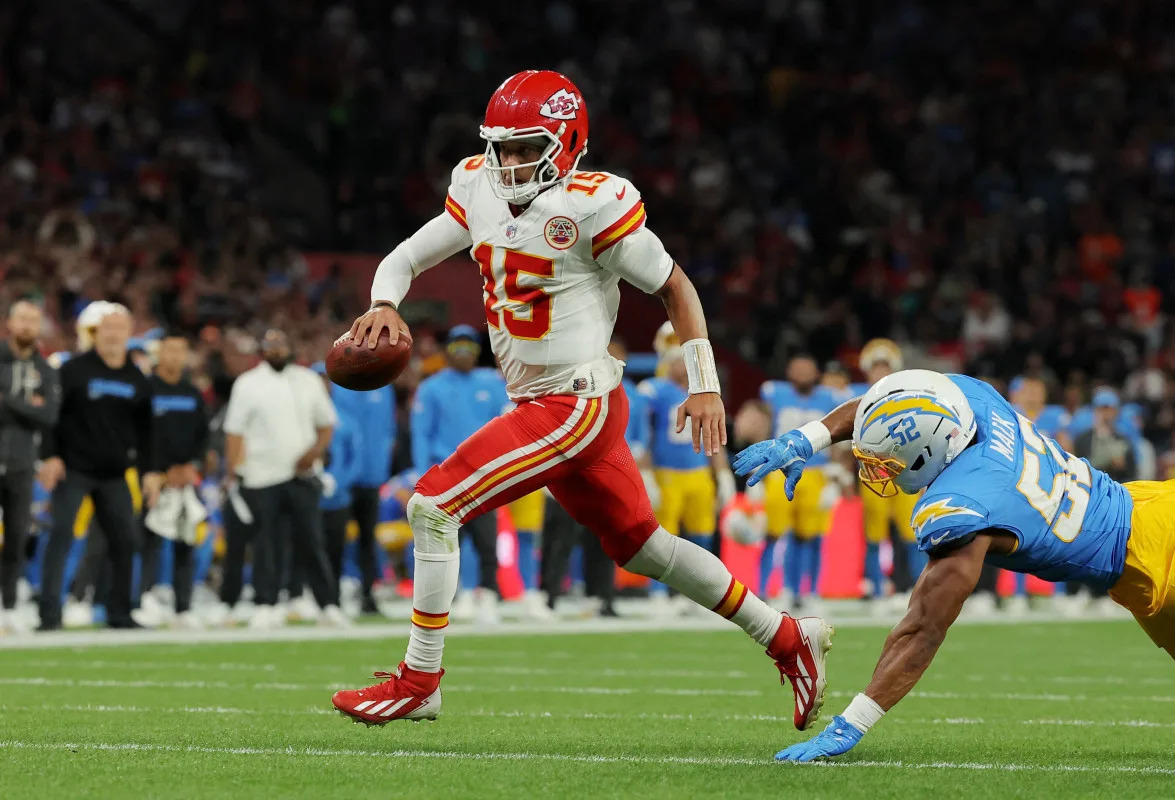
By Bill Carroll
The NFL’s upcoming AFC West showdowns seem more like heavyweight title fights than typical divisional games. November 16, 2025, the Kansas City Chiefs and Denver Broncos met in a match-up that echoed a classic boxing bout. Like Muhammad Ali versus Bob Foster, a fight billed as “The Sound and the Fury, this game was about contrast. Ali, smooth and fluid, controlled the ring with grace and timing. Foster, rangy and powerful, with a heavy punch and the courage to challenge greatness. In Denver, a similar dynamic plays out between Patrick Mahomes and Bo Nix: one a reigning champion of improvisational brilliance, the other a poised challenger seeking legitimacy.
Round I: The Quarterbacks-Mahomes and Nix
Ali, “The Greatest,” danced and jabbed before delivering fight-ending power shots; Foster, tall and lean, employed a punishing jab and elite reach. Patrick Lavon Mahomes II is Kansas City’s championship-caliber star, improvising and dazzling in the pocket, while Denver’s Nix is a hungry challenger who finds ways to land blows, especially late in the fight.
Mahomes entered, the established force. His play remains elegant in chaos, improvisational without panic. Through those nine weeks, Mahomes had thrown for 2,349 yards and 17 touchdowns with five interceptions. He could command the field with his off-platform throws and creative pocket movement. His teammates still trust him to deliver in crucial moments, having seen him scramble, pivot, and throw from impossible angles. When the Chiefs need a play, Mahomes finds one.
Bo Nix: was the challenger. In his second season, he had thrown for 1,976 yards and 17 touchdowns with only six interceptions. He has already engineered four fourth-quarter touchdown drives this season. Against Houston, he sealed a victory with a clutch scramble on the final drive and a perfectly placed 30-yard touchdown to Courtland Sutton. Now at 2,954 yards, which is good 11th in the NFL, he is Tied-at 12th with 19 and 9 INTs. He does not dance quite like Mahomes, but he strikes decisively. He is precise, patient, and unflappable. Nix plays like fighter who has no interest in bowing to a champion, only in taking his crown.
The contrast is clear. Mahomes plays like Ali, all fluidity, daring, and freedom. Nix is more like Foster, accurate, patient, steady, and aware of his moment.
Round II: The Corner-Men Andy Reid and Jim Harbaugh
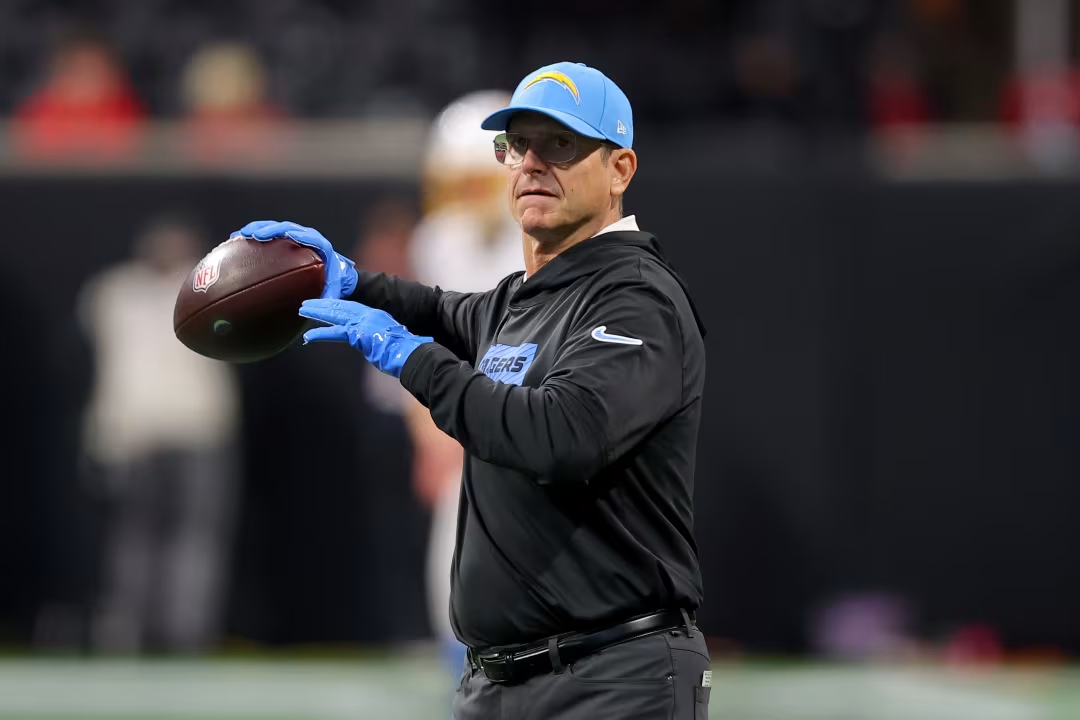
The Chiefs’ final December stretch plays out like a modern Ali trilogy. Patrick Mahomes stylistically recalls “Ali” fluid, reactive, and spatially brilliant guided by Andy Reid as Ali was by Angelo Dundee. Each opponent is a Joe Frazier, Ken Norton or Joe Bugner figure, coached by an Eddie Futch or Andy Smith–like tactician. December 8th (“Norton moment”), Kansas City faces a Chargers team primed with physical discipline (like Norton vs. Ali) after a 22–19 OT win over Philadelphia. December 21st should be a“Bugner performance”, as the Chiefs travel to a grind-it-out, underwhelming, but plucky Tennessee Titans squad requiring patience and poise. Finally, on December 25th (“rematch moment”), Arrowhead hosts Denver in a national TV showdown to reassert dominance the trilogy’s final fight.
In each game, Mahomes, like Ali will lean on improvisation and spatial mastery; Reid like Dundee will adjust mid-fight; and the opponent’s coach (Chargers’, Titans’, Broncos’) may respond as Futch did with a disciplined, angle-driven game plan. Ali’s style was “fluid, reactive, creative” versus Norton’s structured discipline, a perfect metaphor for Mahomes against these schemes. As one preview noted, “Kansas City mirrors Ali: spacing concepts, extended plays, rhythm broken and reformed by Mahomes’ genius”, while each opponent mirrors Norton or Bugner with bend-but-don’t-break control.
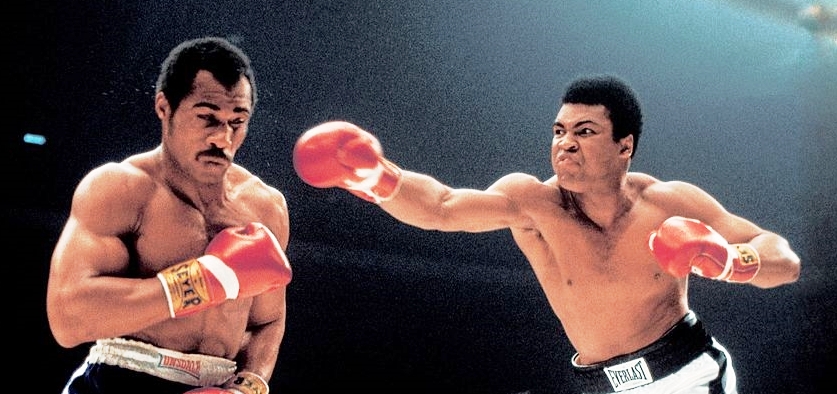
San Diego, CA 3/31/1973
CREDIT: Neil Leifer (Photo by Neil Leifer /Sports Illustrated/Getty Images)
(Set Number: X17583 )
Norton Moment – Chiefs at Chargers (December 8th)
This must-win road game is the Norton fight. L.A. is a well–prepared, physical squad with a stout defense (Chargers coach Jim Harbaugh presents a disciplined, Futch-like challenge). KC needs to attack carefully but creatively. On offense Mahomes must create outside the pocket when LA brings pressure (the Chargers have 35 sacks so far). On defense, Kansas City must contain a duo of young, star RBs, Omarion Hampton and Kimani Vidal and limit WR Ladd McConkey (who leads LAC with 695 receiving yards). Key figures: Justin Herbert (2,981 pass yards, 22 TDs) runs LAC’s offense; on the Chiefs’ side Travis Kelce (727 yards, 5 TD) will battle Charger CBs like Cam Hart and SS Derwin James in coverage.
STATISTICAL SNAPSHOT (Team Comparison): Kansas City averages ~24.2 PPG and 367.1 YPG (3rd-down ~40.2%). Los Angeles has 23.1 PPG and 346.8 YPG (3rd-down ~48.3%). KC’s defense allows just 19.4 PPG (303.7 YPG); the Chargers allow 21.0 PPG (275.3 YPG).
Norton I (1973) famously rocked Ali by breaking rhythm and rhythmically jabbing at angles, even fracturing Ali’s jaw, proof that disciplined structure can disrupt genius. Translating to Sunday: Jim Harbaugh’s Chargers emulate a programmatic, angle‑heavy defense and a run‑focused offense that forces the game onto their terms, testing Mahomes’ patience.
What the corner sees
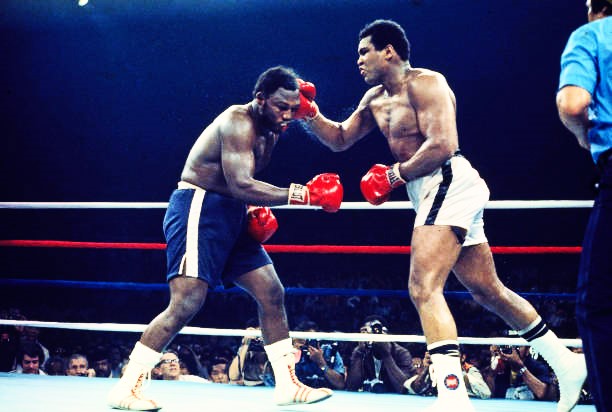
Chargers’ current form: An OT win over the Joe Frazier-like Eagles
Key Elements:
- Pass rush & physicality: Tuli Tuipulotu leads a front that has become Harbaugh’s tone‑setter; pieces like Derwin James and Daiyan Henley keep the middle tight. (Tuipulotu’s 10.0 sacks, is nearly a third of team’s sacks.)
- Offensive identity: Kimani Vidal’s emergence, Ladd McConkey’s efficiency, Herbert as a mobile distributor win on angles, not volume.
Tactical keys (Ali’s adjustments)
- Mahomes against angles: Kansas City must alter launch points (roll-outs, sprint‑outs), stress quarters/3‑match with slot option‑routes and RB alignments that force edge conflict.
- Explosive control: Chargers’ defense ranks top‑10 in scoring allowed (≈21.0 PPG); this is a 12–15 possession fight, take 3 points when drives stall!
- Hidden rounds: Field position and third‑down math (KC ≈ 40% 3rd; LAC ≈ 48%) decide the cards if explosives are muted.
Round 2: Titans (The “Norton II” Split—Win the War of Patience)
Norton II (1976) Was a razor‑thin, tactical fight won on patience, jabs, and judges’ hunches. The Titans represent an opponent whose record belies trap qualities: they aim to drag you into clinches, shorten the game, and lean on field position. It’s attrition over aesthetics.
What the corner sees
- Team profile: Tennessee has struggled15.5 PPG, placing them 31st. Cam Ward is at QB, Tony Pollard and Tyjae Spears share the running game duties, and Chigoziem Okonkwo as the main passing game chain mover at 32.76 yards per game.
- Efficiency gaps: The Titans are 1–11 with severe net yardage deficits across rushing and passing and heavy sack yardage allowed—this is a control fight if KC stays on script.
Tactical keys (Don’t get out‑pointed)
- Possession management: Win early downs; Titans’ offense struggles to manufacture explosives—force third‑and‑long, play coverage + four‑man rush.
- Run fits & red zone: Prevent short‑field TDs; Tennessee leans on kicking points and limited passing. Disciplined gaps avoid the upset via special teams and penalties, where judges tally rounds.
Round 3: Broncos (The “Norton III” Closure—Settle It Under Lights)
Norton III (1976) Contentious, high‑stakes, nationally watched. Christmas at Arrowhead is the closure bout with Bo Nix, who is the poised challenger: efficient game management, late‑game poise, and ten wins in a row driving Denver’s legitimacy case.
What the corner sees
- Nix’s 2025 ledger: 2,954 pass yards, 19 TD, 9 INT through 13 games; Broncos scoring ≈23.7 PPG and allowing ≈18.1 PPG (top‑5) a defense‑backed, QB‑efficient contender.
- Recent rhythm: Week 13/14 lines show 321 yards versus Washington, 81.6% completions vs. Las Vegas; Denver sustains drive efficiency and limits giveaways, Ali’s foe who won’t give you a free round.
In part II we dive deeper into the schemes.