
 NFL
NFL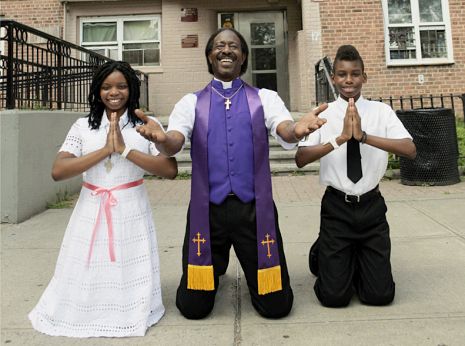
By: Matt Overton
The Nineteenth Joint
Has anyone ever identified a slump era in Spike Lee’s career? I find it extremely ironic that the same year Obama was inaugurated, Spike couldn’t help but release some of the worst films in his career. Following up the unimpressive Miracle at St. Anna with Red Hook Summer, Spike returns to the streets of Brooklyn to tell a story about a young Atlanta boy spending the summer with his grandfather. What begins as a sweet coming-of-age story in the vein of Crooklyn ends in a much darker place than expected.
Flik’s mother drops him off in the Red Hook projects, where his grandfather lives. Da Good Bishop Enoch Rouse is enthusiastically played by Clarke Peters in a truly transformative performance. Da Good Bishop is more than aware that this grandson he has just met for the first time, was not raised in the church and is prepared to force him into a heavenly routine. Flik balks at his grandfather’s seemingly draconian lifestyle—no television, no games, going to church every day of the week to work, and a dietary plan that doesn’t respect his self-imposed veganism. Flik maintains his righteous independence through his snazzy iPad 2, which he uses to record most interactions. He claims he’s making a documentary about his summer trip, but there’s more than one inhabitant of Red Hook who doesn’t trust any type of evidence being recorded.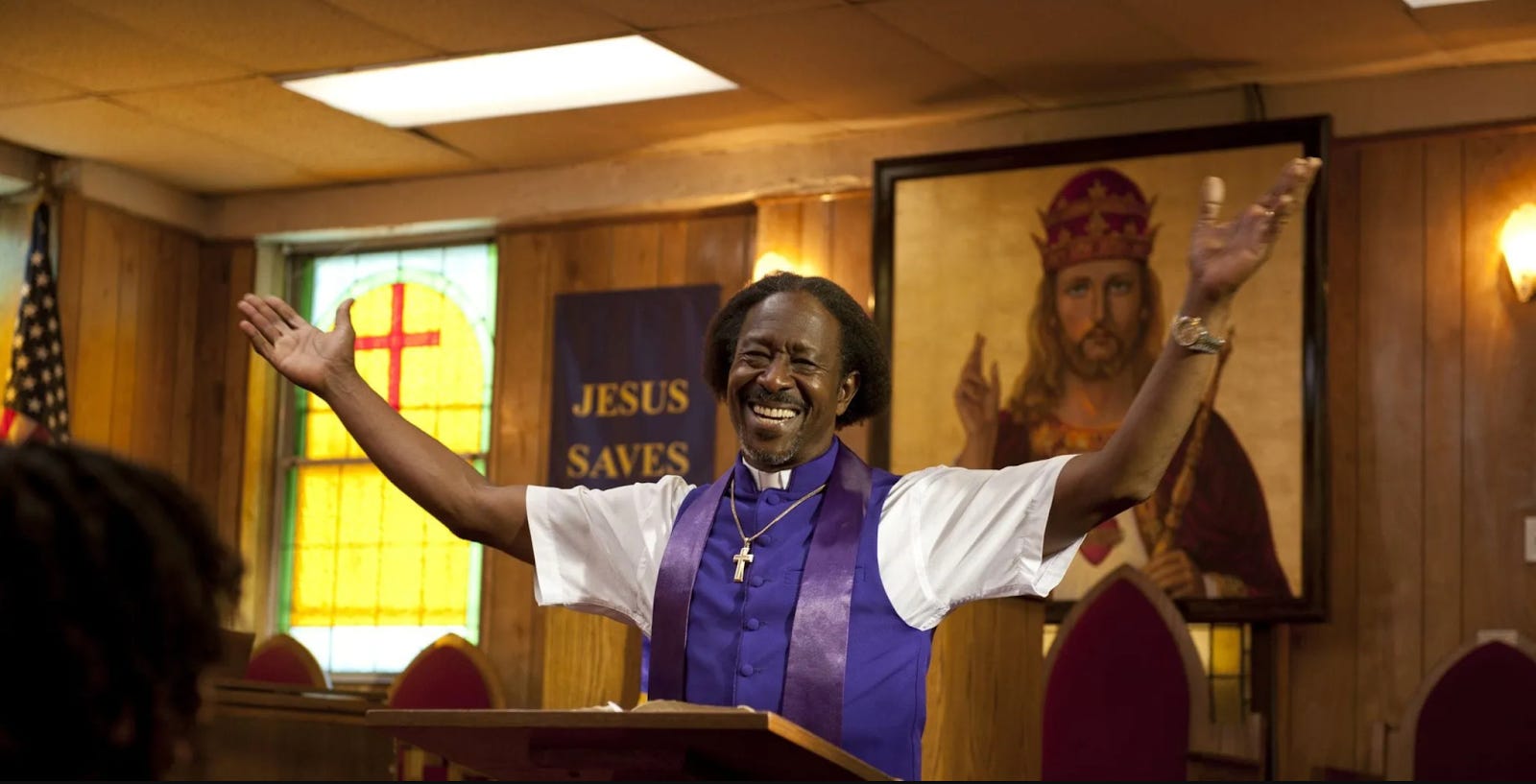
As badly as Flik wants to return to his middle-class life in Atlanta, where he attends private school, his grandfather insists that this summer will be good for him. He meets Chazz, a young lady who also attends Lil’ Peace of Heaven with her mother, Sister Sharon, a faithful follower of Da Good Bishop. The two get into plenty of trouble with Deacon Zee, the beloved drunkard played by Thomas Jefferson Byrd. When Spike needs an unhinged, chaotic role filled, he can always count on the versatile Byrd to answer the call. His drunken rants to himself were the main source of comedy for the majority of the movie, and I enjoyed Byrd’s character the most.
For a solid 75% of the film, Red Hook Summer plays out like a very safe, albeit Spike Lee-inspired, coming-of-age story. It had all the makings to come out the other side as a well-to-do story that conveyed strong emotions related to growing up in the city. But then, with only a quarter of the movie left, the script reveals a dastardly twist that changes everything. It was at this moment that I was hit with whiplash—why was this pertinent to the story, why did this character make that decision, and why did Spike/McBride write the script this way? It’s an extremely shocking development in the plot that comes out of left field, and I still can’t figure out if it was meant as some sort of commentary or simply as a means to introduce more conflict.
What begins as a pretty doting story about one boy’s summer vacation ends as a bleak and disgusting memory. It seems in character for Spike to throw something so controversial and shocking right at the end of his movie, but for the life of me, I just can’t see through to the reasoning. It makes a well-made, aesthetically pleasing film that explores young masculinity and its relationship to the environment, and morphs into a strangely revolting character study. Flik is an awesome character, so is Deacon Zee, and I loved Clarke’s rapturous, possessed performance. But the ending is just too random and distasteful, and I can’t help but feel less passionate about Red Hook Summer.